
Mid-Autumn Festival in Vietnam draws travelers because it is one of the rare moments when family life, street culture, and local tradition all meet in one evening. Visitors come for the meaning behind the Moon Festival, the glow of the Vietnamese lantern festival, and the chance to see how Vietnamese people celebrate with lanterns, mooncakes, and lion dances. For first-time visitors, the big questions are simple: what it means, when it happens, and how to experience it like a local.
If you are planning a cultural trip, the all tours of Toward Local can help you build an itinerary around authentic neighborhoods and local food stops. The festival is easy to enjoy without special preparation, but timing matters because the best atmosphere comes from walking the right streets at the right hour. In the sections below, you will get a clear overview of the mid-autumn festival in vietnam, plus practical context for travelers who want a local experience, not just a photo stop.
| Criteria | For travelers | Best time | Local experience |
|---|---|---|---|
| Festival meaning | Family reunion and children’s celebration | Full moon night | Lantern walks and mooncakes |
| Travel value | Strong cultural insight with low disruption | Evening only | Street crowds, music, local food |
The main insight is that this festival is public, visual, and easy to join, which makes it especially appealing for solo travelers, couples, and families who want something local but not difficult to access. If you are already planning time in central Vietnam, Hoi An tours are often the best fit because the lantern atmosphere is strongest there and the streets feel alive without requiring a full travel reset.
What the Mid-Autumn Festival in Vietnam Is All About
Mid-autumn festival in Vietnam is a family-centered lunar celebration that takes place on the 15th day of the 8th lunar month, when the moon is brightest and communities gather after sunset. For travelers, it is one of the clearest ways to see Vietnamese culture in real life: children with lanterns, street music, mooncakes, and homes prepared for reunion without the pressure of a major national holiday.
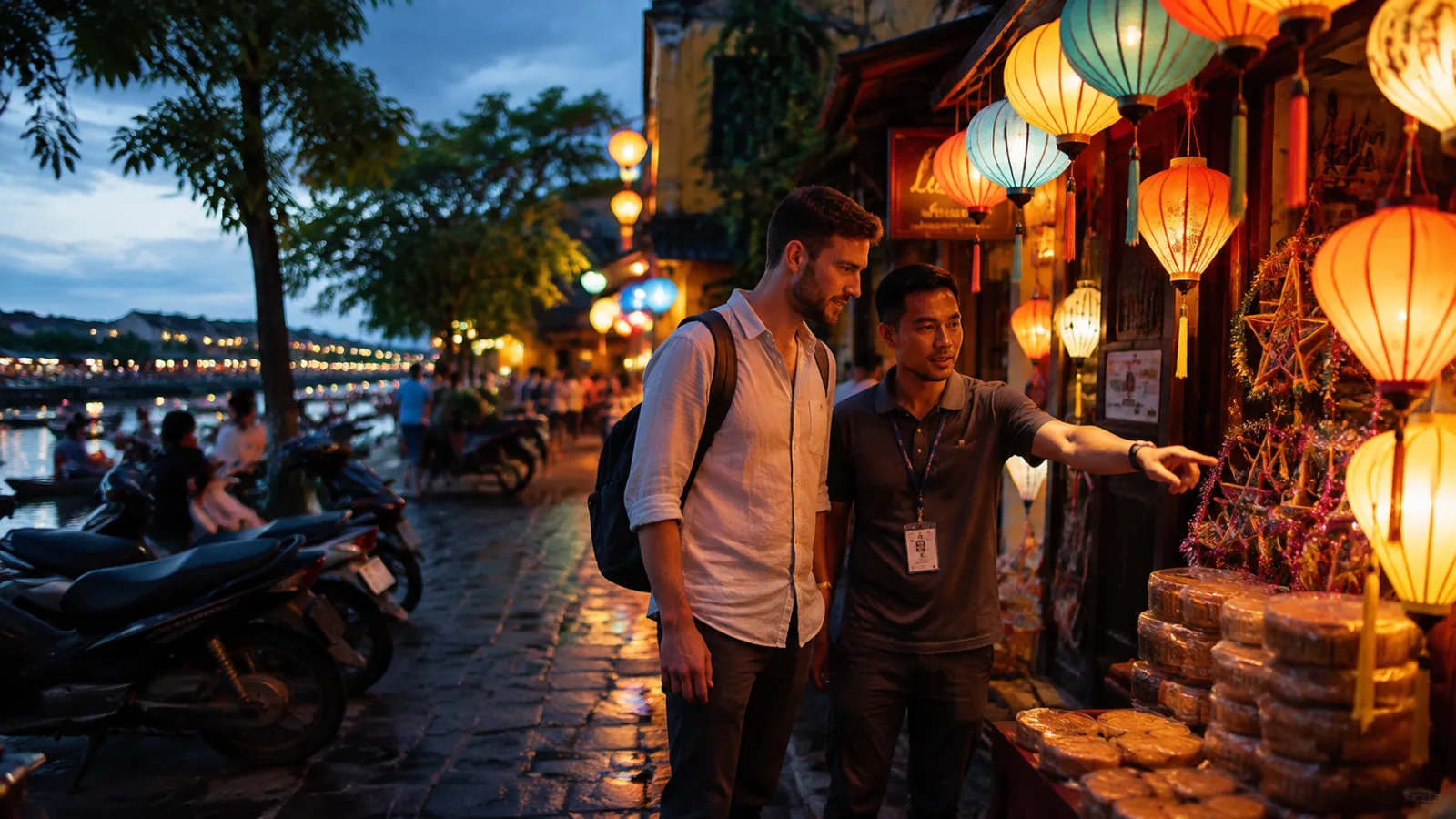
Its cultural roots come from harvest traditions, folk legends, and ancestor respect, which is why the festival feels both festive and deeply local. You may see public lantern processions in Hoi An lantern streets or busy family scenes in city neighborhoods, where the night is less about performance and more about belonging.
In practical terms, the festival combines three layers: a seasonal celebration, a children’s event, and a family ritual. That mix is why it matters to first-time visitors, couples, and solo travelers who want something authentic but easy to experience.
| Criteria | Cột 1 | Cột 2 | Cột 3 |
|---|---|---|---|
| Festival focus | Family reunion | Children and lanterns | Moon viewing and offerings |
| Best for travelers | Easy cultural access | Street-level photo moments | Local food and atmosphere |
The simplest way to understand the festival is this: Vietnamese families use one evening to celebrate children, honor ancestors, and enjoy the full moon together. A common scene is a mother buying mooncakes after work, children carrying star lanterns, and grandparents placing fruit on the altar at home.
The Mid-Autumn Festival in Vietnam is a lunar celebration centered on family reunion, children’s lantern parades, mooncakes, and ancestor offerings. It is usually celebrated on the 15th day of the 8th lunar month, and in many cities travelers can join public events without disrupting their trip.
For visitors planning a cultural trip, this is where the festival becomes practical. If you want the most atmospheric setting, Ho Chi Minh City food tours and old-quarter evening walks can pair naturally with lantern season. A soft approach works best: arrive before sunset, stay flexible, and let the crowd lead the experience.
What makes the festival memorable is not size but intimacy. Unlike large-scale holiday travel, this night gives you direct access to everyday Vietnamese heritage in a setting that still feels warm, local, and easy to understand.
- Definition: a lunar family festival
- Main symbols: lanterns, mooncakes, fruit trays
- Traveler value: authentic city and neighborhood atmosphere
In short, the Mid-Autumn Festival in Vietnam is less about sightseeing and more about observing how Vietnamese people celebrate connection. If you are building a local-focused itinerary, this is one of the best nights of the year to do it.
If you want to experience it with less guesswork, plan your evening around a walkable festival district and a simple dinner stop nearby. For a broader local-first trip, explore all Toward Local tours and choose the city that fits your pace.
Book early, keep your evening open, and put the Mid-Autumn Festival in Vietnam on your route if you want one of the most accessible cultural nights in the country. The best experiences happen when you arrive before the crowds and stay long enough to watch the family rituals unfold.
How the Mid-Autumn Festival in Vietnam Is Celebrated
The mid-autumn festival in vietnam is a warm, public celebration built around children, family, and neighborhood life. For travelers, the challenge is not finding things to do, but knowing where the real energy happens and how to join without feeling like an outsider. The answer is simple: follow the lanterns, stay near the crowds, and watch how homes, streets, and food all come together.
It is not a quiet cultural display. In the right places, the festival feels alive, especially in old neighborhoods, riverfront streets, and local markets. If you want a deeper experience, plan for movement, noise, and close-up street scenes rather than a formal event. That is what makes it memorable for solo travelers, couples, and families who prefer authentic local moments.
Vietnam celebrates the Mid-Autumn Festival with lantern parades, lion dances, mooncakes, and family gatherings. The most visible traditions happen in the evening, when children carry lanterns through the streets, performers bring luck with lion dances, and families share mooncakes and fruit at home or in their neighborhoods.
Core traditions are easy to spot if you know what to look for. Lanterns lead the night, lion dances bring the sound, mooncakes mark the table, and family gatherings give the festival its emotional center. In practice, each part serves a different purpose: lanterns for children, lion dances for good fortune, food for sharing, and home rituals for family unity.
You will often see a street scene like this: children holding star-shaped lanterns, shop owners watching a lion dance outside their doors, and parents carrying mooncakes home after work. In local street food tours, visitors often notice that the festival feels less like a show and more like a neighborhood rhythm. That is the key insight: it is public, but still deeply domestic.
Mooncakes are not just desserts. They are gifts, symbols, and a sign that the season has started. Lanterns, meanwhile, are the most photogenic part of the festival, especially in older districts where streets are narrow and decorated early. If you are visiting with children, this is the easiest event to enjoy without needing a long explanation.
| Criteria | Before | During | After |
|---|---|---|---|
| Street atmosphere | Lantern stalls and decorations appear | Parades and lion dances peak | Shops stay open and crowds thin |
| Best activity | Browse markets and buy a lantern | Walk with the crowd and watch performances | Enjoy quieter streets and late mooncake shopping |
A practical timeline helps you avoid wasted time. Before the festival, streets in Hanoi, Hoi An, and Ho Chi Minh City often fill with lantern sellers and seasonal displays. During the evening itself, children dominate the scene, and the best viewing spots are usually near pedestrian streets, lakefronts, or old quarters. Afterward, the decorations may remain, but the social energy drops fast.
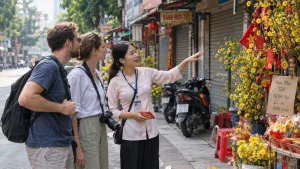
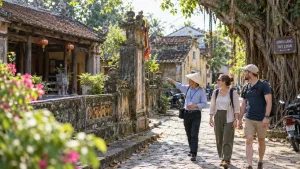
If you want to experience the festival in a more local setting, choose a neighborhood instead of a major stage area. In Hoi An, the best moments often happen away from the busiest bridge, where families move slowly through the old town. In Ho Chi Minh City, District 5 gives you a more community-based feel, while Hanoi’s Hang Ma Street becomes a market that feels busy long before the main night. For a quieter base with easy access, Da Nang tours can work well if you want to combine the festival with a day trip to Hoi An.
A useful travel tip is to arrive early, eat before sunset, and stay flexible. The festival is short, crowded, and best enjoyed on foot. If you are a first-time visitor, focus on one area and observe how local families move through the space. That is usually more rewarding than trying to cover several cities in one night.
In real life, the celebration looks different depending on the place. In central tourist zones, it can feel polished and crowded. In old residential streets, it feels more personal, with children running between houses and adults chatting while sharing food. The contrast is what makes the festival interesting: the same tradition, but with very different levels of spectacle and intimacy.
Soft planning tip: If you already know your route, keep one evening free for the festival and build the rest of your trip around it. That gives you enough time to explore without rushing through the best part.
For travelers who want a stronger local angle, the best experience usually comes from walking, watching, and joining small actions rather than seeking a formal performance. Buy a lantern, try a mooncake, and follow the sound of drums. That is enough to feel the festival properly.
In city celebrations, the pattern is usually the same. Early evening brings shopping and photos, later evening brings music and children, and the last part of the night is best for slower walks and street snacks. If you want the broadest view of how the festival works across Vietnam, compare one large city with one heritage neighborhood, because the difference tells you more than a guidebook ever could.
For adventurous travelers, that contrast is the story. The festival is not only about what happens on stage. It is about how Vietnamese families use public space, how streets become social spaces, and how a single night can reveal a very local way of celebrating together.
Bottom line: If you want to understand how Mid-Autumn Festival is celebrated in Vietnam, watch the lanterns, follow the crowds, and stay long enough to see the shift from public performance to family gathering. That is where the real meaning sits.
Why the Mid-Autumn Festival in Vietnam Matters Today
Mid-Autumn Festival in Vietnam still matters because it connects daily family life with public culture in a way travelers can actually see. For first-time visitors, that means the festival is not just a date on the calendar, but a live window into how Vietnamese families gather, honor tradition, and make space for children, elders, and neighbors in one evening.
Unlike larger holidays that can disrupt a trip, this celebration is easy to join and easy to understand. The streets fill with lanterns, mooncakes, and lion dances, while homes and community spaces hold quieter rituals. If you want a cultural moment that feels local rather than staged, explore all Toward Local tours and plan around the festival night for the strongest experience.
The Mid-Autumn Festival in Vietnam is a family-centered celebration that blends lantern parades, mooncakes, and ancestor offerings. For travelers, it offers a rare chance to see local life up close without major travel disruption, making it useful for cultural learning, photography, and soft adventure planning.
The festival matters most in two ways.
For Vietnamese families, it is emotional and personal. Children receive lanterns, parents prepare fruit trays and mooncakes, and grandparents use the evening to reconnect with younger generations. The ritual feels simple, but it carries memory, belonging, and respect for home.
For travelers, it creates practical use cases:
- Travel experience: join a lantern walk in Hoi An or Hanoi and see how public space becomes festive
- Cultural learning: observe how mooncakes, altar offerings, and lion dances reflect family values
- Photography: capture color, movement, and street atmosphere in real settings
- Community events: attend neighborhood celebrations that feel local rather than commercial
A useful rule is to focus on places where people are already gathering naturally. In Hoi An, the evening atmosphere is ideal for Hoi An tours that fit walking, eating, and festival watching into one slow-paced night.
The practical takeaway is simple. If your trip overlaps with the festival, do not treat it as a bonus stop. Build one evening around it, keep your expectations local, and choose a city where the celebration matches your travel style. Couples usually prefer lantern-lit streets, families want easy access and safe crowds, and solo travelers often get the richest cultural exchange by staying near the busiest public spaces.
| Criteria | Hoi An | Hanoi | Ho Chi Minh City |
|---|---|---|---|
| Best for | Lantern atmosphere and easy walking | Local culture and street energy | Community events and Chinatown vibes |
| Traveler type | Couples and families | Solo travelers and culture seekers | Groups and repeat visitors |
If you want a relaxed base near the most photogenic celebration, check Da Nang tours for a quieter stay with easy access to festival nights in central Vietnam.
The strongest reason the festival matters today is trust. It is public, seasonal, and rooted in real family tradition, so visitors do not need to guess what is authentic. You can see the meaning in the lanterns, the food, and the way streets naturally fill with local life.
For travelers who want something local, adventurous, and easy to experience in one evening, this is one of Vietnam’s most rewarding cultural moments.
Book your trip around the full moon, stay near a festival district, and arrive before sunset so you can see the transition from ordinary street life to celebration. If you want a trip that feels local without becoming difficult to plan, this is the right event to build around.
How to Experience the Mid-Autumn Festival in Vietnam as a Visitor
Mid-Autumn Festival in Vietnam is one of the easiest ways to see local life up close without planning around a public holiday. For visitors, the challenge is not finding an event, but choosing the right place and knowing whether to join the crowds or look for a smaller family setting. That decision changes the whole experience.
If you want lantern streets, lion dances, and a strong first impression, focus on Hanoi, Ho Chi Minh City, Hoi An, and nearby local markets. If you prefer a quieter, more personal evening, look for homestays or family-led dinners. The best choice depends on whether you want atmosphere, comfort, or access to real household traditions during the mid-autumn festival in vietnam.
The best way to experience the Mid-Autumn Festival in Vietnam is to match the city to your travel style. Hoi An gives the most visual spectacle, Hanoi feels more local, Ho Chi Minh City offers a strong Chinatown atmosphere, and smaller markets or homestays reveal private family customs with fewer crowds.
| Criteria | Public events | Private family celebrations | Best for |
|---|---|---|---|
| Atmosphere | Busy, colorful, high-energy | Quiet, warm, personal | Public events for first-time visitors |
| Access | Easy to join in city centers | Only if invited or hosted | Family-style for deeper cultural travel |
| Photo opportunities | Lanterns, parades, street life | Table settings, offerings, home rituals | Choose based on your content goals |
In Hanoi, the strongest draw is the Old Quarter, especially Hang Ma Street, where lantern shops and toy stalls create a dense festival mood before the full moon. The city feels more lived-in than staged, which matters if you want to see how families actually prepare. A short walk from Toward Local tours style neighborhoods can show you the difference between tourist lanes and real residential streets.
Ho Chi Minh City gives a different angle. District 5, especially around Cho Lon, mixes lantern displays with Chinese-Vietnamese traditions, so the celebration feels broader and more layered. If you are already planning food-focused exploration, the streets around this district pair well with HCMC food tours, because snacks, mooncakes, and late-night street energy all come together naturally.
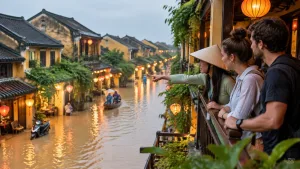
Hoi An is the most photogenic option, but it is also the most crowded. The old town glows beautifully, and the river lanterns create a strong visual memory, yet the experience can feel compressed on the main night. That makes it ideal for couples or families who want a classic first visit, while solo travelers may prefer to arrive early or stay nearby and explore with a slower rhythm.
For local markets, look beyond the festival headline and watch how people shop. You will see mooncakes, star lanterns, fruit trays, and small gifts being bought for children and relatives. This is where the festival feels practical rather than performative. A good rule is simple: markets show preparation, public streets show celebration, and homes show meaning.
If you are planning a trip around the festival, choose one city for the public atmosphere and leave time for one local market visit. That balance gives you both the visual story and the cultural detail.
The main advantage of public events is access. You do not need an invitation, and the energy is easy to understand even for first-time visitors. The downside is crowd pressure, traffic, and less privacy. Private family celebrations are the opposite: more intimate, more meaningful, but limited to guests who already have local connections or a trusted host.
If you get invited to a home, accept respectfully and keep your phone discreet. A family dinner may include mooncakes, fruit, tea, and a small altar ritual. That setting is not for performance, it is for belonging. For travelers who value slower cultural exchange, this is often the most memorable part of the mid-autumn festival in vietnam.
Public events work best when you want movement, sound, and street photography. Family-style celebrations work best when you want context, conversation, and a real sense of Vietnamese hospitality. The smartest visitors do both: they watch the city at night, then compare it with the quieter traditions that happen behind closed doors.
Final CTA: Book your route around the city that matches your travel style, then leave one evening open for spontaneous discovery. That is the easiest way to experience the festival without missing the details that make it real.
Tips, Common Mistakes, FAQ, and Final Travel Advice
Mid-Autumn Festival in Vietnam is one of the easiest cultural events for foreign travelers to experience, but small mistakes can ruin the night. The biggest wins come from timing, crowd awareness, and knowing which moments are public and which are private. If you plan for the details, you get the atmosphere, the food, and the local energy without stress.
This chapter focuses on what actually matters on the ground: how to avoid rookie mistakes, where to stand, what to eat, and how to move through the evening like a respectful visitor. For travelers who want a more local, adventurous trip, a few smart choices make a big difference, especially in places like Hoi An and Hanoi. If you are pairing the festival with city food exploring, Toward Local tours can help you build a smoother itinerary.
To enjoy the festival well, arrive early, wear light clothing, keep valuables secure, buy mooncakes from reputable sellers, and respect family altars. Join public lantern areas, stay alert in crowded streets, and choose one city with strong local atmosphere rather than trying to cover too many places in one night.
Common mistakes tourists make usually fall into five patterns. They arrive after the crowd has peaked, stand too close to lion dances, treat home altars like photo spots, buy the first mooncake they see, or assume every street is safe for children. In Hoi An, the lanes can become packed fast, so coming before sunset matters more than most first-time visitors expect.
A practical way to think about it is simple: public festival zones are for watching and joining, while homes and temples are for observing quietly. If you are staying in central Vietnam and want an easier base, Hoi An tours can pair well with an evening festival visit, especially for couples and families who want a softer pace.
Another common issue is food choice. Mooncakes are rich, dense, and often sweet, so one cake is usually enough for two people. First-timers should start with lotus seed paste or mung bean filling. If you want to avoid an upset stomach, choose packaged cakes from bakeries rather than loose ones sitting in hot weather for hours.
Quick decision guide:
| Criteria | Best choice | Why it works | Good for |
|---|---|---|---|
| Best city for first-timers | Hoi An | Strong lantern culture and easy visual appeal | Couples and families |
| Best local feel | Hanoi Old Quarter | Less polished, more neighborhood energy | Solo travelers and culture seekers |
Timing, best places, food, etiquette, and what to bring are the five questions travelers ask most. The short answer is: go at dusk, choose a pedestrian-friendly area, eat simple mooncakes, ask before photographing people closely, and bring water, insect repellent, and comfortable shoes. For broader urban food and night-market experiences, HCMC food tours can complement a festival night in the south.
Timing: arrive early, ideally before sunset, because the most atmospheric streets fill fast. Best places: Hoi An for the most iconic experience, Hanoi for a more local street feel, and Ho Chi Minh City District 5 for strong community energy. Food: choose classic baked mooncakes first. Etiquette: keep distance from altars and performers. What to bring: cash, phone, water, and a small bag you can zip shut.
Final advice: do not try to force the festival into a checklist. Pick one neighborhood, stay longer than you think you need, and let the evening unfold. That is how you get the real rhythm of the Mid-Autumn Festival in Vietnam, not just the photos. If you want to extend the trip into central Vietnam with scenic movement and local eating, Da Nang tours are a smart add-on for a balanced itinerary.
When in doubt, watch local families and follow their pace. That small adjustment makes the night smoother, more respectful, and much more memorable.