
Motorcycle crash protocol is the fastest way to protect yourself after a wreck, especially when shock, traffic, and bystanders make it hard to think clearly. In the first minute, your priorities are simple: stop, check for injury, move out of danger if you can, and avoid saying anything that could hurt your insurance or legal position later.
This guide shows the practical steps riders need at the scene, from checking for hidden injuries to recording evidence and calling for help. If you are traveling through busy cities or remote roads, the right motorcycle crash protocol can reduce mistakes, speed up treatment, and make the claims process much easier. For riders planning local routes, it also helps to understand support options like all Toward Local tours and how safety planning fits into a longer trip.
| Step | Best action | Why it matters | Common mistake |
|---|---|---|---|
| Safety check | Look for bleeding, pain, and movement issues | Finds urgent injuries early | Standing up too fast |
| Scene control | Stay calm and document what happened | Supports insurance and police reports | Arguing or admitting fault |
After a motorcycle crash, check for injuries first, move to safety if possible, call emergency help when needed, take photos of the scene, exchange details, and contact your insurer before making any payment or statement about fault.
The most expensive mistake is often not the crash itself, but what a rider says or does in the first few minutes. If you are ever hurt on a trip and need a faster recovery plan, a trusted local operator such as HCMC local tours can also be part of a safer travel strategy once you are fully fit to ride again.
Soft check: if this is your first time managing a crash abroad, save the steps, keep your documents handy, and know who to call before you need them. When you are ready to keep exploring, choose routes and support that match your experience level, riding conditions, and comfort with local traffic.
Action step: use this motorcycle crash protocol as a real-world checklist, not a theory guide. The goal is simple: stay alive, stay accurate, and stay protected.
What a Motorcycle Crash Protocol Is and Why It Matters
Motorcycle crash protocol is a simple step-by-step plan for what to do immediately after a motorcycle accident, so you can protect people, preserve evidence, and avoid costly mistakes. For riders exploring Vietnam or any unfamiliar road, it turns panic into action. A clear motorcycle crash protocol matters because the first few minutes often decide your medical outcome, your insurance claim, and how quickly the situation calms down.
When a crash happens, adrenaline can make even experienced riders freeze. Passengers may not know whether to stand up, move the bike, call for help, or wait. Witnesses often want to help, but without a structure they may give conflicting information. That is why a protocol is not paperwork for later. It is a practical safety tool for the road, especially on local streets where traffic, language, and urgency can all collide at once.
A motorcycle crash protocol is an emergency action plan for the moments after a crash. It tells riders, passengers, and witnesses how to secure the scene, check injuries, collect key details, and contact help. The goal is to reduce risk, prevent confusion, and protect any insurance or legal process that follows.
Simple definition of a motorcycle crash protocol
A motorcycle crash protocol is a short, memorized response for the first minutes after impact. It usually covers four things: stop the bike, check for injuries, move to safety if possible, and document what happened. In real travel conditions, this can be the difference between a manageable incident and a bigger problem.
Example: if a rider slips on wet pavement near a busy intersection, the protocol might be to stay still for a moment, check for pain, signal other traffic, then call emergency help or a local contact. A useful rule is simple: protect people first, then protect the scene, then protect your claim.
- Stop and breathe
- Check yourself and passengers
- Move away from traffic if safe
- Record photos and witness details
For travelers planning a road trip, reading practical safety guidance before departure can save time later, and it also helps you choose the right support network. If you are comparing ride options, you can review all tours from Toward Local as a reminder that the best adventure is the one you can finish safely.
The best protocol is not complicated. It is easy to recall when you are hurt, stressed, or surrounded by traffic noise.
| Criteria | Quick Reaction | Better Protocol | Why It Helps |
|---|---|---|---|
| Injury check | Guessing | Structured self-check | Reduces hidden risk |
| Scene control | Random movement | Move only if safe | Protects evidence and people |
Why riders, passengers, and witnesses need it after an accident
Riders need a protocol because they are often the first decision-maker on scene. Passengers need it because they may be shocked and unable to judge risk clearly. Witnesses need it because they can support the response by calling help, keeping bystanders back, or sharing what they saw. Without a shared plan, everyone acts in separate directions.
Think of a couple riding through a mountain pass or a family on a city scooter rental. If one person is injured and another is trying to manage luggage or traffic, confusion grows fast. A protocol creates roles. One person checks injuries, another documents the scene, and a witness helps call emergency services or nearby support. That simple structure can prevent panic from becoming a second accident.
For travelers who want support before the trip even starts, it helps to choose routes and operators with strong safety awareness, such as HCMC food tours or other curated local experiences that prioritize clear logistics and local knowledge. The same mindset applies on the road: good preparation lowers stress when something goes wrong.
Before your next ride, save a crash checklist on your phone and share it with your group. If one person knows the process, the whole team responds better.
Witnesses matter more than most riders expect. A calm witness can preserve facts that may later support insurance, medical care, or a police report.
If you are building a motorcycle trip through Vietnam, make safety planning part of your route planning. A few minutes of preparation now can protect your body, your budget, and your trip later.
The Step-by-Step Motorcycle Crash Protocol at the Scene
The motorcycle crash protocol starts with one rule: protect your body before you protect the bike. After a fall, riders often feel fine for 10 seconds and then notice pain, dizziness, or numbness. A fast, calm response reduces injury, prevents a second collision, and makes the rest of the process easier to manage.
If you are on a busy road, in a rural bend, or on a tour with other riders, the scene can become chaotic quickly. The goal is simple: check for injuries, move to safety if you can, then call emergency services before anyone starts arguing about fault or damage.
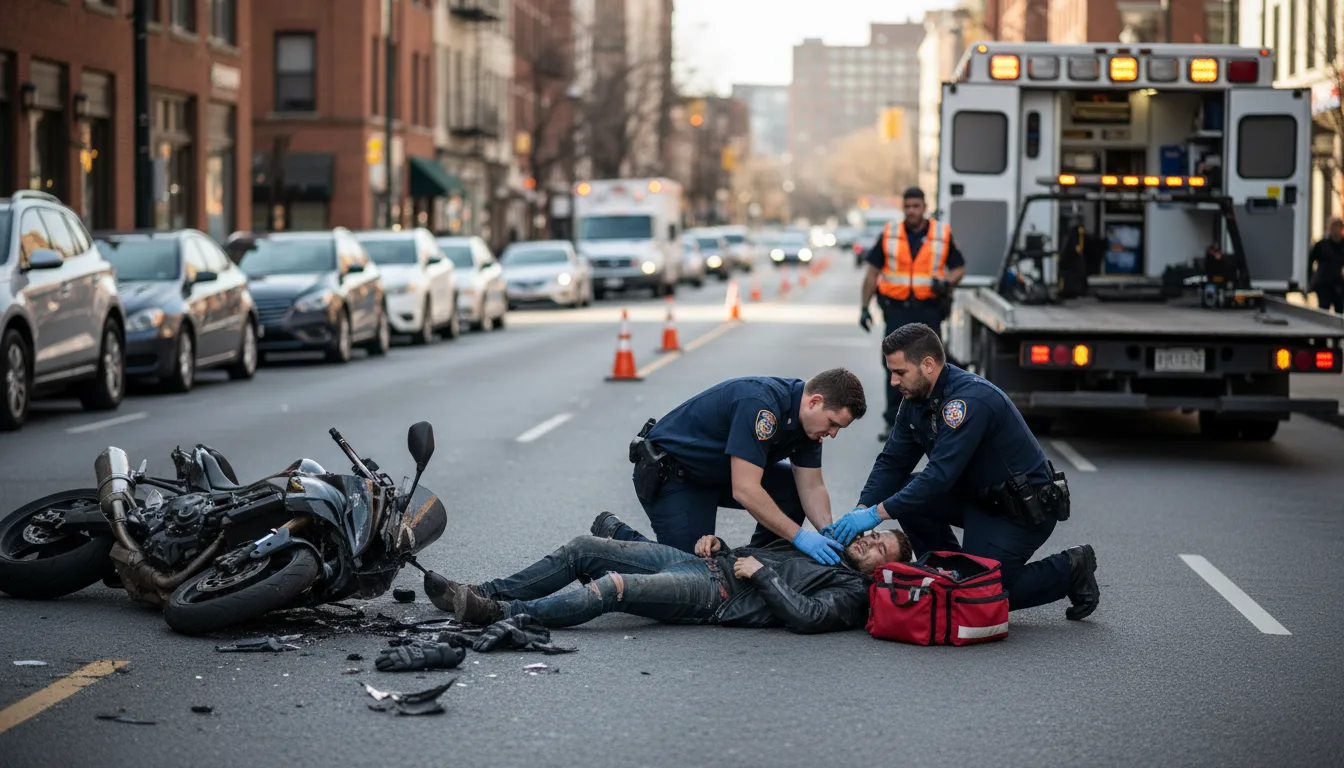
After a motorcycle crash, first check yourself and your passenger for bleeding, broken bones, and head injury signs. If it is safe, move off the road, turn on hazard lights, and call emergency services. Do not move a seriously injured rider unless the scene is life-threatening.
Step one is a body check. Ask yourself and anyone with you: can you move fingers, toes, neck, and shoulders? If there is bleeding, pressure the wound with clean cloth. If someone is confused, vomiting, or dazed, treat it as a possible head injury and keep them still.
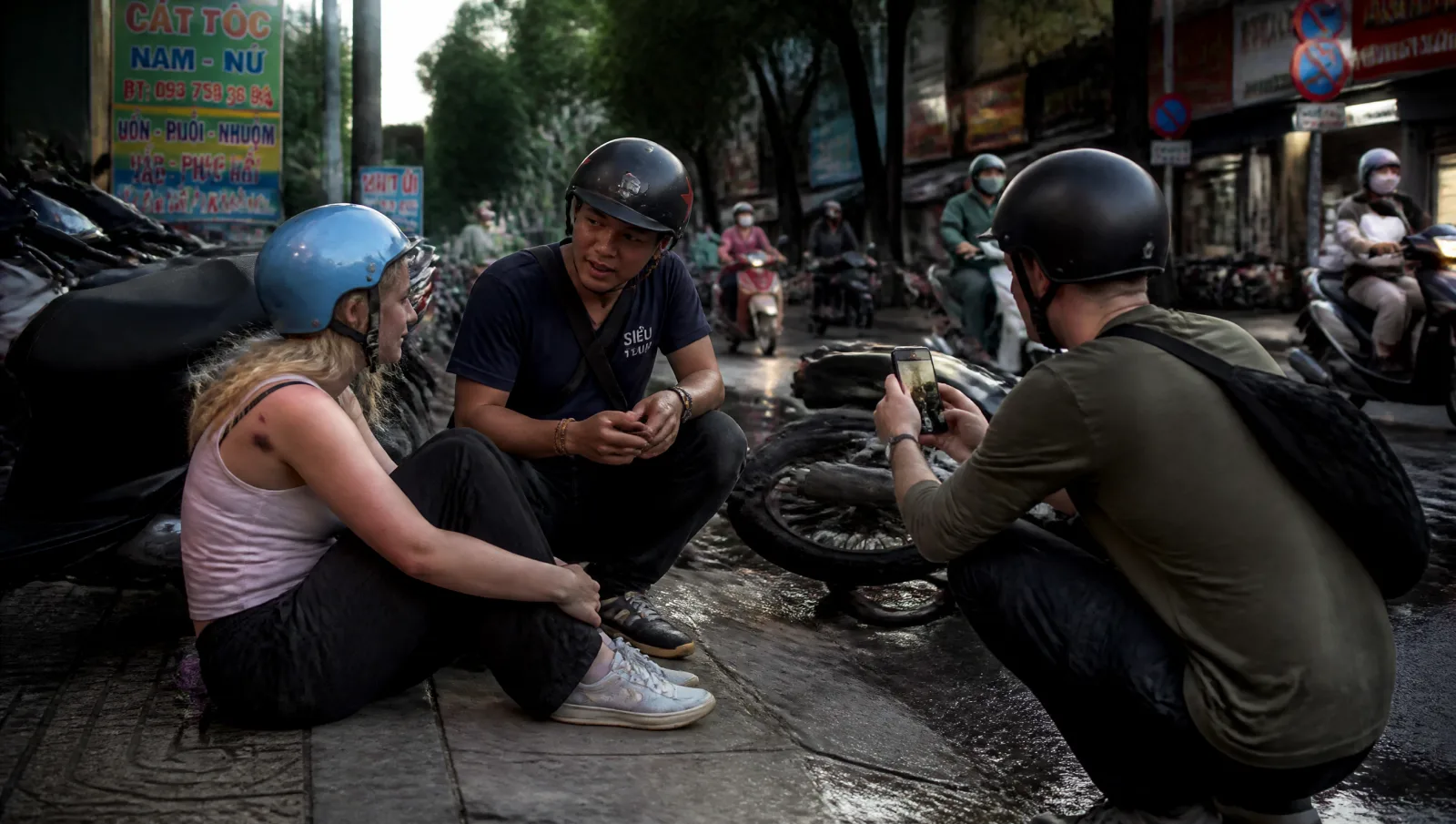
Step two is scene safety. In traffic, standing beside the bike can put you at more risk than the crash itself. Move to the shoulder, behind a barrier, or onto the sidewalk if you can do it without twisting an injury. In a mountain pass or rural road, stay visible and keep other vehicles away from the crash area.
Step three is the call. Emergency services, local police, or a trusted local contact should be informed as early as possible. If language is a barrier, use a translation app and give short facts: location, number of injured people, and whether anyone is unconscious. For travelers planning remote routes, a reliable support option such as all Toward Local tours can also help reduce risk by pairing you with local route knowledge before the ride begins.
Once the scene is stable, switch to documentation. Take wide photos first, then close-ups of bike damage, tire marks, road surface, traffic signs, and any visible injuries. Preserve evidence by not moving helmets, broken parts, or dropped luggage until you have documented the position.
| Criteria | Move Immediately | Wait for Help | Document First |
|---|---|---|---|
| Rider is conscious and can walk | Yes, if traffic is active | No | Yes, after safety is secured |
| Possible spinal or head injury | No | Yes | Only from a safe distance |
After that, exchange information calmly. You need names, phone numbers, vehicle plate details, insurance status, and a short factual summary of what each person saw. Keep the tone practical. A simple example is: I was slowing for the curve, the car changed lane, and contact happened at low speed. That is enough to start the report process.
Many riders lose evidence by apologizing too early or admitting blame under stress. Say what happened, not what you think it means. If you are carrying on to a tour after a minor incident, confirm the bike is safe to ride before moving again. A reliable local operator such as HCMC Food Tours is a reminder that local support matters, especially when you are new to the area and far from your own repair network.
Final rule: protect health, protect evidence, then protect your claim. That order keeps the crash manageable and gives you the best chance of a clean medical, insurance, and repair outcome.
How a Motorcycle Crash Protocol Helps With Medical, Insurance, and Legal Claims
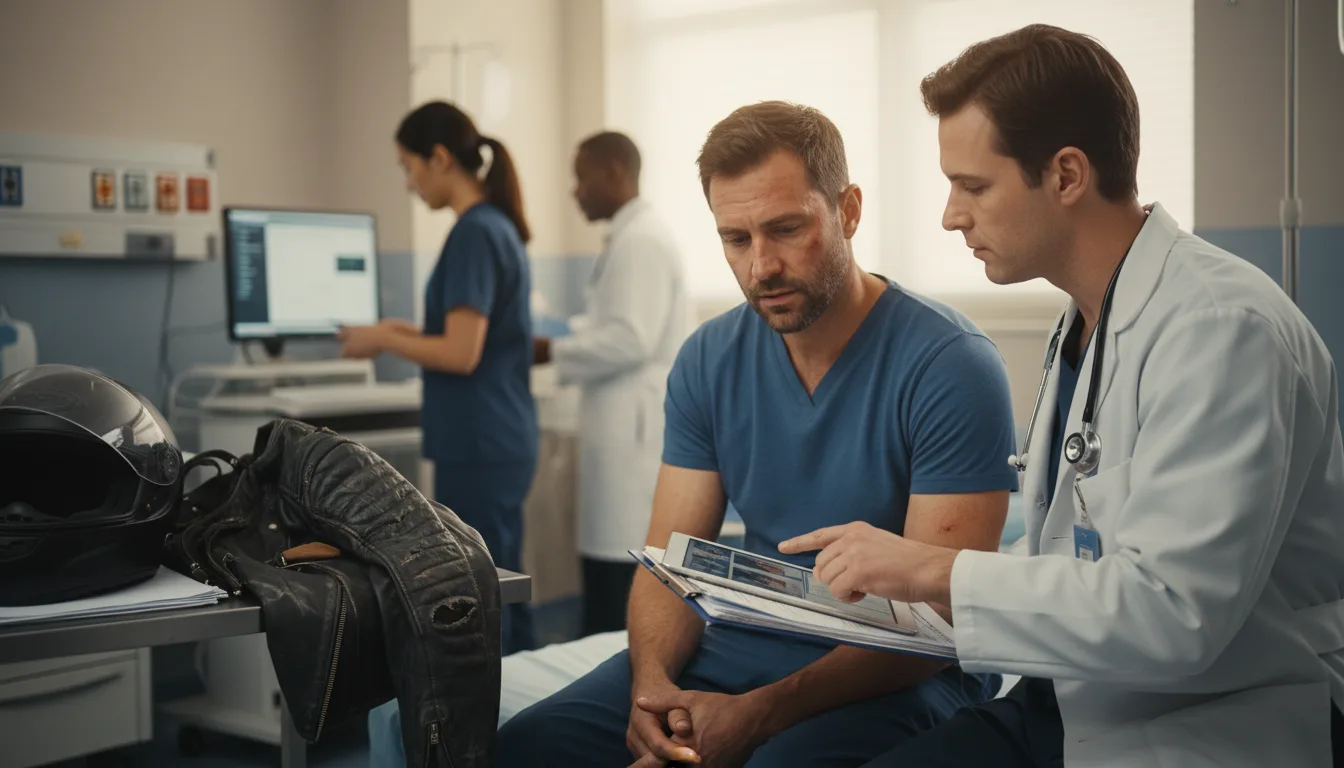
A motorcycle crash protocol helps turn panic into proof. When a rider gets hurt, the first problem is not only pain. It is also how to document injuries, preserve evidence, and avoid statements that weaken medical, insurance, or legal claims later. A clear motorcycle crash protocol gives you a sequence that protects health first and keeps the record usable for doctors, insurers, and lawyers.
The value is simple: what gets recorded early is usually taken more seriously. A scraped knee, neck stiffness, or dizziness may seem minor at the roadside, but those details can matter in a claim if they are written down correctly. For travelers riding unfamiliar roads, this structure reduces confusion and helps you make decisions while adrenaline is still high.
A motorcycle crash protocol is a step-by-step response plan that helps riders document injuries, gather crash evidence, and communicate correctly with hospitals, insurers, and legal contacts. It improves claim quality by creating a clear timeline, supporting medical notes, and reducing disputes over fault or damage.
Getting medical attention and recording injuries properly starts with a simple rule: treat symptoms as evidence, not guesses. If you feel pain, tingling, nausea, blurred vision, or limited movement, say it clearly to the doctor and ask for it to be noted in the medical record. All tours from Toward Local can wait; your body cannot, and delayed care often creates gaps that insurers notice.
Example: a rider who slips in wet gravel may walk away thinking it is only bruising, then develop shoulder pain the next day. If the first clinic note already mentions the impact, the complaint pattern looks consistent. Even small facts like helmet damage, broken gloves, or a twisted ankle can support the seriousness of the injury.
| Criteria | Medical claim | Insurance claim | Legal claim |
|---|---|---|---|
| Best early evidence | Doctor notes, diagnosis, scans | Photos, receipts, witness details | Scene record, damage timeline, statements |
| Main risk if delayed | Symptoms appear unrelated | Coverage dispute or reduced payout | Fault becomes harder to prove |
Using crash documentation to support insurance and liability claims is about building a clean story from the first minute. Photos of the road, vehicle position, weather, skid marks, and visible injuries help show what happened before memory fades. If you need help during a ride plan or a route decision after recovery, a soft next step is to explore local HCMC experiences once the claim process is stable.
Keep the file practical: time, location, names, plate numbers, witness contacts, hospital receipts, and any police report reference. Then report the event without guessing fault or exaggerating pain. Strong claims are not dramatic; they are consistent. That is why a disciplined motorcycle crash protocol matters for riders, insurers, and anyone who may need to prove liability later. If the case is serious, save every message and ask for a written summary before leaving the hospital.
For soft conversion, think of the same discipline you use before a ride: prepared, organised, and calm. If you are planning more travel after recovery, you can browse the full tour collection for future routes, but the immediate priority is documentation that protects your claim. A clear record today can save weeks of stress tomorrow and improve your chances of a fair outcome.
Choosing the Right Motorcycle Crash Response Based on the Situation
Motorcycle crash protocol starts with one decision: is this a minor drop or a serious incident that changes how you move, speak, and document the scene? For foreign riders, the wrong response can turn a simple scrape into a police, insurance, or medical problem. The goal is to stay calm, protect evidence, and choose the right next step fast.
If the crash is minor, focus on safety, photos, and quick facts. If there is pain, bleeding, a trapped bike, or a local crowd, slow down and follow a structured motorcycle crash protocol instead of improvising. A clear response protects your health, helps with insurer claims, and reduces conflict when you are riding in an unfamiliar place.
A motorcycle crash protocol should match the severity of the crash. Minor incidents need scene safety, photos, and a simple exchange of details. Serious crashes need medical help, police involvement, insurer contact, and sometimes legal support. The safest rule is to treat any crash with pain, head impact, or major damage as serious until proven otherwise.
Minor crash vs. serious crash: what changes in the response
In a minor crash, the bike is usually rideable, there is no head injury, and both riders can speak clearly. Your response should be simple: move out of traffic, check for injuries, take photos, and exchange names, plate numbers, and phone contacts. A quick example is a low-speed tip-over on a village road where a mirror breaks but everyone walks away.
Serious crashes are different. If someone is dizzy, bleeding heavily, unconscious, in severe pain, or the bike is not safe to move, your first job is medical safety, not paperwork. In that case, the best choice may be to call emergency help, contact your rental provider, and wait for authorities. A useful takeaway: a calm scene often matters more than perfect words, especially when locals are already gathering.
| Criteria | Minor crash | Serious crash | Best response |
|---|---|---|---|
| Injury level | Small cuts or bruises | Head, chest, or bone pain | Check medical risk first |
| Bike condition | Rideable with cosmetic damage | Unsafe, leaking, or blocked | Move only if safe |
| Next step | Document and settle facts | Call police, insurer, and doctor | Use the situation, not guesswork |
When to involve police, insurers, and a motorcycle accident lawyer
Police should be involved when there is injury, a dispute over fault, major damage, or a crowd that may escalate the situation. Insurers should be contacted as soon as the scene is safe, because many claims need a report, photos, and a clear timeline. If the crash involves serious injury, conflicting statements, or a likely liability dispute, a motorcycle accident lawyer can help you avoid giving the wrong version of events.
For soft conversion, this is also the point where local support matters. Once you are fully recovered and ready to travel again, our Saigon night food tour by motorbike is a gentler way back, with you riding pillion behind a local driver. Practical planning is easier after the facts are documented and the claim process has started.
Strong close: do not decide based on fear or pressure from bystanders. Decide based on injury, damage, and paperwork needs. If the crash is simple, keep it simple. If it is not, escalate early, document carefully, and use the right people in the right order. That is the difference between a manageable incident and a much bigger problem.
Common Mistakes, FAQs, and the Next Step After a Motorcycle Crash
Motorcycle crash protocol starts with avoiding the mistakes that turn a bad moment into a bigger problem. Riders often focus on the bike first, speak too quickly, or ignore injuries because the adrenaline makes everything feel manageable. The safer approach is simple: protect yourself, slow the scene down, and collect the facts before anyone starts guessing what happened.
If you are traveling through Vietnam on a solo ride, with a partner, or on a family trip, this is the moment to stay calm and practical. A few correct decisions can protect your health, your insurance claim, and your legal position. The rest of this chapter breaks down the most common errors, the questions riders ask most, and the next step after the crash scene is under control.
After a motorcycle crash, stop, check for injuries, move only if it is safe, document the scene, contact emergency help or your rental provider, and avoid admitting fault. Do not argue, do not sign anything you do not understand, and do not leave before you know whether you need medical care or a police report.
Mistakes riders make after a crash and how to avoid them
The biggest mistake is moving too fast. Riders often try to stand up, pick up the bike, and explain everything at once. That can hide neck, back, or internal injuries. A better motorcycle crash protocol is to breathe, check hands and feet, then look for bleeding, pain, or dizziness before touching the bike.
Another common error is apologizing too early. In real life, a simple sorry can sound like an admission of fault. Instead, keep your language factual: where you were, what you saw, and who was involved. If the scene feels tense, let a local helper or support contact speak first. At the crash site the priority is safety, not continuing the itinerary, and our guide to motorbike passenger sitting position is worth reading before your next ride.
Many minor crashes become expensive because riders skip photos, forget witness names, or leave the scene before the insurance details are clear.
- Do not move an injured person unless there is immediate danger
- Do not argue with the other rider or the crowd
- Do not wash away evidence before taking photos
- Do not assume pain will disappear later
When the route continues after recovery, riders who prefer guided, lower-stress days often look at Hoi An tours as an easier way to keep exploring without handling every risk alone.
| Criteria | Safer choice | Risky choice | Why it matters |
|---|---|---|---|
| Body check | Pause and assess pain | Stand up immediately | Hides serious injury |
| Conversation | Use calm facts | Blame or apologize fast | Affects liability and claims |
FAQ: what to do, what not to say, and when to seek help
What should you do first after a crash? Check for injury, move to a safe place only if you can do so without risk, and take clear photos of the road, vehicle positions, plates, and visible damage. If someone is hurt, call for medical help before discussing repairs or money.
What should you not say? Avoid phrases like it was my fault, I am sorry, or I will pay right now. Those words can complicate the claim even when you are simply trying to be polite. Keep your tone neutral and short. If you need help with a phone call or translation, a local contact or Da Nang tours team can be a useful point of reference when you are already planning travel support in the region.
When should you seek help? Go for urgent medical care if there is head pain, confusion, heavy bleeding, broken bones, chest pain, numbness, or vomiting. Seek legal or insurance help if the other party wants cash fast, the police may be involved, or your rental contract requires a report. The next step is to document everything, notify the right people, and follow through before you move on to the rest of your trip.
If you have already crashed, do not guess your next move. Save the evidence, contact your rental or insurance provider, and get medical care first if there is any doubt. A calm response now can protect your health, reduce conflict, and make the rest of your journey far easier to manage.