
Vietnamese incense is more than a fragrant stick: in many homes and temples, it marks a moment of respect, remembrance, or prayer. For newcomers, its place in family life and religion can raise questions: who lights it, when is it offered, and what should a visitor do? Understanding the setting helps you observe confidently without mistaking a personal ritual for a performance.
This guide explains common incense forms, what their use may signify, and how to approach ancestral worship and incense offerings with respect. You will also learn simple safety habits, such as following posted rules, keeping clear of flames, and never touching an altar or moving offerings. If you are exploring in person, local Ho Chi Minh tours can introduce you to the city while leaving religious spaces in local hands.
What Vietnamese Incense Means in Culture and Religion
Quick answer: Vietnamese incense is burned to mark prayer, remembrance, and respect. At home, a family may light it before an ancestor altar; at a temple, visitors may offer incense as part of worship. Its meaning depends on the setting, blending Buddhist, Taoist, ancestral, and local practices rather than following one rule.
What Vietnamese incense is and how it became part of Vietnamese traditions
Vietnamese incense usually consists of fragrant material shaped around a thin stick, lit so its smoke accompanies a prayer or offering. Incense became woven into Vietnamese life through religious practice and household rituals, and today it appears in temples, communal spaces, and family homes.
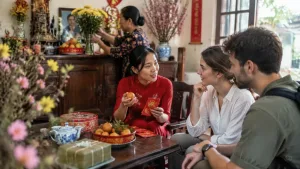
A familiar example is a person lighting incense at an altar during a family visit or on a death anniversary. The act creates a pause for remembrance; it is not simply decoration or a way to make a room smell pleasant.
Its role in ancestor veneration, Buddhism, Taoism, and folk beliefs
Incense can carry different meanings in different settings. Families may use it to honor ancestors, while Buddhist worshippers offer it as a gesture of devotion. Taoist rites and local folk practices also use incense, though customs vary by community and occasion.
| Setting | Common meaning | What a visitor may see |
|---|---|---|
| Family altar | Respect and remembrance | A relative lighting a stick |
| Buddhist temple | Devotion or prayer | An offering at a designated place |
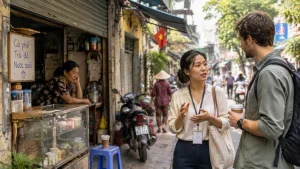
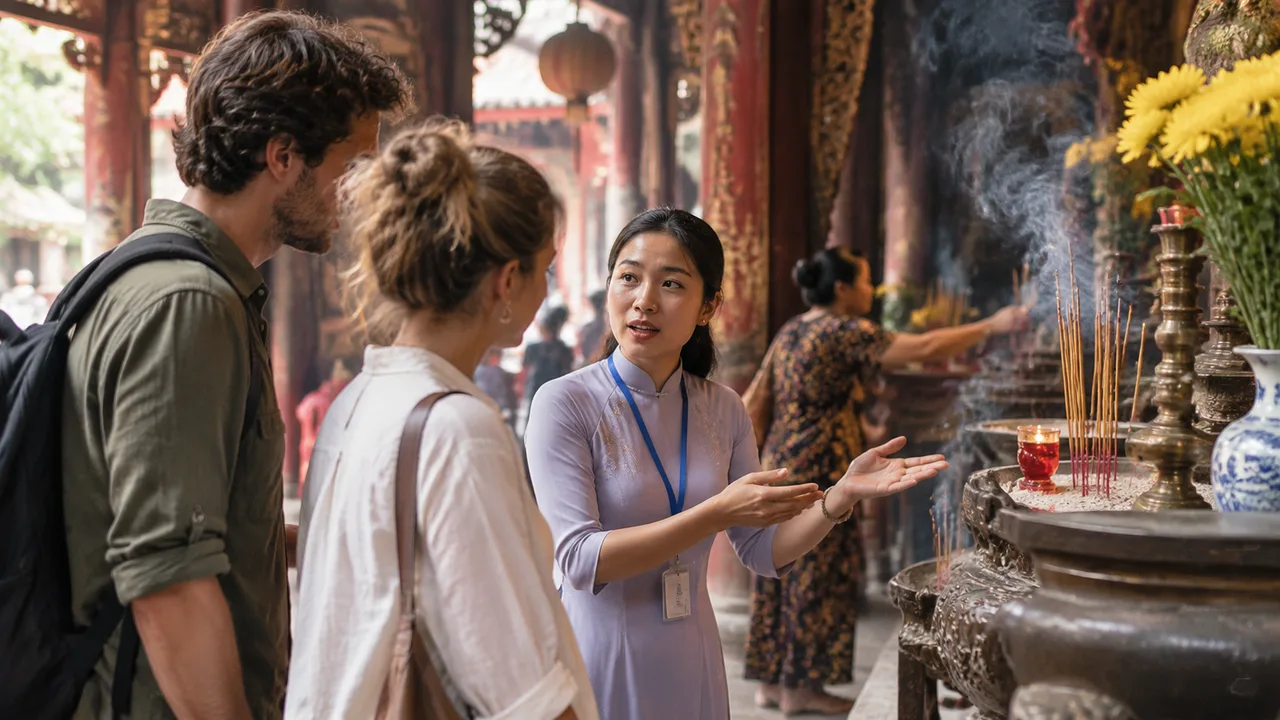
When visiting a temple, follow posted guidance, avoid interrupting prayers, and ask before photographing worshippers. On a cultural walk, a local guide can explain what is appropriate at each site; explore local Hoi An tours for ways to experience the town with context. The key insight is simple: observe first, then follow local cues rather than assuming every altar or incense ritual is the same.
For a respectful, more informed visit, browse all Toward Local tours and choose an experience that matches your interests.
How Vietnamese Incense Is Used in Rituals and Daily Life
Vietnamese incense is used to mark moments of remembrance, gratitude, and prayer at home and in temples. For visitors, the customs can feel unfamiliar: when should you bow, where should you stand, and is it appropriate to take photos? A few simple guidelines help you participate respectfully without treating a private ritual as a spectacle.
Incense offerings are usually brief and quiet. The occasion and the family matter more than a fixed set of rules, so follow the host’s lead and ask before joining.
At a glance: Incense is commonly lit during daily prayers, Tết, and death anniversaries. At an altar, approach calmly, keep your voice low, and follow the family’s example. Offer incense only when invited, place it in the burner rather than leaving it unattended, and ask permission before photographing people or offerings.
When incense is lit
Some households light incense each morning or evening to honor ancestors. During Tết, families may make offerings at the start of the new year; on a death anniversary, relatives gather to remember someone who has died. Temples also welcome worshippers, but practices differ by place.
| Occasion | What you may see | Visitor approach |
|---|---|---|
| Daily prayer | A quiet household offering | Do not enter private spaces uninvited |
| Tết | New-year offerings for ancestors | Wait for your host to invite you |
| Death anniversary | Family remembrance and offerings | Keep a respectful distance |
How to make an offering respectfully
If a host invites you to join, observe first. Remove your shoes if others do, accept incense only if offered, and place it gently in the burner. A small bow may be appropriate; copying the family’s gesture is safer than guessing. Never touch altar objects or interrupt prayers for a photograph.
Customs vary between households, regions, and religious settings. On a local walk in Hoi An, a guide can explain the difference between a public temple visit and a family altar without intruding on worship. Explore local Hoi An tours for cultural context, and always ask before taking photos.
The Meaning and Everyday Uses of Vietnamese Incense
Vietnamese incense is more than a familiar fragrance: lighting a stick can mark a moment of remembrance, respect, prayer, or quiet reflection. For visitors, the meaning is easiest to understand by noticing who is present and how the incense is used, rather than assuming every ritual has the same purpose.
At home, a family may offer incense at an ancestral altar; at a temple or pagoda, worshippers may use it as part of a personal or communal act of devotion. Customs vary by household, faith, and occasion.
How lighting incense expresses meaning
A small act can carry several meanings. People may light incense to remember relatives, show respect to ancestors or sacred figures, make a prayer, or pause for reflection. The gesture is often more important than the fragrance.
In brief: Vietnamese incense is commonly used to express remembrance, respect, prayer, or reflection. Its meaning depends on the setting and local custom: a family altar may honor ancestors, while incense at a temple or pagoda may accompany worship. Visitors can observe first, follow posted guidance, and ask before joining a ritual.
Where incense is used
- Homes: On family altars, often during daily offerings or important occasions.
- Temples and pagodas: As part of individual devotion or shared ceremonies.
- Community events: At some memorials and traditional gatherings, according to local practice.
| Setting | Common purpose | Visitor cue |
|---|---|---|
| Family home | Remembrance and respect | Wait for an invitation |
| Temple or pagoda | Prayer or reflection | Follow signs and observe quietly |
| Community ceremony | Shared remembrance | Follow the host’s lead |
If invited to participate, use the incense provided and follow the host’s example; otherwise, quiet observation is respectful. Smoke-sensitive visitors can keep a little distance. To explore local culture with context, consider Hoi An cultural experiences and ask your guide about customs you encounter.
Vietnamese Incense Types and How to Choose Them
Vietnamese incense comes in several forms, and the right choice depends on where and how you plan to use it. For travelers, unfamiliar scents, smoke levels, and customs can make a small purchase feel uncertain. Start by matching the form to the setting, then check the ingredients and choose a scent that feels comfortable.
Quick guide: Incense sticks suit brief offerings and everyday home use, while coils burn for longer and work well in spacious, ventilated areas. Cones are compact and simple to set up, but can produce concentrated smoke. Choose a mild, clearly labeled fragrance, and always follow local customs and fire-safety guidance.
Common forms and ingredients
- Sticks: The familiar choice for altars and short rituals. Bamboo-cored sticks are common; unscented or lightly scented options may be easier for sensitive noses.
- Coils: Designed for an extended burn, so they are more suitable for an open, well-ventilated space than a small room.
- Cones: Compact and convenient, with a relatively concentrated plume of smoke. Use a heatproof holder.
Ingredients vary by maker and region. Look for clear labeling rather than assuming every product is made from a single traditional wood or herb.
| Form | Best suited to | Consider |
|---|---|---|
| Sticks | Brief offerings | Smoke and fragrance |
| Coils | Longer outdoor burning | Ventilation and duration |
| Cones | Compact setups | Concentrated smoke |
How to choose for a ritual, altar, or personal use
For a ritual or household altar, ask your host or local seller which form is appropriate; customs differ between families and places. For personal use, begin with a small pack and a mild scent. If you are exploring Hoi An, a locally guided Hoi An walk can offer cultural context without treating a sacred practice as a souvenir activity.
Keep incense away from children, pets, curtains, and unattended flames. Ready to explore local culture with care? Browse Toward Local experiences and choose a trip that fits your pace.
Burning Vietnamese Incense Safely and Respectfully
Vietnamese incense is a small offering with meaning, but smoke and open flames deserve care. If you are visiting a family home or temple, follow the host’s lead, keep a respectful distance from the altar, and never assume that more incense is better.
Quick guide: Vietnamese incense is commonly offered to honor ancestors, express gratitude, or mark a prayer. Use the number of sticks your host or temple indicates, place them securely in the burner, and keep them away from fabric, children, pets, and drafts. Ventilate the room and fully extinguish any unused sticks.
Fire safety and altar etiquette
Light incense only in a stable holder on a clear, heat-resistant surface. Do not leave it unattended, and avoid placing it near curtains or directly beneath a fan. A common mistake is adding sticks to an already crowded burner, where ash can spill or embers can fall.
- Ask before lighting incense in a shared home or public shrine.
- Keep pathways clear and avoid touching altar objects.
- Step back after offering; do not photograph worshippers without permission.
During a local Hoi An visit, observe first and let your guide explain any household or temple customs.
| Situation | Suggested approach | Safety check | Etiquette |
|---|---|---|---|
| Family altar | Follow the host’s example | Use a stable burner | Ask before lighting |
| Temple visit | Follow posted guidance | Keep smoke ventilated | Observe quietly |
FAQs
What does Vietnamese incense symbolize? Remembrance, respect, gratitude, or prayer, depending on the occasion.
How many sticks should you offer? Customs vary; follow the host or temple’s guidance rather than assuming a fixed number.
Can you burn incense every day? Some households do, but daily practice is personal and should account for ventilation and health.
What is the difference between Vietnamese incense and joss sticks? Joss stick is a broad English term for incense sticks used in worship; Vietnamese incense refers to sticks made or used in Vietnamese traditions.
Is incense smoke safe indoors? Smoke can irritate lungs, especially in enclosed rooms. Use it briefly with ventilation, or choose not to burn it if anyone is sensitive.
When in doubt, watching respectfully is a meaningful way to participate. Explore local customs with a knowledgeable guide, and always prioritize the household’s wishes and your breathing comfort.