
Vietnamese superstitions are traditional beliefs that can influence everyday choices, family customs, and major life events, but they are not followed in the same way by everyone. For travelers, unfamiliar practices can be confusing without context. Beliefs vary across regions, generations, and individuals, so this guide explains their cultural roots and meanings without treating one custom as universal.
From auspicious numbers and Tet customs to household taboos, Vietnamese folk beliefs often express hopes for harmony, protection, and good fortune. The chapters ahead explore common examples, where they come from, and how people interpret them today. If you want to encounter local life with more cultural context, consider exploring locally led Vietnam tours alongside your reading.
What Are Vietnamese Superstitions and Where Do They Come From?
Vietnamese superstitions are beliefs that certain signs, actions, or objects can bring good fortune or misfortune. They are part of everyday culture, but they are not the same as religious doctrines, shared customs, or folklore.
The distinction matters for visitors: a family may follow a practice for spiritual reasons, as a habit passed between generations, or simply out of respect. Asking with curiosity rather than assuming everyone believes the same thing is the best way to understand what you see.
How beliefs differ
| Category | What it means | Everyday example | How it may be observed |
|---|---|---|---|
| Superstition | A belief about luck, signs, or unseen influence | Avoiding an action thought to invite bad luck | Personal or family choice |
| Religious practice | A devotional or spiritual act | Offering incense at an altar | May follow a faith or household tradition |
| Custom or folklore | A shared social habit or inherited story | Family rituals during Lunar New Year | Often varies by region and family |
Where the influences come from
Vietnamese beliefs developed through layers of local folk practice and contact with wider Asian traditions. Ancestor veneration keeps family ties present across generations; Buddhism shapes ideas about compassion and spiritual life, while Taoist traditions influence ideas about balance, spirits, and auspicious timing. Confucian values add emphasis on respect, family roles, and social harmony.
These influences often overlap rather than appearing as separate systems. An altar in a home, for example, may honor ancestors without indicating that the family follows one formal religion. In a neighborhood market or old town, a local guide can help explain such details respectfully; consider exploring with a locally led Vietnam tour rather than treating every practice as a fixed rule.
The useful insight for travelers is that beliefs are lived, not universal: practices can differ between households, generations, and regions. Observe first, ask politely when appropriate, and follow a host’s lead at temples or family spaces.
Common Vietnamese Superstitions in Everyday Life
Vietnamese superstitions can shape small everyday choices, from picking a wedding date to deciding when to sweep. For visitors, understanding these customs helps make local encounters more respectful without treating every belief as a strict rule.
Numbers, colors, dates, and auspicious times
Some people avoid number 4 because its Vietnamese pronunciation resembles a word for death, while 8 is often associated with prosperity. Red and gold are popular at celebrations for their links to luck and abundance. Families may also consult a lunar calendar when choosing dates for weddings, opening a business, or moving house.
Quick guide: Common Vietnamese good-luck beliefs include avoiding number 4, favoring number 8, choosing festive red or gold, and selecting important dates or hours with a lunar calendar. These are cultural customs, not universal rules; practices vary by family, region, and personal preference.
| Everyday choice | Common belief | What a visitor may notice | Helpful response |
|---|---|---|---|
| Numbers | 4 may be avoided; 8 can feel auspicious | Number choices in addresses or gifts | Follow the host’s preference |
| Household customs | Sweeping during Tet may symbolically sweep luck away | Cleaning may wait until after the first days | Ask before helping tidy |
Household signs and small taboos
During Tet, some households avoid sweeping or using sharp tools on the first days, hoping not to cut off or brush away good fortune. Elsewhere, beliefs such as not sweeping at night or not whistling after dark may be shared as family habits rather than firm prohibitions. A practical mini-insight: notice what your host does, then ask politely instead of assuming everyone follows the same custom.
Curious travelers can learn more through a locally guided walk, where everyday customs often come up naturally alongside food and neighborhood life. Explore local Hoi An tours and ask your guide which beliefs are meaningful in the area. Respectful curiosity is the best way to experience Vietnamese superstitions: listen, follow household preferences, and enjoy the cultural context without worrying that an accidental misstep will bring bad luck.
Vietnamese Superstitions Around Weddings, New Year, and Other Milestones
Vietnamese superstitions often become easiest to understand during family milestones, when small gestures express hopes for health, harmony, and good fortune. For visitors, knowing a few customs helps avoid awkward moments and makes it easier to join celebrations respectfully.
Practices vary by region, family, and generation, so treat them as traditions rather than rules everyone follows. When in doubt, observe what your hosts do or ask politely before taking part.
Quick guide: At Lunar New Year, families may give lucky money, welcome an auspicious first visitor, and exchange wishes for prosperity. Weddings often involve choosing a favorable date, while housewarming and funeral customs focus on blessings, respect, and family continuity. Follow the hosts’ lead because beliefs differ between households.
Lunar New Year: welcoming luck
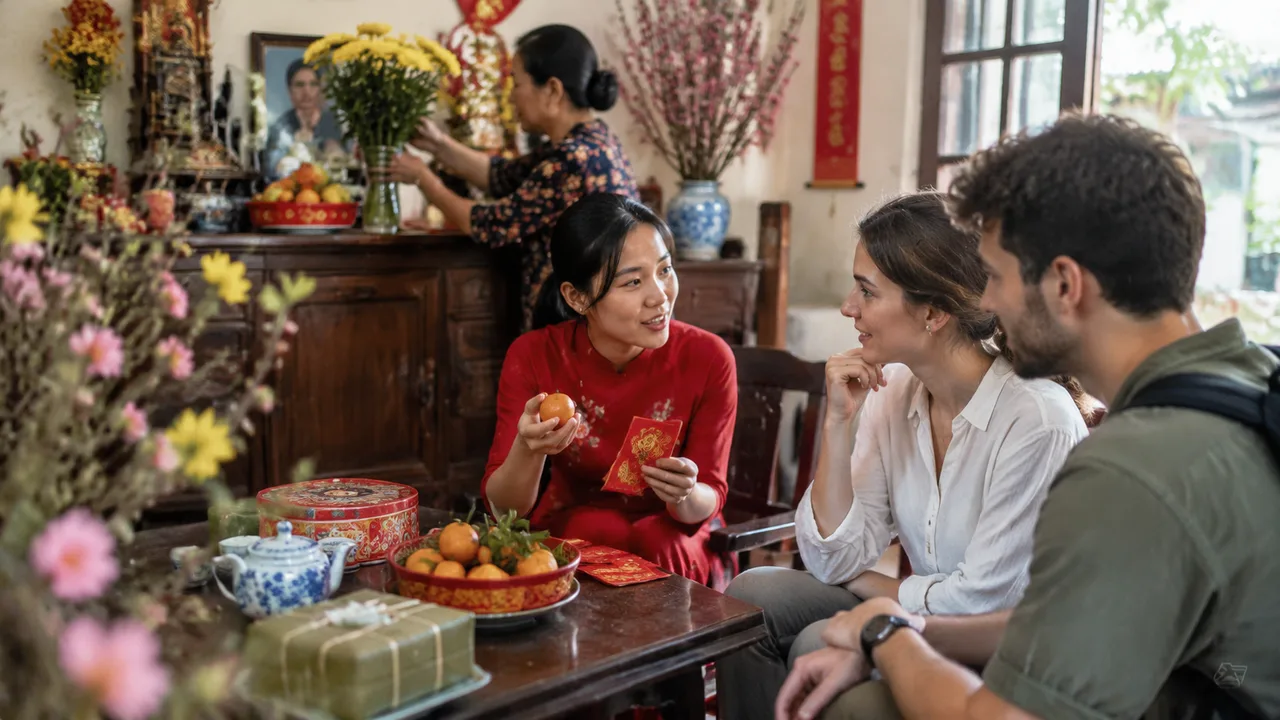
During Tet, adults commonly give children and older relatives lucky money in red envelopes, wishing them health and success. The first person to enter a home in the new year, known as the first visitor, may be chosen for their good fortune and character. Some families also avoid sweeping on the first day, symbolically keeping luck inside.
Common New Year wishes mention prosperity, good health, and family happiness. If you are visiting, a warm greeting and a small red envelope for a child may be appreciated, but follow your host’s cues. A local guide can help explain seasonal customs while exploring Hoi An with local guides.
Weddings, new homes, and funerals
Wedding dates may be selected with lunar calendars or advice from elders, and ceremonies can include offerings to ancestors. At a housewarming, guests might bring practical gifts or wish the household peace and prosperity. Funeral etiquette is different: dress modestly, speak gently, and follow the family’s instructions about incense, offerings, or condolence customs.
| Milestone | Common belief | Respectful response |
|---|---|---|
| Tet | First visitor can set the year’s tone | Wait for an invitation before visiting |
| Wedding | Favorable dates support harmony | Follow the couple’s ceremony guidance |
| Funeral | Rituals honor the deceased and family | Dress modestly and observe quietly |
The key insight is that these customs are expressions of care, not tests of belief. For a deeper cultural encounter on your trip, explore Toward Local tours and ask your guide about local traditions.
How Vietnamese Superstitions Vary by Region and Generation
Vietnamese superstitions are not a single rulebook: beliefs can shift with local history, family habits, and the person you ask. For travelers, assuming everyone in the north, center, or south follows the same customs can turn a thoughtful question into a stereotype.
A useful way to understand regional differences is to notice what people do, then ask how they learned it. In one family, an altar offering may be a daily act of remembrance; in another, the same ritual may be reserved for anniversaries or Tet.
Featured insight: Beliefs in Vietnam vary by household as much as by region. Northern, central, and southern communities share many traditions, yet local histories and family practices shape how customs are observed. Urban routines, education, and younger generations may preserve a ritual, adapt it, or leave it aside.
| Context | Possible emphasis | What to remember |
|---|---|---|
| Northern households | Ancestral observances in some families | Practices differ by family |
| Central communities | Local customs shaped by place and history | No single regional pattern |
| Southern cities | Tradition alongside fast-changing routines | Belief is personal, not universal |
In cities, work schedules, schooling, and contact with global culture can change how younger people observe customs. Some still visit a family altar but do not follow every traditional taboo; others keep a practice because it connects them with relatives. This mix is easy to notice while exploring local life in Da Nang, where a guide can explain context without presenting one view as universal.
Ask politely rather than testing a belief, and accept that answers may differ. For a closer look at central Vietnam beyond familiar landmarks, explore Hoi An with a local guide and hear how customs fit into everyday life.
Understanding Vietnamese Superstitions Respectfully
Vietnamese superstitions are part of a varied cultural landscape, not a checklist that every person follows. You may notice customs around family rituals, good fortune, or important dates, but beliefs differ by generation, region, religion, and household. For travelers, curiosity and respect matter more than trying to memorize every rule.
Quick answer: Some traditional beliefs remain part of everyday life, especially around family occasions and Lunar New Year, while others are observed casually or not at all. Lucky symbols can include the color red, certain numbers, and wishes for prosperity, but meanings vary. When unsure, watch what hosts do and ask politely.
What visitors should know
| Situation | Respectful response | Avoid assuming |
|---|---|---|
| A family altar or offering | Observe quietly and ask before taking photos | That it is a public display |
| A custom around a celebration | Follow your host’s lead | That everyone observes it |
Beliefs can vary between northern, central, and southern communities, and between urban and rural settings. In practice, ask an open question such as whether a custom is important to your host, rather than labeling it strange or treating one person’s answer as universal. If you are exploring local neighborhoods, a small-group Hoi An cultural experience can offer context from people who know the community.
Approach unfamiliar traditions as an invitation to learn, not a rule to judge. Listen, follow local guidance, and let your host decide what they are comfortable sharing. For a more grounded view of daily life, choose a locally led tour and ask your guide about the customs you encounter.