
Vegetarian in Vietnam can be easier than expected, but a meat-free dish is not always animal-free. Fish sauce may season vegetables, while broth, lard, dried shrimp, or shared cooking surfaces can add ingredients you do not eat. For travelers exploring local markets and family-run kitchens, knowing what to ask matters as much as spotting tofu or greens on a menu.
This guide explains how religious food customs shape Vietnamese cuisine, where to look for dependable vegetarian food, and how to communicate your needs without missing the pleasure of eating locally. It also covers practical differences between vegetarian, vegan, and other dietary requirements, with tips for solo travelers, couples, and families. If you want to discover regional dishes with local guidance, explore Da Nang food tours as part of your planning.
Vegetarian in Vietnam: Food, Culture, and Everyday Reality
Vegetarian in Vietnam can mean avoiding meat, choosing a fully plant-based diet, or eating without animal products on particular days. The key is to clarify what you do not eat: broths, fish sauce, eggs, and dairy may still appear in dishes described as vegetarian.
Ăn chay is shaped partly by Buddhist practice, but it is not one fixed menu or rule. For travelers, asking specific questions is more reliable than assuming every meat-free dish is vegan.
What ăn chay means in Vietnamese food culture
In everyday use, ăn chay means eating vegetarian, often for religious, personal, or practical reasons. Some people observe it on the first and fifteenth days of the lunar month; others choose it regularly. Restaurant interpretations vary, so check ingredients rather than relying on the label alone.
A useful distinction when ordering:
- Meat-free may still include fish sauce or seafood stock.
- Strictly plant-based means no meat, fish, eggs, dairy, or animal-based sauces.
| Dining choice | What it usually means | What to confirm |
|---|---|---|
| Meat-free | No visible meat | Broth and fish sauce |
| Plant-based | No animal ingredients | Eggs, dairy, and sauces |
| Buddhist observance | Often meat-free on set days | Practices differ by person |
How Buddhist traditions shape vegetarian meals and dining customs
Buddhist ideas of compassion and mindful eating influence many vegetarian kitchens. Meals commonly pair rice with tofu, vegetables, soup, or plant-based dishes made to resemble familiar meat foods. Customs vary between temples, families, and restaurants, so a temple meal should be treated as an invitation to observe respectfully, not as a universal routine.
For a more local food experience, ask a guide about neighborhood vegetarian spots when you explore Hoi An tours. Before ordering anywhere, state your dietary needs clearly and confirm the broth and sauces.
How to Eat Vegetarian in Vietnam with Confidence
Eating vegetarian in Vietnam is manageable when you know where to look and how to check what goes into a dish. Dedicated vegetarian kitchens are the easiest starting point, while local stalls can work if you explain your needs clearly and confirm the broth, sauces, and seasonings.
For a quick search, use map terms such as vegetarian restaurant or vegan food, then check recent reviews and menu photos. In major cities, Buddhist vegetarian restaurants offer familiar meat-free choices; smaller neighborhood spots may have limited hours or sell out early.
Where to find vegetarian restaurants and meat-free options
Look near central districts, pagodas, and university areas, and ask your accommodation host to recommend a nearby place. On market streets, point to a vegetable-and-tofu dish, but do not assume it is vegetarian: fish sauce and meat stock are common. In Ho Chi Minh City, a local food tour in Ho Chi Minh City can also help you discover neighborhood eateries and understand how dishes are prepared.
Quick rule: Choose a dedicated vegetarian restaurant when certainty matters. At a regular stall, ask about the cooking liquid and every sauce, then request a freshly prepared dish if needed.
| Option | Best for | Check first |
|---|---|---|
| Vegetarian restaurant | Clearer meat-free menus | Eggs or dairy if excluded |
| Street food stall | Local, quick meals | Fish sauce, broth, shared pans |
Ordering questions for avoiding hidden ingredients
Keep a translated dietary card on your phone and show it before ordering. State whether you avoid only meat or also fish, seafood, eggs, and dairy. Ask specifically whether the dish contains fish sauce, meat broth, shrimp paste, or meat-based seasoning; a vegetable topping does not guarantee a vegetarian base.
If you are unsure, choose a dedicated kitchen or ask your host to confirm ingredients. A little checking lets you explore confidently, from simple rice-and-tofu meals to regional street food. For a more supported introduction, explore Toward Local tours and tell your guide about your dietary requirements before booking.
What to Eat: Vietnamese Vegetarian Dishes and Regional Favorites
Eating vegetarian in Vietnam can be deliciously varied, but a dish that looks meat-free may still contain fish sauce, meat broth, or egg. Learn a few familiar dishes and ask how they are prepared so you can enjoy local food with fewer surprises.
Many kitchens adapt regional favorites with tofu, mushrooms, vegetables, or mock meats. The key is to confirm the broth and seasoning, not just the visible toppings.
Common dishes to look for
Quick answer: Look for vegetarian phở, bún noodle bowls, bánh mì, and cơm chay, a rice plate or set meal. These may use tofu, mushrooms, vegetables, or mock meats, but recipes vary. Ask whether broth, sauces, and fillings contain meat, seafood, fish sauce, or egg before ordering.
- Phở and bún: Choose versions made with vegetable broth; check that the seasoning and toppings are also meat-free.
- Bánh mì: Tofu, mushrooms, or mock meat can replace pâté and cold cuts, but ask about mayonnaise and sauces.
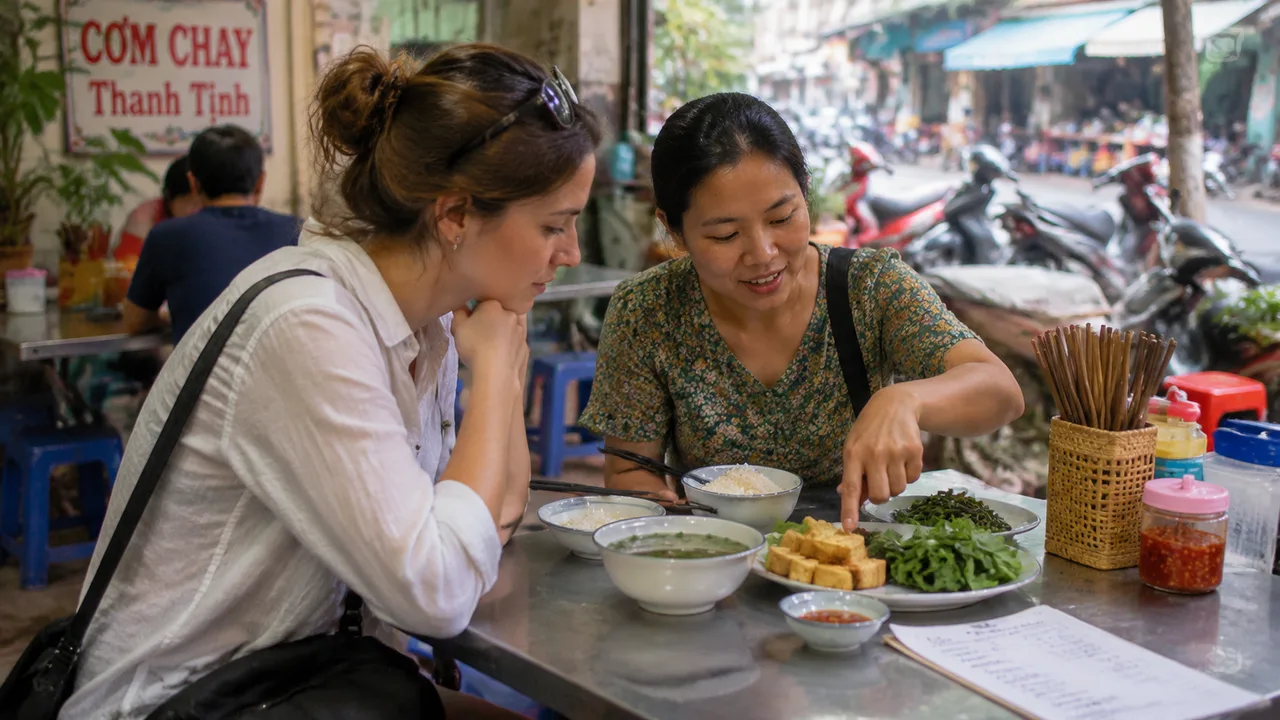
- Cơm chay: A useful choice for sampling several cooked vegetables, tofu, soup, and rice in one meal.
In Huế, look for delicate noodle soups and small savory bites; in the south, menus often feature sweeter broths and abundant herbs. In central Vietnam, a local food walk can help you spot Hoi An vegetarian-friendly stops and ask vendors about ingredients.
| Dish | What to expect | What to confirm |
|---|---|---|
| Vegetarian phở | Noodles, herbs, tofu or vegetables | Vegetable broth and seasoning |
| Bánh mì | Tofu, mushrooms, or mock meat | Pâté, mayonnaise, and sauces |
| Cơm chay | Rice with several meat-free sides | Soup, sauces, and shared cooking oil |
How choices vary across Vietnam
Vegetarian options change with local produce, family recipes, and the restaurant. The word chay usually signals vegetarian food, especially at specialist eateries, but it is still worth checking whether your needs exclude eggs or dairy as well as meat and seafood. For hands-on discovery, explore local food experiences in Ho Chi Minh City and tell your guide about any dietary restrictions before booking.
For a smoother meal, keep a translated dietary note on your phone and mention fish sauce explicitly. When a vendor cannot confirm the ingredients, choose a dedicated vegetarian restaurant and ask staff to recommend a regional specialty.
Choosing Between Vegetarian, Vegan, and Buddhist-Style Meals
Being vegetarian in Vietnam can be easier when you know what local labels do—and do not—guarantee. A meat-free dish may still contain fish sauce, broth, eggs, or dairy, so match the menu to your needs and ask a clear question before ordering.
Quick guide: Vegetarian meals may include eggs or dairy, while vegan meals exclude all animal products. Buddhist-style food is usually meat-free, but ingredients vary by restaurant and tradition; temple-style cooking may also avoid garlic, onion, and related aromatics. Always confirm sauces and stock.
Key differences between vegetarian, vegan, and Buddhist-style food
| Meal type | Common approach | Check before ordering |
|---|---|---|
| Vegetarian | No meat or seafood; eggs and dairy may be used | Fish sauce, shrimp paste, and broth |
| Vegan | No animal-derived ingredients | Egg, dairy, honey, and hidden sauces |
| Buddhist-style | Often meat-free; practices differ | Eggs, dairy, and alliums |
How to match your dietary needs with restaurants and local meal options
If you avoid animal products strictly, say that you cannot eat fish sauce or meat stock, not just that you prefer vegetables. A simple tofu-and-rice meal can be a safer choice than a noodle soup with uncertain broth. Buddhist restaurants are useful starting points, but verify ingredients, especially if allergies are involved.
For curious eaters, ask what is in the sauce and choose the level of flexibility that feels comfortable. Travelers exploring the city can browse Ho Chi Minh City food tours for local context. Plan your next meal-led adventure with Toward Local tours.
Common Mistakes, FAQs, and Planning Tips for Vegetarians in Vietnam
Being vegetarian in Vietnam is manageable, but a vegetable-filled dish is not automatically meat-free. Fish sauce, meat broth, dried shrimp, and shared woks can all be hidden in an otherwise plant-based meal.
Quick answer: Find a vegetarian restaurant or ask clearly for a meal with no meat, fish, seafood, fish sauce, or meat broth. Say ăn chay for vegetarian, but explain whether you also avoid eggs, dairy, or shared cooking equipment. Confirm before ordering, especially at busy street stalls.
Mistakes to avoid when ordering vegetarian food
- Assuming vegetables mean vegetarian: greens may be stir-fried with oyster sauce, pork fat, or fish sauce.
- Forgetting broth and seasoning: noodle soup can contain meat stock, even when the toppings are vegetables.
- Not explaining how strict you are: some cooks may use the same wok or utensils for meat and tofu.
For a local food outing, tell your guide about your dietary needs before booking; travelers exploring Hoi An with a local guide can also ask which stops can accommodate them. Availability varies, so do not assume a tour meal is suitable without confirmation.
| Situation | What to check | Best next step |
|---|---|---|
| Vegetable noodle soup | Broth and fish sauce | Ask for vegetable broth |
| Street-stall stir-fry | Oyster sauce and shared wok | Choose a vegetarian kitchen |
FAQs: vegetarian food in Vietnam
Is it easy to find? Often, especially in cities and near pagodas, but options and opening hours vary.
What does ăn chay mean? It means eating vegetarian. Clarify your exact restrictions, since interpretations differ.
Is fish sauce vegetarian? No. It is made from fermented fish.
Can travelers find vegan food? Yes. Ask about eggs, dairy, honey, and sauces as well as meat.
What should I say? Save this phrase: Tôi ăn chay, không thịt, cá, nước mắm hay nước dùng thịt, meaning I eat vegetarian, with no meat, fish, fish sauce, or meat broth. If cross-contact matters, explain that too and ask the cook to use clean equipment.
Save the phrase on your phone and plan a nearby vegetarian meal before a long day of exploring. A little preparation leaves more room for spontaneous local discoveries.