
Joss Paper Burning in Vietnam: Meaning, Ritual, and Respect
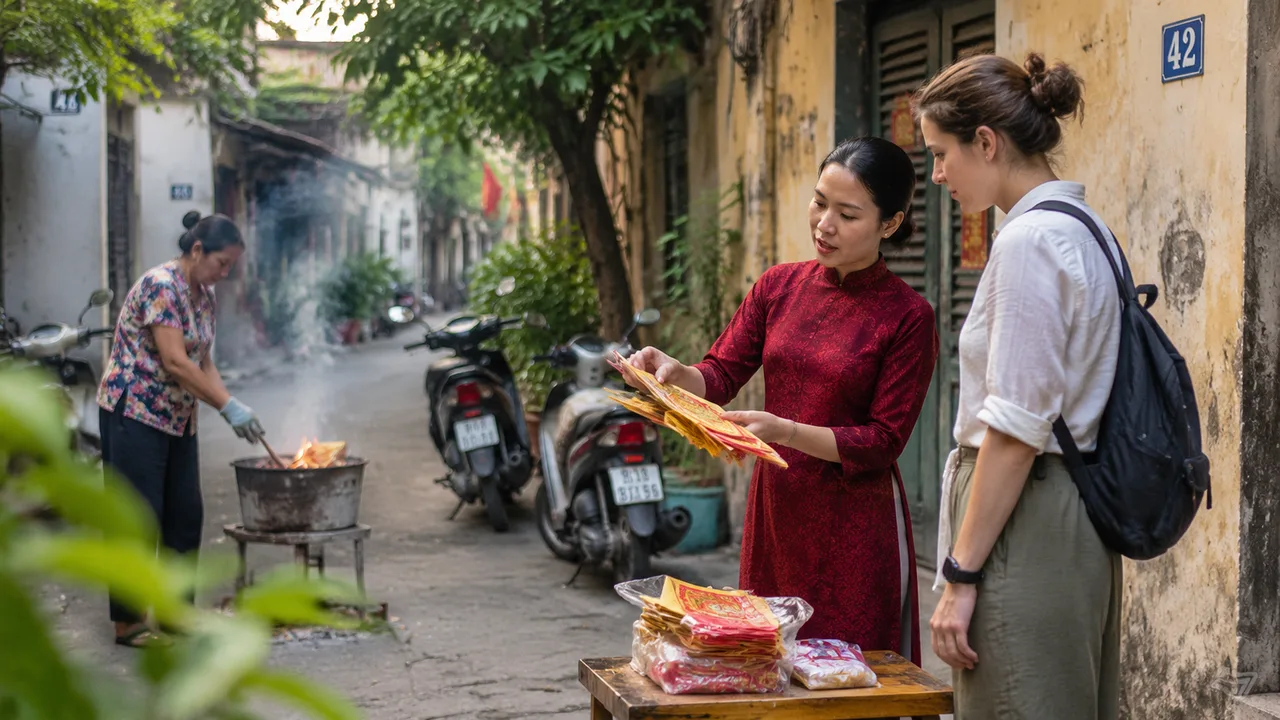
Joss paper burning in Vietnam is a practice visitors may notice outside family homes, temples, or graves, where paper offerings are placed into a small fire. If you encounter it on a neighborhood walk, the smoke and unfamiliar objects can be puzzling; understanding the custom helps you recognize an act of remembrance rather than a public performance.
Often called vàng mã, joss paper represents symbolic goods offered to ancestors and, in some traditions, other spirits. Families may burn it around Tet, at funerals or death anniversaries, and during Ghost Month. As you explore local neighborhoods on Ho Chi Minh City tours, remember that practices vary: observe quietly, give families space, and ask before taking photographs.
What Joss Paper Burning in Vietnam Means to Families
Joss paper burning in Vietnam is a family offering that expresses remembrance and care for deceased relatives. Often called vàng mã, these paper objects are burned so their symbolic value can reach ancestors in the spirit world.
What the practice means
Joss paper is ceremonial paper made to resemble money or useful objects. For many families, burning it is one way to honor ancestors and maintain a bond between generations. Beliefs and customs differ, so it is best understood as a meaningful ritual rather than a single rule followed by every household.
In brief: Families burn vàng mã as a symbolic gift for deceased relatives. The offering may represent money or everyday necessities, while the act itself shows respect, remembrance, and an ongoing connection with ancestors.
A place in family life
At home, offerings may be made near a household altar, alongside incense, flowers, or food. A family might burn paper during a death anniversary or Lunar New Year observance; the gathering can be as important as the objects, giving relatives time to remember someone together.
| Offering | What it represents | Family context |
|---|---|---|
| Paper money | A symbolic provision | Ancestor remembrance |
| Paper goods | Care and comfort | Offerings chosen by a family |
Visitors may notice small fires near homes or shops selling ceremonial paper, especially around festival periods. These moments are part of local life, not a performance, so observe from a respectful distance and avoid photographing people without permission. To explore neighborhood culture with a local guide, browse Hoi An local tours.
Approach the practice with curiosity rather than assumptions: families may welcome questions when the moment is appropriate, but private ceremonies deserve privacy. For a deeper look at everyday customs, choose a locally led experience and let residents set the pace.
How Joss Paper Burning in Vietnam Is Practiced
Joss paper burning in Vietnam is a family offering ritual in which symbolic paper goods are burned for deceased relatives. Families usually prepare the offerings, light incense, say prayers, and burn the paper in a designated burner or safe outdoor area. The details differ by household, occasion, and region.
A typical offering ritual
- Prepare the offerings: Family members choose paper items, often guided by the occasion and the relative being remembered.
- Make the offering: They may arrange the items at a family altar, light incense, and offer prayers or quiet remembrance.
- Burn safely: The paper is placed in a metal burner or another designated area. Ash is left to cool before it is handled according to the family’s custom.
Common offerings include imitation money, paper clothing, and symbolic household goods. A family might burn paper garments during a death anniversary, while another may choose money or miniature furniture. These objects express care; they are not a fixed checklist, and practices vary between families and regions.
| Offering | What it represents | Common context | Remember |
|---|---|---|---|
| Paper money | Provision in the afterlife | Ancestor rites and commemorations | Design and quantity vary |
| Clothing or household goods | Comfort and everyday needs | Family-selected occasions | Offerings are symbolic |
For visitors, the most respectful approach is to observe quietly from a distance and avoid photographing people without permission. If you are exploring local neighborhoods, Hoi An tours with local guides can offer cultural context without turning a private ritual into a performance. Choose a small-group local experience and ask your guide how to behave before approaching a ceremony.
When Vietnamese Families Burn Joss Paper
Vietnamese families burn joss paper on occasions such as Tet, funerals, death anniversaries, and the seventh lunar month. The offering may honor ancestors, accompany a farewell, or show respect to wandering spirits. Its setting matters: a home altar is personal, a temple may serve a wider community, and a gravesite centers remembrance on one person.
Joss paper burning in Vietnam is tied to family remembrance, not a daily spectacle. The timing and the people gathered help explain what an offering means, so visitors should observe quietly rather than assume every fire marks the same ritual.
- Tet: Families honor ancestors and welcome their protection for the new year.
- Funerals: Offerings form part of a farewell and may be made as relatives accompany the deceased.
- Death anniversaries: Families remember a particular relative, often gathering at an altar or grave.
- Seventh lunar month: Some households make offerings for ancestors and wandering spirits during a period associated with the Hungry Ghost Festival.
The location changes the focus. At home, the ritual is usually intimate; at a temple, offerings may be part of a shared religious observance; at a gravesite, relatives may tend the tomb and remember the person buried there. If you are exploring a neighborhood with a local guide, small-group Vietnam tours can help you learn when observation is appropriate without intruding.
| Setting | Main focus | Visitor approach |
|---|---|---|
| Family home | Honoring household ancestors | Keep distance and avoid photographing without permission |
| Temple | Shared worship or community offerings | Follow posted rules and leave space for worshippers |
| Gravesite | Remembering a specific relative | Do not touch offerings or enter private family space |
A useful local insight: the same paper offering can carry different meaning depending on who is present and where it is made. Treat a burning as a private act unless invited to watch. For a respectful, locally led way to explore Vietnamese culture, browse our Vietnam cultural experiences and choose a tour that suits your travel style.
Joss Paper Offerings, Regional Customs, and Modern Choices
Joss paper burning in Vietnam is one way families honor ancestors, but it is not the only offering you may see at a home altar or during a festival. For visitors, the customs can look similar at first: paper, incense, and food appear together. Knowing what each represents helps you observe respectfully without assuming every family follows the same ritual.
Joss paper represents symbolic goods for the deceased; incense carries prayers and marks reverence, while food is shared symbolically with ancestors before family members eat or remove it. Families may combine all three, but practices differ by household, region, and occasion.
What each offering means
Quick answer: Joss paper is burned as a symbolic provision for ancestors, incense is lit as a sign of respect and prayer, and food is presented as a shared offering. Families may use them together on death anniversaries, Tet, or other observances, choosing the combination that fits their beliefs and local custom.
- Joss paper: paper money or symbolic objects, burned where permitted.
- Incense: sticks placed at an altar, often with a brief prayer.
- Food: dishes, fruit, or tea presented before a family meal.
Traditional and lower-smoke choices
Some households use elaborate paper replicas; others choose a small amount of symbolic paper, incense alone, or food and flowers. Smoke, fire risk, local rules, and environmental concerns are prompting some families to simplify offerings. There is no single national standard, so avoid treating one household’s choice as universal.
| Choice | What it expresses | Practical consideration | Often suits |
|---|---|---|---|
| Joss paper | Symbolic provision | Creates ash and smoke | Families maintaining this custom |
| Incense and food | Respect and remembrance | Avoids burning paper | Simpler observances |
In busy neighborhoods, fires may be confined to designated containers or avoided altogether. If you encounter a ceremony while exploring, keep a respectful distance and do not photograph people without permission. A Ho Chi Minh City food tour can also introduce you to local streets and everyday customs with a guide to answer questions sensitively.
Let the family set the tone: observe quietly, follow posted fire-safety rules, and never add paper or food to an offering. For a deeper local perspective, choose a guided neighborhood experience and ask your guide about customs before approaching a private altar.
Respectful and Safe Practices for Joss Paper Burning in Vietnam
Respectful and Safe Practices for Joss Paper Burning in Vietnam
Joss paper burning in Vietnam is a symbolic offering, not a spectacle or a practice followed identically by every household. Families may burn paper money or other paper offerings for ancestors, while some customs also include offerings for wandering spirits.
What visitors should know
Burning joss paper is a symbolic way to honor the dead or make spiritual offerings. It is commonly seen around Tet, death anniversaries, funerals, and Ghost Month, but timing and meaning vary by family. Visitors are not expected to participate, and burning paper is not a requirement for every Vietnamese person.
If you encounter a small fire in a neighborhood, keep a safe distance, do not step over offerings or handle ashes, and avoid blocking a doorway or sidewalk. Follow posted local rules and use only designated burners if invited to take part. Some places restrict open flames, especially in crowded urban areas.
| Situation | Respectful approach | Avoid |
|---|---|---|
| Family ritual | Observe quietly from a distance | Assuming you are invited to join |
| Street-side burner | Keep clear of flames and passersby | Touching offerings or ash |
In Hoi An, a locally guided Hoi An experience can offer cultural context without treating private worship as a tourist activity.
Common questions
Are offerings for ancestors or wandering spirits? They may be for either, depending on the occasion and family custom.
Should visitors participate? Only if invited, and it is fine to politely decline. Customs differ, so follow your host’s lead rather than assuming a single rule.
Observe gently, and always ask permission before taking photos of people, altars, or a ceremony. For a more meaningful visit, choose cultural experiences that respect local boundaries and let residents decide what they wish to share.