
Traveling with food allergies in Vietnam can turn an exciting meal into a stressful risk assessment, especially when menus are unfamiliar and ingredients are not always listed. Vietnamese food often relies on sauces, broths, and shared cooking surfaces, so avoiding an obvious allergen may not prevent cross-contamination. With a little preparation, you can explore local flavors while making more informed choices.
Before you travel, prepare a translated allergy card, carry prescribed medication, and explain your needs before ordering rather than at the table. Ask specifically about sauces, cooking oil, utensils, and shared equipment, then choose meals only when staff can confirm how they are prepared. If joining a Ho Chi Minh City food tour, tell the operator in advance; a guide can help communicate, but cannot guarantee an allergen-free meal.
What Travelers Need to Know About Traveling With Food Allergies in Vietnam
Traveling with food allergies in Vietnam takes more than checking a menu: sauces, shared utensils, and fast-moving kitchens can hide ingredients. Knowing which foods to ask about and explaining your allergy before ordering can make local meals easier to navigate, including when exploring busy street-food areas.
Quick answer: Ask about ingredients and cross-contact before ordering. Peanuts, seafood, soy, sesame, eggs, and wheat may appear in dishes or condiments; fish sauce contains fish, while shrimp paste contains shrimp. Shared oil, pans, and utensils can transfer allergens, so a dish made without an ingredient may not be safe for everyone.
Common ingredients and hidden risks
Check sauces as carefully as the main dish. Fish sauce is widely used for seasoning, shrimp paste can flavor soups and dips, and soy sauce may contain wheat. Peanut toppings and sesame are easy to miss; eggs and wheat also appear in some noodles, batters, and baked foods.
| Check | Possible source | Ask about |
|---|---|---|
| Fish or shellfish | Fish sauce or shrimp paste | Broth, dips, marinades |
| Peanut, soy, or wheat | Toppings, sauces, noodles | Shared oil and utensils |
In a crowded kitchen, staff may use the same oil, wok, or chopping board for several dishes. Even a simple rice-based meal can carry a cross-contact risk. Carry a translated allergy card and prescribed medication, and explain that trace contact may matter if that applies to you.
If joining a food walk, share your needs before booking and confirm what the guide can accommodate. You can review local tour options and contact the operator with specific questions; do not rely on a menu description alone.
For a serious allergy, choose only food you can verify and leave any uncertain dish untouched. Keep emergency medication accessible, and ask your clinician for travel-specific advice before departure.
How to Prepare for Traveling With Food Allergies in Vietnam
Prepare for traveling with food allergies in Vietnam by carrying a clear Vietnamese allergy card, confirming cross-contact precautions before ordering, and keeping prescribed medication accessible. List each allergen and reaction severity, ask about sauces and shared cooking equipment, and do not assume a dish is safe when staff cannot verify its ingredients.
Traveling with food allergies in Vietnam is easier to manage when you make your needs clear before you arrive. Menus may not list every sauce or seasoning, and a dish that avoids an ingredient can still be exposed to it during preparation.
Create a Vietnamese allergy card
Use a card in Vietnamese and English. Name each allergen specifically, describe the risk, and ask staff to prevent cross-contact. For example, a peanut allergy card should distinguish an allergy from a preference and mention shared utensils, oil, or prep surfaces.
- Write the allergen and reaction severity.
- Ask whether sauces, broths, and marinades contain it.
- Request clean cookware and separate preparation.
Show the card before ordering, not after a meal is served. If the answer is uncertain, choose another option rather than relying on a guess.
| Preparation | What to do | Why it helps |
|---|---|---|
| Allergy card | List allergens and cross-contact risk | Reduces language ambiguity |
| Medication | Pack prescribed supplies in hand luggage | Keeps treatment accessible |
Pack medication and plan for uncertainty
Bring enough prescribed medication for the trip, plus a reasonable delay buffer, and keep it in its original packaging with prescription details. Check airline rules, storage needs, travel insurance, and where to seek medical care at each stop. For guided meals, tell the operator in advance; when comparing local food tour options, ask how they handle allergies and whether ingredients can be confirmed. A careful plan cannot guarantee a risk-free meal, so carry safe snacks and skip food when staff cannot verify it.
How to Order Food Safely While Traveling With Food Allergies in Vietnam
Traveling with food allergies in Vietnam takes more than recognizing dishes on a menu: ingredients, sauces, and shared cooking tools can create hidden risks. A clear, specific request helps you decide when a vendor can safely prepare a meal and when to choose another option.
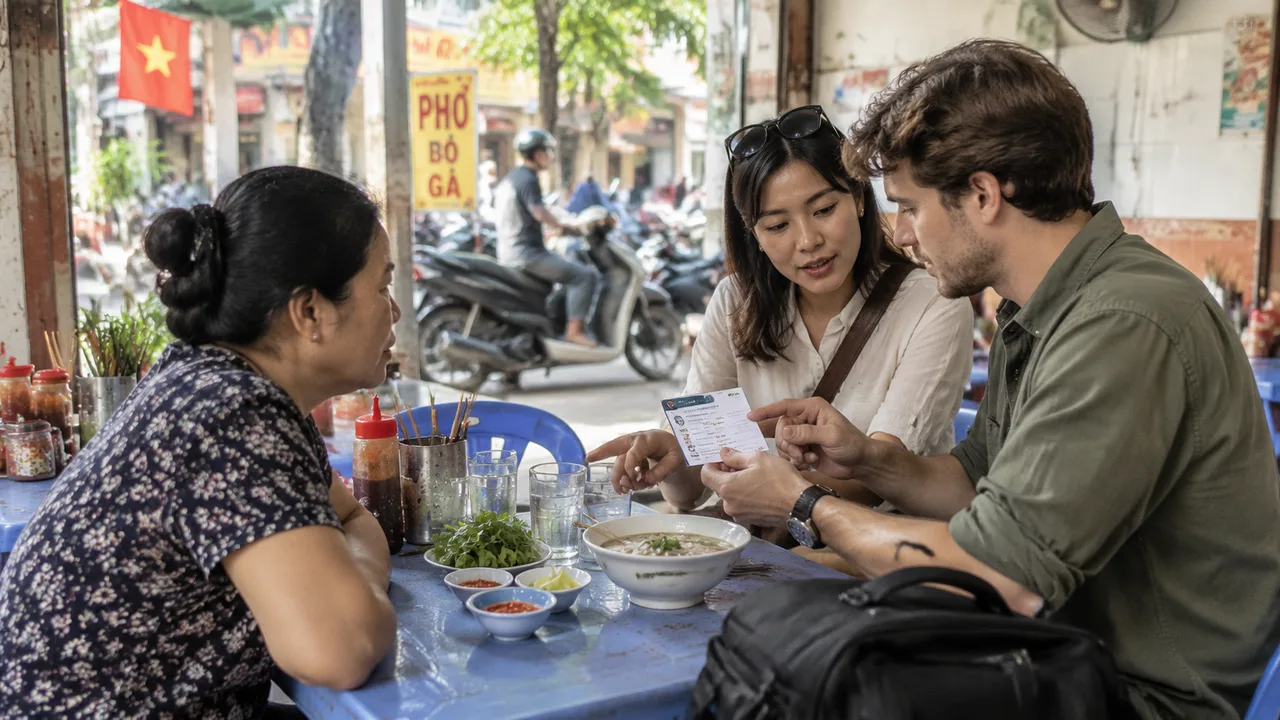
Show staff a professionally translated allergy card that names your allergen and explains that even a small amount can cause a reaction. Ask whether it is in the dish, broth, marinade, dipping sauce, or cooking oil, then confirm that clean utensils, cookware, and surfaces will be used. If answers are uncertain, do not order.
Quick rule: Explain the allergy, check every ingredient and sauce, and ask about shared equipment before ordering. Dish names are not reliable safety guides; recipes vary, and a meal that appears suitable may contain an allergen or have touched it during preparation.
Check the food setting
At a busy street stall, watch how food is prepared and whether the same pan, tongs, or oil are used for multiple orders. Packaged food labels may not clearly identify every ingredient, so ask for help reading them rather than guessing. A quiet moment to ask can make the answer clearer.
When booking a food experience, contact the operator in advance and confirm what precautions are practical. For example, ask about allergy procedures before choosing Ho Chi Minh City food tours; a tour is not a substitute for checking each dish directly.
| Setting | Check | Safer decision | Warning sign |
|---|---|---|---|
| Street stall | Separate tools and cooking surface | Order only if preparation is clear | Shared oil or uncertain answers |
| Restaurant or packaged food | Sauces, labels, and possible cross-contact | Ask staff to verify each ingredient | Assuming the dish name means safe |
Carry prescribed medication and follow your clinician’s emergency plan; no restaurant can guarantee zero cross-contact. For a local food outing, browse Toward Local tours and discuss your allergy before booking. If staff cannot confidently confirm ingredients and preparation, choose a different meal.
Choosing Where to Eat With Food Allergies in Vietnam
When traveling with food allergies in Vietnam, the best place to eat is the one that can explain ingredients and prepare your meal with precautions you trust. A busy, local-looking stall may be memorable, but limited time, shared utensils, and uncertain sauces can make allergy checks difficult.
Match the setting to your allergy risk, how clearly staff understand your request, and whether you have a reliable backup meal nearby. No restaurant type guarantees an allergen-free meal, so communicate before ordering and follow your clinician’s advice for severe allergies.
Quick guide to choosing where to eat
Restaurants with a manager or staff who can discuss ingredients often allow more conversation; self-catering offers the most control over products you select. Street-food kitchens may have less room to separate ingredients. Hotels vary, so confirm with the kitchen rather than relying on a menu label.
| Option | Ingredient visibility | Practical fit |
|---|---|---|
| Established restaurant | Ask staff about sauces and preparation | Useful when staff can confirm precautions |
| Street-food stall | Recipes and shared tools may be unclear | Choose only if risks are understood |
| Self-catering | You check packaged ingredients | Helpful backup for higher-risk needs |
For a severe allergy, prioritize a kitchen that can repeat your restriction accurately, explain cross-contact controls, and decline the order if uncertain. Carry prescribed medication and identify a backup meal before heading out. A translated allergy card can support the conversation, but it cannot verify kitchen practices.
If you want to explore local food with a guide, contact the operator in advance and ask how they handle allergy requests; see Hoi An food experiences. Share your allergy details before booking and confirm directly with the kitchen on the day.
Choose curiosity with a safety plan: check the menu, ask specific questions, and walk away when answers are unclear. Explore local tour options and discuss your needs before reserving.
Mistakes, Emergencies, and FAQs About Food Allergies in Vietnam
Traveling with food allergies in Vietnam takes more than avoiding obvious ingredients: sauces, shared utensils, and rushed translation can create hidden risks. Use a clear allergy card, confirm how food is prepared, and know what to do if symptoms start.
Avoid these common mistakes
Do not rely on a vague translation such as no peanuts if you need staff to avoid cross-contact too. Removing an allergen after cooking does not make a dish safe, and allergy-friendly is not a guarantee of allergen-free. Ask about ingredients, shared oil, utensils, and preparation surfaces.
Emergency steps: Stop eating. For breathing difficulty, throat or tongue swelling, faintness, or symptoms affecting more than one body system, use your prescribed epinephrine promptly and call Vietnam ambulance services at 115. Get emergency medical care; antihistamines are not a substitute for epinephrine.
| Situation | Safer response | Avoid | Why |
|---|---|---|---|
| Ordering food | Show a translated allergy card | Assuming staff understood | Ingredients can be hidden |
| Reaction symptoms | Use prescribed epinephrine and call 115 | Waiting to see if it passes | Severe reactions can progress quickly |
FAQs
- Which ingredients commonly contain allergens? Peanuts, shrimp paste, fish sauce, soy, wheat noodles, and condensed milk are worth checking. Recipes vary, so ask about each dish and its sauces.
- Can I safely eat street food? Sometimes, but busy stalls may have limited ingredient information and shared equipment. Choose only when the vendor can clearly confirm ingredients and preparation.
- What should my allergy card say? List the specific allergen, that even small amounts and cross-contact must be avoided, and what to do in an emergency. Carry it in Vietnamese and your language.
Tell any tour operator about your allergy before booking and reconfirm directly with food vendors; a local guide cannot guarantee a meal is safe. You can review Toward Local tour options and ask about dietary communication in advance.