
Mekong Delta public bus travel is the simplest way for first-time visitors to move between cities without spending much. If you are landing in the south and trying to keep your trip flexible, public buses can solve the biggest pain point fast: getting from one town to another without paying private-transfer prices or feeling stuck with a fixed itinerary.
For solo travelers, couples, and families who want a more local trip, the system is practical once you understand the basics. A Mekong Delta public bus usually connects major hubs like Ho Chi Minh City, Can Tho, Ben Tre, and Chau Doc, which makes it useful for both point-to-point travel and slow exploration. If you are also planning a food stop in the city before heading south, see Ho Chi Minh City food tours for a good pre-bus experience. This guide shows where buses fit, when to avoid them, and how to choose the right option for your route.
The Mekong Delta public bus is the most budget-friendly way to travel between major towns in southern Vietnam. It works best for travelers who do not mind simple logistics, local stations, and fixed departure times. For shorter regional trips, it can be reliable, affordable, and easy to combine with sightseeing.
| Criteria | Public bus | Private car | Best for |
|---|---|---|---|
| Price | Lowest | Highest | Budget travelers |
| Flexibility | Fixed schedule | Door to door | Families and groups |
If you want a smoother transfer after your city time, a soft upgrade is to compare bus routes with all tours at Toward Local so you can match transport with the kind of local experience you want.
In practice, the bus is best when your plan is simple: arrive, move, and continue. It is less ideal if you need private pickup, multiple stops, or tight timing, but for independent travelers it can be the most honest value in the Mekong Delta.
Use it when you want low cost, local access, and predictable routes. Skip it only when comfort, speed, or hotel pickup matters more than saving money.
What the Mekong Delta Public Bus System Is and How It Works
The Mekong Delta public bus system is the main low-cost way to move between cities, towns, and ferry points across southern Vietnam. For travelers who want a local, practical trip, the Toward Local tours mindset applies here too: simple routes, real local life, and less time wasted on guesswork.
It works through fixed routes, local operators, and major hubs such as Ho Chi Minh City, Can Tho, Ben Tre, and Chau Doc. If you are planning a budget trip, the Mekong Delta public bus is often the smartest option because it is cheaper than a private car, easier than self-driving, and more direct than trying to piece together boats or small regional transfers.
The Mekong Delta public bus system is a network of scheduled routes connecting major towns and provinces in the delta. It is best for budget travelers, solo visitors, and anyone who wants local mobility without paying for private transport.
A public bus in the Mekong Delta usually means an intercity coach, not a city shuttle. You book a seat, board at the terminal or a pickup point, and travel on a fixed timetable. Most routes are straightforward, but some are more useful than others depending on where you stay and how flexible your schedule is.
In practice, travelers use it for three common reasons: to save money, to reach authentic local towns, and to keep the trip simple. For example, a solo traveler going from Ho Chi Minh City to Can Tho may choose a bus for the price and convenience, while a family with luggage may prefer a private transfer for comfort. Ho Chi Minh City experiences can also be a helpful starting point before heading deeper into the delta.
Soft advice: choose the bus when your route is direct, your luggage is manageable, and you do not need door-to-door service. It is usually the right call for adventurous travelers who want local texture without paying for premium transport.
| Criteria | Public bus | Private car | Best for |
|---|---|---|---|
| Price | Low | Higher | Budget travel |
| Flexibility | Fixed schedule | High | Families and comfort |
If you want the cheapest practical transport and you do not mind local routines, the bus is the best entry point. If you want easier luggage handling, faster coordination, and private pickup, then a car is worth the extra cost. For many first-time visitors, the bus is the most authentic balance of value and simplicity.
For route planning, think in terms of hub to hub movement: Ho Chi Minh City to Ben Tre, Can Tho to Ho Chi Minh City, or Ben Tre to Chau Doc. The more local your destination, the more useful the bus becomes. When the route is direct, the bus usually gives you the best ratio of price, reliability, and access to real Mekong life.
Book the bus when your goal is to travel smart, save money, and keep the trip local. If you want more comfort or you are moving with family luggage, compare it with a private car before deciding. For deeper trip planning, check the full Toward Local tours collection and match your transport choice to your itinerary.

How to Use a Mekong Delta Public Bus Step by Step
Mekong Delta public bus travel is the easiest low-cost way to move between local towns if you are comfortable with a simple system and a little flexibility. For first-time visitors, the real challenge is not the ride itself, but finding the right station, checking the schedule, and knowing when to buy a ticket. This guide keeps it practical, so you can travel with confidence instead of guessing.
If you are planning a local trip in the Mekong Delta, start by matching your departure city with the correct bus terminal and route number. In most cases, the bus is reliable, the fare is clear, and the trip is straightforward once you understand the basic flow. For a deeper local experience, you can combine bus travel with a local Mekong experience after arrival, which saves time and keeps the journey adventurous.
To use a Mekong Delta public bus, first identify your route, then go to the correct terminal, buy or confirm your ticket, and board at the assigned gate. Expect simple seating, occasional luggage storage under the bus, and multiple short stops along the way. Arrive early, keep your destination written in Vietnamese, and confirm the last stop with the driver or staff.
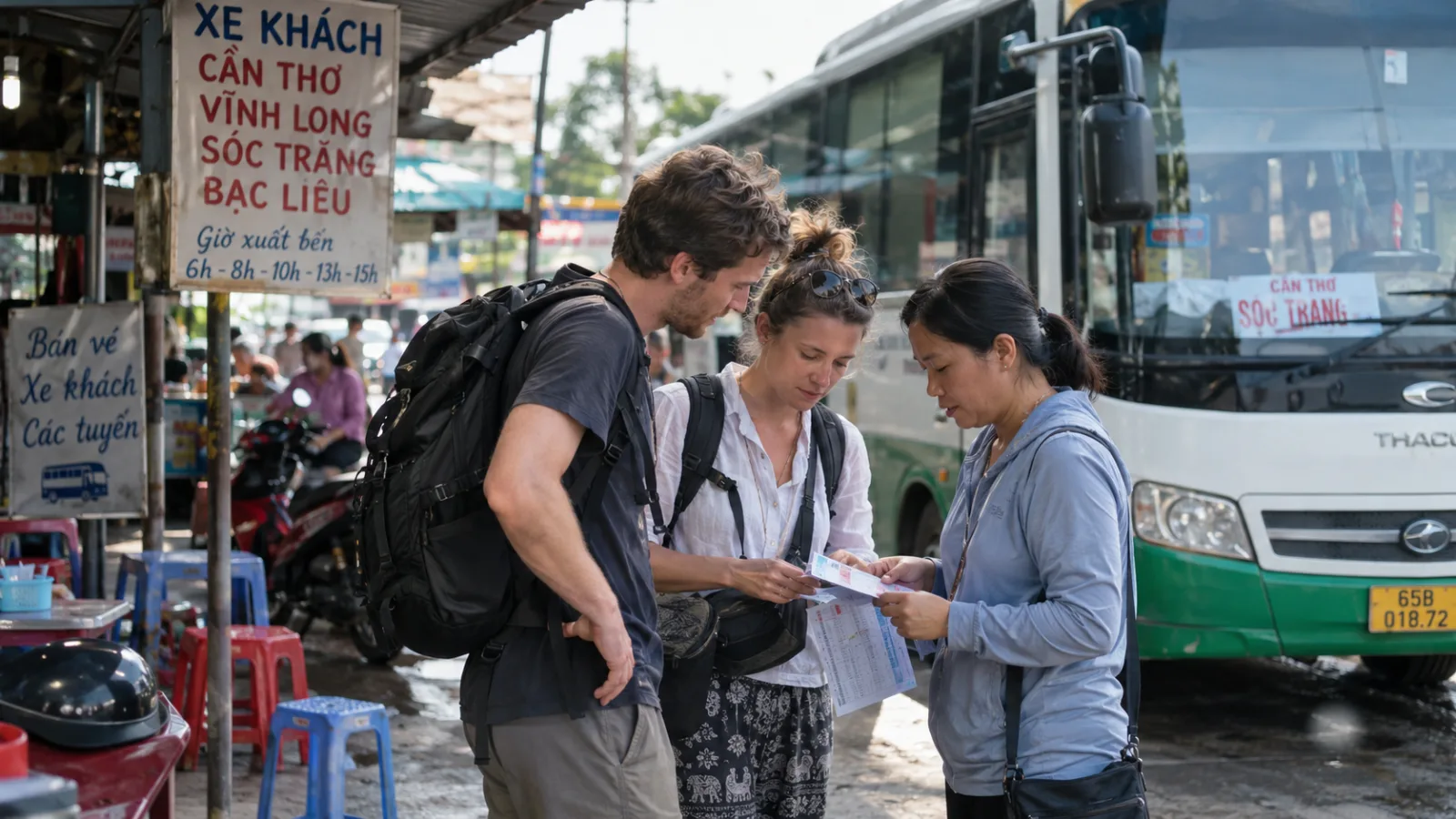
Step 1 is finding routes and departure times. In towns like Ben Tre, Can Tho, and Ho Chi Minh City, route information is often posted at the station rather than online, so a local desk is usually more useful than a search result. If you are unsure, ask for the destination name plus the word xe buyt or xe khach, which helps staff understand you want the public bus.
Step 2 is choosing the right station. Large terminals usually handle intercity services, while smaller stations may only serve nearby districts. A simple comparison can help:
| Criteria | City terminal | Local stop | Best use |
|---|---|---|---|
| Route choice | More options | Fewer options | Longer intercity trips |
| Ease for visitors | Higher | Lower | First-time travelers |
Step 3 is understanding what happens onboard. Most buses in the Mekong Delta are basic but comfortable enough for short and medium rides. You may get a paper ticket or pay at the counter, luggage often goes under the bus or near the rear, and the driver may stop for pickup and drop-off along the route. A soft Ho Chi Minh City tour can be a smart add-on if your trip begins or ends there, especially for couples and solo travelers who want an easier city transition.
The best seats are usually near the front if you want fewer motion bumps, while the middle section is better if you plan to nap. Keep your small bag with passport, phone, and cash close to you, because under-bus luggage access is less convenient during quick stops.
What to expect in practice is simple: the bus may leave on time, but it can also pause for local passengers, so build in a buffer if you have a ferry, train, or flight later. For families, this matters even more because kids and bags take time to organize. A quick destination check before boarding avoids the most common mistake, which is getting on the correct company but the wrong route.
How to use the bus step by step:
1. Confirm the route and terminal name before you leave your hotel or homestay.
2. Arrive 20 to 30 minutes early, especially on weekends or holidays.
3. Buy the ticket at the counter or confirm the fare with the staff.
4. Label your luggage if it is large or valuable.
5. Ask the driver or assistant to point out your stop if the route has multiple drops.
6. Keep cash ready for small fares or local transfers.
For travelers who want to stay adventurous without losing comfort, public bus is the right middle ground. It is cheaper than a private car, more local than a tour bus, and easier to manage once you know the rhythm. If you plan to explore more of southern Vietnam after the Mekong, check the full range of Toward Local tours for a smoother next step.
Final tip: write your destination in Vietnamese, keep a screenshot of the route name, and ask one simple question before boarding: this bus stops at my town, yes or no. That one habit saves time, reduces stress, and makes Mekong Delta public bus travel far easier for foreign visitors, couples, families, and solo travelers alike.
Best Uses and Benefits of Taking a Mekong Delta Public Bus
For travelers who want the real Mekong Delta without paying private car prices, the Mekong Delta public bus is often the smartest option. It suits people who enjoy local life, do not mind a simple ride, and want flexible access to towns, markets, and ferry points across the region.
It also works well if your plan is built around exploration rather than comfort-first travel. You can move between major hubs, save budget for food or experiences, and still reach places where guided tours are not the only answer. That makes it especially useful for solo travelers, couples, and families who like a more grounded trip.
Featured insight: Public buses in the Mekong Delta are best for travelers who want low-cost movement, authentic local atmosphere, and direct access to common routes like Ho Chi Minh City to Ben Tre or Can Tho. They are less ideal for tight schedules, but they are strong value for flexible, independent trip planning.
Main advantages for cost-conscious and independent travelers
The biggest benefit is simple: low cost with enough coverage for most classic routes. A public bus lets you keep transport spending under control while still traveling in a way that feels practical and local. For many foreign visitors, that balance is the main reason to choose it over a private transfer.
It also gives you more freedom to design your own day. If you want to arrive in Ben Tre, then join a local experience collection later, bus travel keeps your morning open and your budget flexible. This works best when you do not need door-to-door service and you are comfortable handling a short taxi or walk after arrival.
- Best for saving money on intercity travel
- Useful for independent travelers who plan their own route
- Good for reaching towns before exploring by bike, taxi, or boat
- Better value than private car when timing is not critical
Common trip types where public buses work especially well
Public buses are strongest on point-to-point journeys between major destinations. A typical example is Ho Chi Minh City to Ben Tre, where many travelers use the bus first and then switch to a local transfer for their homestay, market visit, or river activity. Another common route is Can Tho to Ho Chi Minh City, which is practical for ending a Mekong trip without booking a private driver.
They are also a smart match for one-way travel, short regional hops, and travelers combining bus trips with local discovery. For example, someone may take the bus into the delta, then book a tasting or city walk through Ho Chi Minh City food tours before heading south. If you want variety across the region, buses are often the backbone of a flexible itinerary.
| Criteria | Public bus | Private car | Best use |
|---|---|---|---|
| Price | Lowest | Higher | Budget travel |
| Flexibility | Good on main routes | Highest | Fixed schedules |
| Comfort | Basic | Better | Priority comfort |
For couples and families, the best strategy is often to use the bus for the main transfer and spend more on the part of the trip that matters most, such as a scenic boat ride or a private village visit. That approach keeps the itinerary affordable without losing the sense of adventure that makes the Mekong memorable.
If your style is local, practical, and independent, the bus is not a compromise. It is often the right tool for the job.
Soft next step: Use the bus for main movement, then choose one memorable local experience after arrival so your Mekong trip stays authentic without becoming expensive.
Best fit summary: Choose a Mekong Delta public bus when you want to save money, travel like a local, and connect major towns on a flexible route. Choose a private car when timing, comfort, and direct pickup matter more than price.
Mekong Delta Public Bus vs. Other Transport Options
Mekong Delta public bus is the best value option for travelers who want to move between towns without paying private-car prices. It works well for budget-conscious visitors, solo travelers, and adventurous couples who do not mind a slower pace and a little local complexity. The tradeoff is simple: you save money, but you need more time and a bit more planning.
If your goal is to see the Mekong Delta in a more local way, the bus can be part of the experience rather than just a transfer. You will share seats with residents, workers, and students, which gives you a real sense of daily life. For travelers who want comfort, door-to-door convenience, or tight schedules, other transport options often make more sense.
Public buses are the cheapest way to move around the Mekong Delta, but they are not the fastest or easiest. Choose them when budget matters most. Choose taxis, ride-hailing, or private cars when you need comfort, flexibility, and direct pick-up. The best option depends on how much time you have and how much local friction you are willing to accept.
Compared with taxis and ride-hailing, the bus is slower but far more affordable. A short intercity route may take longer because buses stop more often, follow fixed schedules, and sometimes require a transfer. A private car is the opposite: all tours from Toward Local may inspire a fuller trip plan, while a car gives you direct routing, luggage space, and fewer surprises.
Here is the practical breakdown for most visitors:
| Criteria | Public bus | Taxi or ride-hailing | Private car |
|---|---|---|---|
| Budget | Lowest cost | Moderate to high | Highest, but predictable |
| Comfort | Basic seating | Good for short rides | Best for long distances |
| Time | Slowest | Faster point to point | Fastest and most flexible |
A useful rule is this: choose the bus for one-way town hopping, choose a taxi for short flexible rides, and choose a private car if you are traveling with family, carrying luggage, or visiting several stops in one day. For travelers planning food-focused or countryside experiences, a route can be paired with Ho Chi Minh City food tours before heading deeper into the delta.
My practical advice is to use the bus when the journey itself is not the priority. If you want fast movement and easy logistics, pay for comfort. If you want a local rhythm and lower cost, the Mekong Delta public bus is the smartest option, especially for independent travelers who enjoy a bit of adventure without overpaying for every transfer.
In short, think about three things before you book: time, comfort, and budget. When two of those matter more than the third, your choice becomes obvious. If you are traveling as a couple or family and want a smoother experience, a private car usually wins. If you are exploring on your own and want to keep costs low, the bus gives you the strongest value.
Mekong Delta Public Bus Tips, Common Mistakes, and FAQ
Mekong Delta public bus travel works best when you plan around station locations, route names, and local departure habits. For first-time visitors, the main challenge is not distance but clarity: buses can be easy to use once you know where to board, what to ask, and how much buffer time to leave.
If you are traveling solo, as a couple, or with family, public buses can be a practical way to move between towns without paying for a private car. The key is to match your route with your comfort level. A simple rule helps: book early for long legs, keep your luggage light, and confirm the exact stop before you leave your hotel.
Mistakes travelers often make when using local buses
The most common mistake is assuming every bus will stop at the place name printed online. In the Mekong Delta, some routes have different pickup points, and smaller stations may be outside the town center. Another frequent issue is arriving too late, especially on busy travel days when a full bus leaves on time. To avoid stress, arrive early and ask a local to point out the correct platform.
Travelers also underestimate travel time. A route that looks short on a map can take longer because of road conditions, traffic, or multiple stops. If you are connecting to a local experience in Vietnam, leave a wide gap between bus arrival and your next activity so you do not lose the day.
| Decision point | Public bus | Private car | Best use |
|---|---|---|---|
| Budget | Lower cost | Higher cost | Choose bus for savings |
| Flexibility | Fixed schedule | Door to door | Choose car for ease |
Public buses in the Mekong Delta are best for budget travel between major towns, but you should verify the exact station, departure time, and route before you go. They are practical for independent travelers who can handle simple planning and do not need hotel pickup.
Key FAQs and a simple next-step travel tip for first-time visitors
FAQ 1: Is a Mekong Delta public bus good for first-time visitors? Yes, if you are comfortable with basic planning and can read route names. FAQ 2: Can I travel with big luggage? Usually yes, but small and medium bags are easier to handle. FAQ 3: Should I choose bus or private transfer? Choose bus for value, private transfer for convenience and time control.
For a smooth first trip, pick one city pair, check the latest departure details, and save the station location on your phone before leaving. If your goal is to explore the region with less friction, this small step makes a big difference. When your timing matters, a wide range of tours can also be a smart backup for the next leg.
Soft next step: if you want a more flexible day after your bus ride, consider pairing transport with a local experience instead of trying to squeeze in too many stops. That gives you a better pace, more energy, and less chance of missing your connection.
Plan your route, confirm your stop, and keep one backup option ready. That is the simplest way to use Mekong Delta public bus travel confidently while still enjoying the local rhythm of the region.