
Van Lam embroidery village is one of the most distinctive stops in Ninh Binh for travelers who want more than scenery alone. If you are looking for Vietnamese handicrafts with real depth, this village shows how traditional embroidery still lives in daily work, family workshops, and local pride. It is a simple place to visit, yet it answers a bigger question: what does authentic craft culture in Vietnam actually look like on the ground?
For first-time visitors, the appeal is practical as well as cultural. You can watch artisans at work, understand how patterns are made, and see why this village matters in Vietnam’s heritage landscape. A visit to Van Lam embroidery village also fits well with nearby Hoi An tours or a broader all tours of Toward Local plan, especially if you want a slower, more local experience.
| Criteria | Cột 1 | Cột 2 | Cột 3 |
|---|---|---|---|
| Why it stands out | Living craft village | Strong local identity | Easy to combine with Tam Coc |
| Best for | Culture seekers | Solo travelers and couples | Families wanting a short stop |
Van Lam embroidery village is a traditional craft village in Ninh Binh known for hand-stitched textiles, local workshops, and a long embroidery heritage. It is best for travelers who want an authentic cultural stop, not just a photo stop, and it is easy to pair with nearby nature or heritage attractions.
If you value slow travel, this is the kind of place that rewards curiosity. You do not need to be an art expert to appreciate the detail, because the village makes the process visible, from thread selection to finished pieces. For travelers planning a local culture day, a soft next step is to pair this visit with HCMC food tours if your route continues south, or keep it focused on Ninh Binh for a more regional journey. Either way, the village gives context, not just souvenirs.
What Is Van Lam Embroidery Village?
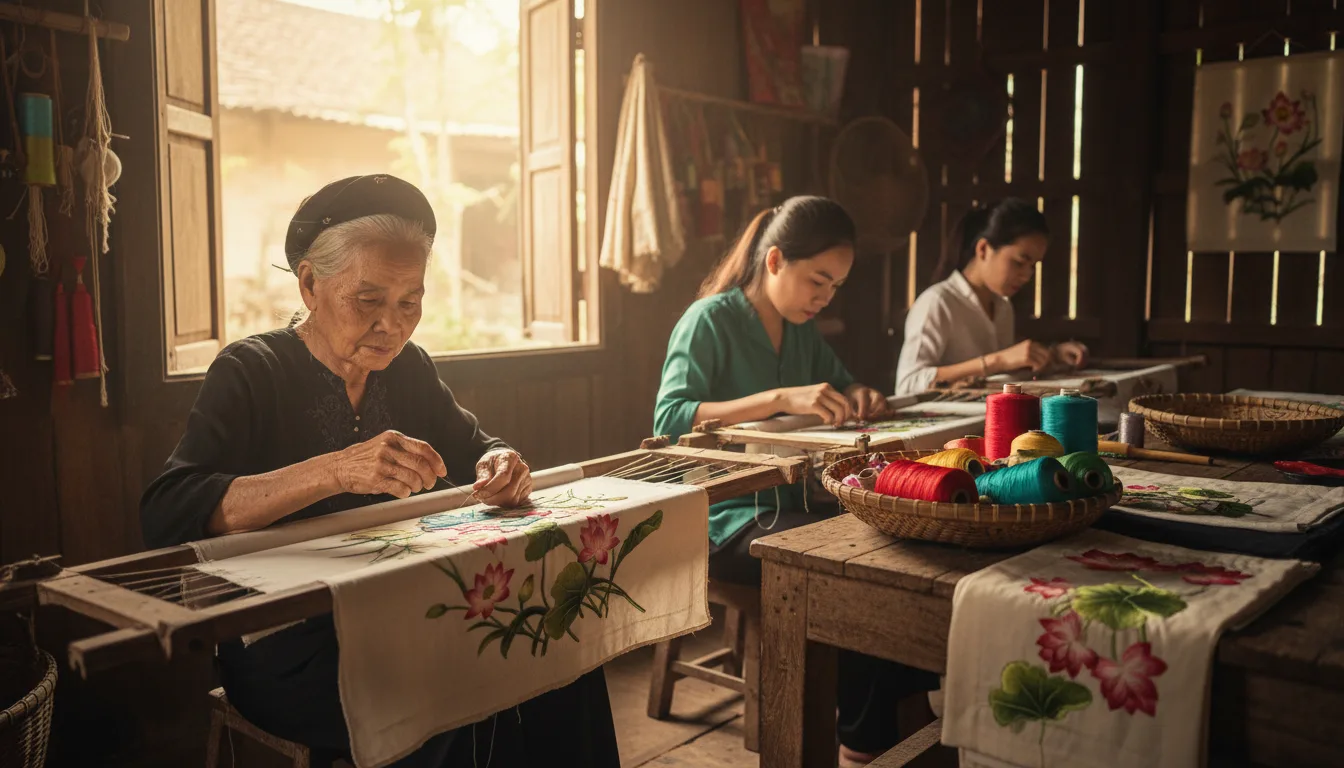
Van Lam embroidery village is a traditional craft community near Tam Coc in Ninh Binh, where local artisans preserve hand embroidery that has been part of daily life for generations. For travelers who want something more local than a standard sightseeing stop, it offers a clear look at how Vietnamese heritage is still made by hand.
Here, the appeal is not only the finished textiles but also the working rhythm of the village itself. Visitors come to see real workshops, understand the role of embroidery in Vietnamese craft culture, and add a meaningful cultural stop to a Ninh Binh itinerary without needing a full day.
Van Lam embroidery village is a historic craft village in Ninh Binh known for hand-stitched textiles, living artisan workshops, and its role in preserving Vietnamese embroidery heritage. It is a practical stop for travelers who want a short, authentic cultural visit near Tam Coc.
| Criterion | Van Lam | Typical tourist stop | Best for |
|---|---|---|---|
| Experience | Active artisan village | Photo-only visit | Cultural travelers |
| Visit length | 30 to 90 minutes | Short stop | Half-day planners |
The best way to understand the village is to think of it as a living workshop, not a museum. One family may be stitching delicate motifs while another explains the meaning of a piece, and that direct contact is what makes the visit memorable. If you are building a broader Ninh Binh route, it fits naturally with Hoi An tours style cultural interests, but in a much quieter northern setting.
Its cultural role is deeper than decoration. Embroidery here supports family income, keeps inherited skills visible, and gives younger generations a reason to learn traditional technique. A useful takeaway: the village feels most valuable to visitors who prefer places with real working purpose, not staged demonstrations.
For travelers comparing local experiences, Van Lam is a strong choice when you want craftsmanship, heritage, and easy access in one stop. It also pairs well with nearby nature, so a visit can stay relaxed rather than rushed.
Many first-time visitors come because they want an authentic local stop near Tam Coc, while couples and solo travelers often appreciate the calm pace and the chance to speak with artisans. Families usually find it easy to visit because the village is compact, walkable, and not physically demanding.
When and why people seek it out usually comes down to three things: genuine handmade products, a short cultural detour from sightseeing, and the chance to see Vietnamese heritage in everyday life. If you want to continue planning a cultural route after this stop, explore the wider Toward Local tours collection for more regional options.
If you are planning a Ninh Binh day trip, make room for Van Lam early in the route so you can visit while the workshops are active and the atmosphere feels most alive.
Book a local-style itinerary that combines Tam Coc, village culture, and slower travel so you can experience Van Lam embroidery village in a way that feels personal, efficient, and genuinely local.
How Van Lam Embroidery Village Preserves Traditional Embroidery
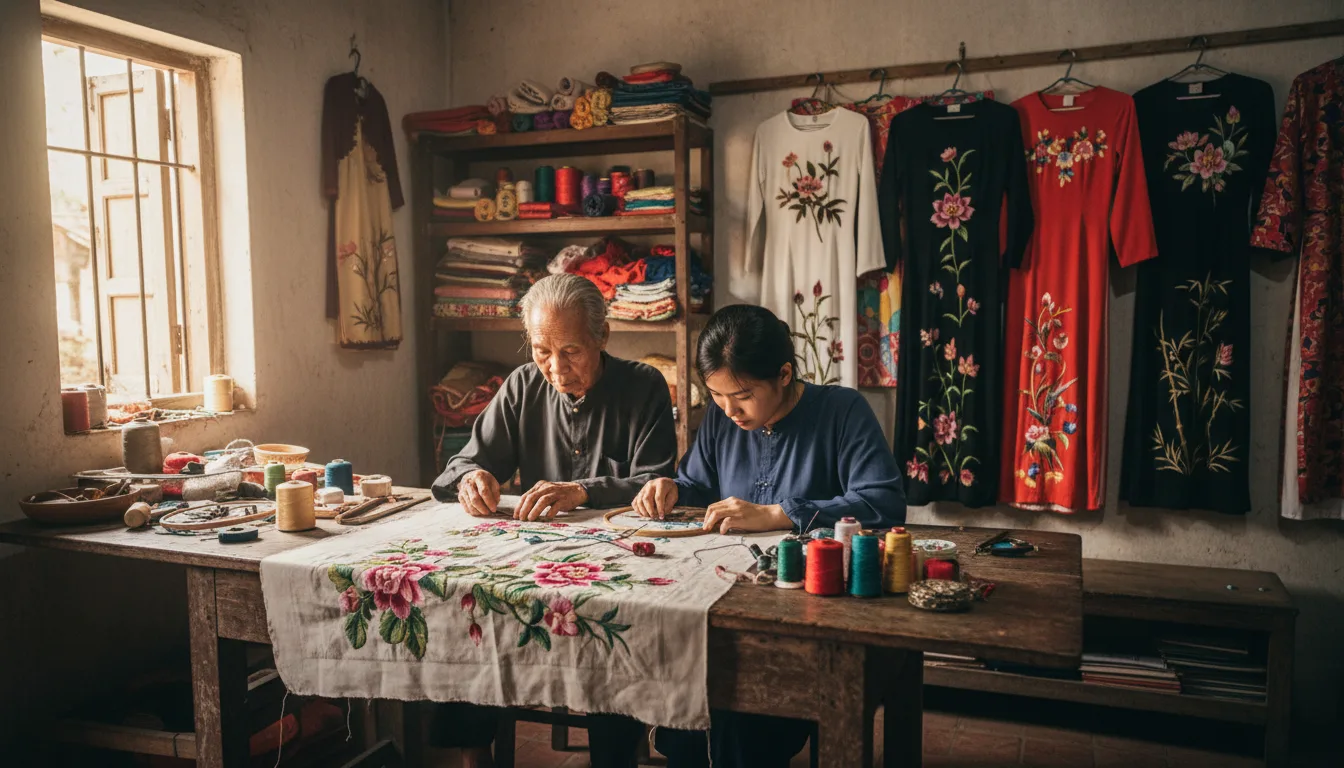
Van Lam embroidery village preserves tradition by keeping the craft in daily use, not in a museum case. Visitors can see how local families pass skills from one generation to the next, while still making items people actually use at home, in ceremonies, and in interior decoration. That living continuity is what gives the village its lasting value.
The village is also a practical example of cultural preservation through work. Artisans protect old stitching methods, train younger hands, and maintain strict quality standards for every piece. For travelers planning a meaningful stop near Tam Coc, this is where heritage becomes visible, useful, and worth supporting through respectful visits and purchases.
Van Lam embroidery village preserves traditional embroidery by combining family-based apprenticeship, hand stitching, and careful material selection. The craft survives because artisans still produce real household and ceremonial items, not just display pieces, while keeping quality standards high and passing technique to the next generation.
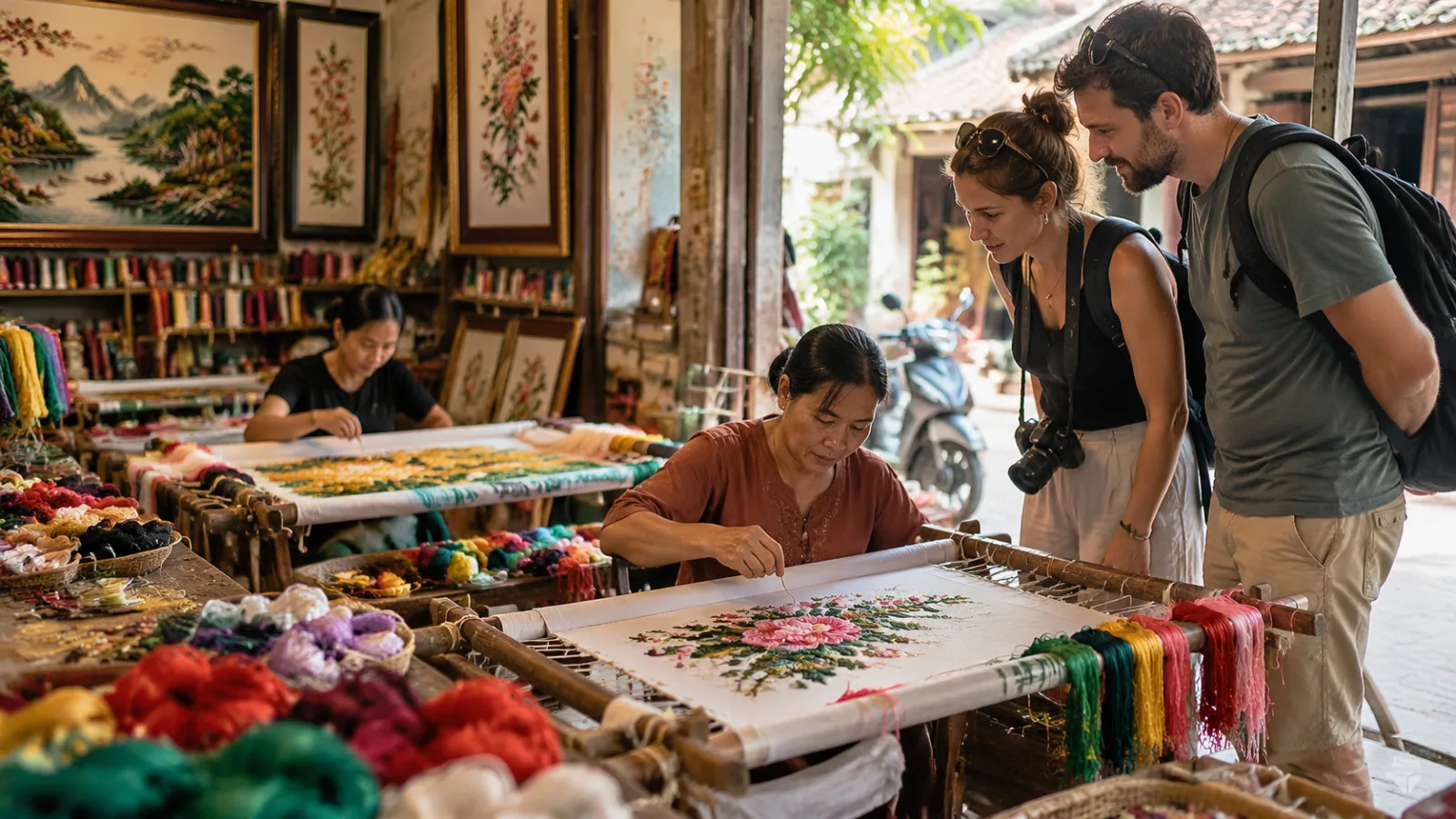
At the heart of the craft is the hand embroidery process, which values patience over speed. An artisan usually begins by sketching the motif, then transferring it onto fabric before stitching the outline and filling details with fine threads. A small floral panel can take hours, while a more complex wall piece may require several days.
The main techniques include outline stitching, dense filling, and decorative lace effects that create texture without losing clarity. If you watch closely, you will notice that many pieces are finished by hand rather than machine, which explains why no two products look exactly the same. That human variation is part of the charm.
For visitors combining culture with travel, this is one of the most rewarding stops in Ninh Binh, especially when paired with Hoi An cultural tours if you want to compare Vietnam’s craft traditions across regions. A soft way to experience the village is to arrive in the morning, observe the process, then choose one small item as a practical souvenir.
Materials matter as much as technique. Artisans often use silk, cotton, linen, and fine thread chosen for color stability and smooth stitching. Wooden frames, needles, chalk, and paper templates help keep the work precise. The standard here is simple: neat lines, balanced composition, and stitches that hold up over time.
| Criteria | Hand Embroidery | Machine Work | Village Standard |
|---|---|---|---|
| Detail | High, varied by artisan | Uniform, less expressive | Clean, balanced, hand-finished |
| Value | Higher cultural value | Faster production | Durable and gift-worthy |
Real products from the village include altar cloths, scarves, framed pictures, pillow covers, table runners, and ceremonial items for local families. A good example is a silk scarf with delicate floral edges: light enough for travel, but detailed enough to show the artisan’s skill. These pieces are not just decorative; they carry the village’s identity.
When comparing options, ask whether the work was fully hand stitched, what fabric was used, and how long it took to complete. This simple check helps you recognize genuine craftsmanship and avoid low-quality imitations. If you want a wider journey across northern Vietnam, browse all Toward Local tours for ideas that fit your route.
For travelers, the best reason to visit is not only to buy something, but to understand how heritage survives through everyday practice. Van Lam embroidery village remains authentic because the craft still serves a real community, and that is the strongest sign of preservation.
To make the visit even more rewarding, pair the village with a nearby local experience so the cultural stop feels part of a larger journey. A private route through Ninh Binh gives you time to slow down, watch the stitching, and support artisans in a meaningful way. If you are building a custom plan, this is an easy place to include.
Why Van Lam Embroidery Village Is Worth Visiting
Van Lam embroidery village is worth visiting because it gives travelers a rare chance to see living craft culture, not a staged souvenir stop. If you enjoy places that feel deeply local, this village offers a calm setting, real artisan work, and a closer look at how heritage is still part of daily life. For first-time visitors to Ninh Binh, it is one of the easiest ways to add meaning to a short trip.
It also fits well for solo travelers, couples, and families who want something slower than a packed sightseeing route. You can combine a visit with nearby Tam Coc, then spend a little time watching embroidery in progress, speaking with artisans, or choosing a handmade piece that actually supports local skills. If you are planning a broader route, you can also compare it with other Toward Local tours to see where it fits best.
Featured insight: the village is not just about shopping, it is about observing a craft economy that still works at household scale. That is what makes the experience memorable for cultural travelers.
Main Benefits for Travelers and Cultural Explorers
The main value of Van Lam embroidery village is authenticity. Visitors see real workshops, real families, and real production instead of a display built only for tourism. That makes it especially appealing for travelers who want deeper cultural context and better photo opportunities without crowds.
Practical benefits are easy to notice too:
- Short visit time, ideal for a half-day Ninh Binh plan
- Quiet village atmosphere with strong local character
- Handmade products that are easy to understand and buy
- Useful stop for travelers who prefer slow, cultural experiences
A small but important insight: because artisans often work from home, the village feels personal rather than commercial. That creates a more respectful travel experience and helps visitors understand how Vietnamese craft traditions survive through everyday work. If your route includes the region, a local day plan can be paired with Hoi An tours for another strong heritage contrast.
Popular Experiences and Activities in the Village
Most visitors come to Van Lam embroidery village to watch artisans stitch by hand, but the experience is more layered than that. You can walk through narrow lanes, see embroidery framed in small family spaces, and notice how design, patience, and repetition shape each finished piece. For many travelers, that close view is the highlight.
Typical activities include visiting the ancestor temple, observing embroidery frames in use, and browsing handmade textiles such as scarves, table covers, and wall art. A simple visit often looks like this:
- Enter the village and walk slowly through the main lanes
- Stop at workshops where artisans are sewing or preparing patterns
- Visit the temple honoring the craft founders
- Choose a handmade item if you want a practical souvenir
Soft booking insight: if you want a fuller cultural day in northern Vietnam, pair this stop with a curated route through Da Nang tours only if your wider itinerary crosses central Vietnam, otherwise keep Van Lam as part of a Ninh Binh-focused plan. That helps avoid rushed, low-value travel time.
Best Situations to Visit Van Lam Embroidery Village
The best time to visit Van Lam embroidery village is when you want a calm, low-pressure cultural stop rather than a full-day attraction. It works well after a Tam Coc boat ride, before lunch, or as part of a slower countryside loop. Morning and early afternoon are usually best for seeing active work and getting natural light for photos.
It is especially suitable for:
| Traveler type | Why it fits | Best timing | Visit style |
|---|---|---|---|
| Solo traveler | Quiet, flexible, easy to explore slowly | Late morning | Walk, observe, photograph |
| Couple or family | Short, educational, low-stress stop | Early afternoon | Combine with Tam Coc |
Final takeaway: visit Van Lam when you want a local experience that feels real, relaxed, and easy to fit into a Ninh Binh itinerary. If that is your travel style, it is one of the smartest cultural stops in the area. For a smoother plan and more local ideas, start from the full tour collection and build around your pace.
If you want a trip that balances culture, scenery, and local connection, add Van Lam embroidery village to your Ninh Binh plan and book a route that leaves time for slow discovery, not just quick sightseeing.
Van Lam Embroidery Village vs Other Craft Villages in Vietnam
Van Lam embroidery village is a better fit than many larger craft stops if you want a quiet, local, and easy-to-explore experience near Ninh Binh. Unlike crowded souvenir villages, it feels lived-in, with artisans working in family spaces and visitors moving at a slower pace.
If your trip already includes Tam Coc or Trang An, this village adds cultural depth without disrupting your schedule. A good way to think about it is simple: all tours from Toward Local can pair nature and heritage, but Van Lam is especially strong for travelers who prefer real contact over staged demonstrations.
Van Lam embroidery village stands out for its small scale, authentic family workshops, and easy pairing with Ninh Binh sightseeing. It is less commercial than famous craft villages, making it ideal for travelers who want a short cultural stop, handmade souvenirs, and a calmer atmosphere.
How It Compares with Other Traditional Artisan Villages
Compared with ceramics, lacquer, or woodcarving villages, Van Lam is less about large production and more about fine, hand-finished work. You are not watching machines or factory-style rows; you are seeing needlework that demands patience, eyesight, and time. For many visitors, that intimacy is the main appeal.
Here is the practical difference:
• Bat Trang offers a broader shopping and workshop scene
• Dong Ho is stronger for folk art history and prints
• Van Lam feels quieter, more personal, and easier to combine with a day in Ninh Binh
That makes it a smart stop for first-time visitors who want craftsmanship without spending half a day on logistics. If you are building a cultural route through central Vietnam, a Hoi An heritage day can complement this kind of village visit well.
Strengths, Limitations, and Visitor Expectations
| Criteria | Van Lam Embroidery Village | Big Craft Villages | Best For |
|---|---|---|---|
| Atmosphere | Quiet, local, low-pressure | Busier, more commercial | Travelers seeking calm |
| Visitor experience | Observe family workshops and buy handmade pieces | More demos, more shops, more crowds | Culture-first itineraries |
Its strengths are authenticity, easy access, and a strong link to local life. The limitation is scale: you should not expect long tours, big showrooms, or a packed program of activities. In return, you get a more honest look at how a craft village actually functions.
If your travel style values small details over spectacle, this village often feels more memorable than a larger, polished stop. For travelers based in the south, HCMC cultural tours may offer a similar balance of local flavor and convenience, though the craft focus will differ.
How to Decide If It Fits Your Travel Itinerary
Choose Van Lam embroidery village if you want a half-day cultural stop, enjoy handmade art, or prefer destinations that feel genuinely local. It works especially well for couples, solo travelers, and families who want something calm between nature activities in Ninh Binh.
A simple decision rule helps:
• Choose Van Lam if you want authentic craft, short visit time, and easy transport
• Choose larger craft villages if you want more shopping variety and workshop scale
• Skip it only if your itinerary is already too tight for a slow-paced stop
For many travelers, the best use of time is to pair the village with nearby countryside experiences rather than treat it as a standalone destination. If you want the same region handled efficiently, consider Da Nang local tours as a model for how compact, well-paced day trips can work. In Ninh Binh, that same logic makes Van Lam a smart addition rather than a detour.
Final takeaway: Van Lam is not the biggest craft village in Vietnam, but it is one of the easiest to appreciate when you care about atmosphere, craftsmanship, and local connection. If those are your priorities, it fits naturally into a thoughtful Vietnam itinerary.
Tips for Visiting Van Lam Embroidery Village + FAQ
Van Lam embroidery village is best enjoyed as a slow cultural stop, not a quick photo break. Many visitors arrive expecting a compact souvenir market, then miss the real value: quiet workshops, family-run homes, and the chance to see hand embroidery being made in front of them. If you plan well, you can turn a short visit into one of the most memorable local experiences in Ninh Binh.
The smartest approach is to combine respect, timing, and curiosity. Arrive when artisans are active, keep your group small, and allow time for a short conversation before buying anything. That simple mindset helps you avoid rushed mistakes and makes the visit more rewarding for solo travelers, couples, and families who want something authentic rather than staged.
Featured tip: If you want the best experience at Van Lam embroidery village, visit in the late morning, ask before taking photos, and buy only what you truly like. The village is quiet, personal, and best appreciated when you move slowly, observe carefully, and support artisans with fair purchases.
Common Mistakes Visitors Should Avoid
Many travelers make the same mistakes here: arriving too late, speaking too loudly near workshops, or treating handmade textiles like mass-produced souvenirs. Another common issue is skipping the village and heading straight to Tam Coc, which means missing the craft heritage that gives the area its identity.
| Criteria | Cột 1 | Cột 2 | Cột 3 |
|---|---|---|---|
| Photo etiquette | Ask first | Use respectful distance | Do not block the workspace |
| Shopping behavior | Check quality | Compare stitching | Pay fairly for handmade work |
A useful takeaway: the best purchases are often the simplest ones, because they show stitch consistency, clean finishing, and local design choices rather than flashy decoration. If you want more craft-focused travel in the region, consider a broader day route through Hoi An tours style experiences or look at all tours of Toward Local for planning ideas that balance culture with comfort.
Frequently Asked Questions About Van Lam Embroidery Village
What is Van Lam embroidery village known for? It is known for traditional hand embroidery, especially detailed textile work made by local artisans using skills passed down through generations.
How long should I spend there? Most visitors need 45 to 90 minutes, or longer if they want to shop, speak with artisans, or combine the visit with nearby Tam Coc.
Is it suitable for families and solo travelers? Yes. The village is calm, walkable, and easy to explore at a relaxed pace, which works well for all three travel styles.
Can I take photos inside workshops? Usually yes, but always ask first. A polite request matters because many workshops are also family living spaces.
Is buying something necessary? No, but purchasing even a small item is a meaningful way to support the craft community and keep the tradition alive.
A Simple CTA for Supporting Local Craft and Planning a Visit
If you care about authentic travel, Van Lam embroidery village is worth adding to your Ninh Binh plan. Visit with respect, buy directly from artisans when possible, and leave enough time to enjoy the village at a human pace. That is the easiest way to support local craft while getting a better trip.
For travelers building a wider itinerary in central and northern Vietnam, a local operator can help connect culture, transport, and timing more efficiently. If you are also planning city food experiences, HCMC food tours can be a smart add-on for a larger Vietnam journey. For a broader regional route, explore nearby craft and nature stops, then let the village be one quiet highlight in a well-paced trip.
Book thoughtfully, travel slowly, and let Van Lam embroidery village be a real cultural stop rather than just another pin on the map.