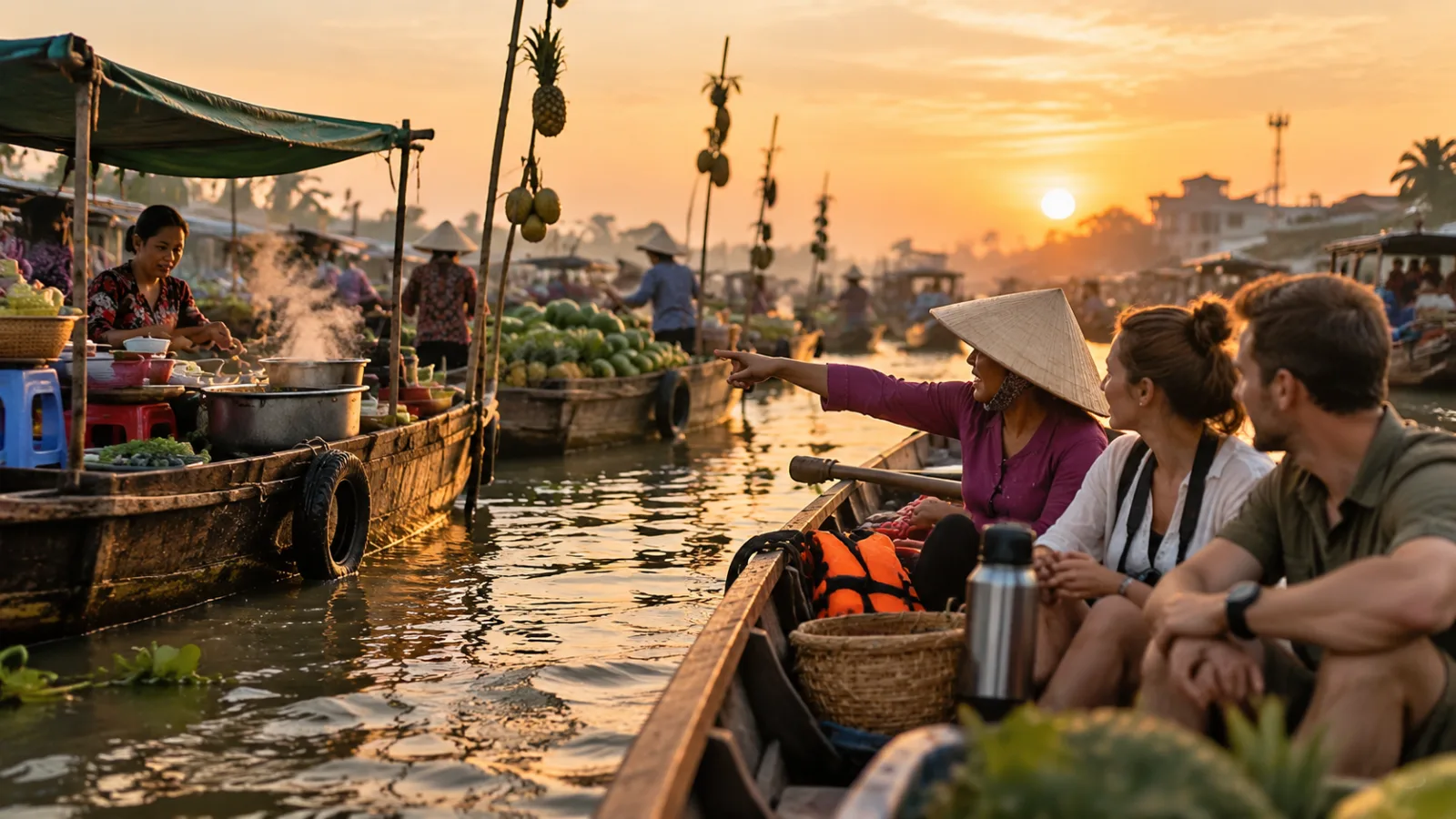

Cai Rang Floating Market is one of the most iconic experiences in the Mekong Delta, but first-time visitors often arrive too late, expect the wrong kind of market, or miss the small details that make the trip worthwhile. This introduction gives you the clearest starting point: what Cai Rang Floating Market actually is, why it matters, and how to plan a visit that feels worth the early wake-up.
If you are traveling for a local, adventurous experience, the key is timing and context. The market works best at sunrise, when boats still trade, breakfast is served on the water, and the river feels alive. A simple plan can turn Cai Rang Floating Market from a rushed boat ride into a memorable morning, especially if you know what to skip and what to focus on.
What Is Cai Rang Floating Market and Why It Matters
Cai Rang Floating Market is one of the best-known river markets in the Mekong Delta, where traders sell fruit, noodles, coffee, and daily essentials from boats instead of stalls. For first-time visitors, it solves a simple travel problem: how to experience something truly local without needing a full-day adventure. The key is knowing what it still is today, and what it is not.
For travelers planning a morning boat trip, Cai Rang Floating Market matters because it shows how river life once shaped trade, food, and movement across southern Vietnam. It is not just a sightseeing stop; it is a living reminder of the delta’s water-based economy. If you want a deeper local experience, compare it with Ho Chi Minh City food tours or browse all Toward Local tours for broader Vietnam trip ideas.
Definition: Cai Rang Floating Market is an early-morning wholesale and breakfast market on the water near Can Tho, best known for boats selling produce and simple meals.
Why it matters:
- It reflects the Mekong Delta’s river-based trading culture.
- It helps visitors see how locals once moved goods before highways dominated.
- It remains one of the easiest ways to add a local, adventurous experience to a Can Tho itinerary.
The market’s cultural role is bigger than the sales on each boat. For many families in the delta, floating trade was a practical response to geography: canals, floods, and narrow roads made boats the fastest way to connect villages and buyers. A small bamboo pole showing the goods for sale is a useful detail to watch for, because it explains how vendors communicate without loud shouting or signs.
The economic role is different now. Today, more goods move by truck, so the market has become smaller and more tourism-driven than many visitors expect. That shift does not erase its value, but it does change how you should approach it. Expect a morning scene with real local activity, then a lighter market atmosphere as the sun rises and tourist boats increase. If you are deciding whether to book, the practical answer is to go for the river experience, the breakfast on board, and the cultural insight, not for a huge wholesale spectacle.
| Criteria | Best for | What to expect | Traveler fit |
|---|---|---|---|
| Early arrival | Authentic atmosphere | More vendor boats at sunrise | Solo travelers and couples |
| Later morning | Relaxed sightseeing | More tourist boats, fewer merchants | Families and casual visitors |
The best time to see Cai Rang Floating Market is very early, usually around sunrise. That is when boats are most active, breakfast sellers are serving noodles and coffee, and the river feels like a working market rather than a staged stop. A useful takeaway: if you arrive late, you may still enjoy the boat ride, but you will be seeing a thinner version of the market.
For travelers who enjoy adventurous, local experiences, this is still worth including in a Mekong Delta trip. It rewards curiosity, early waking, and realistic expectations. If you want a softer landing into southern Vietnam before heading deeper into the region, you can also compare it with Da Nang tours or Hoi An tours depending on your route. The strongest reason to visit is simple: Cai Rang is a rare chance to see how the delta once worked, and how it still adapts today.
How Cai Rang Floating Market Works
Cai Rang Floating Market works as a river-based wholesale hub where farmers, boat owners, and small traders meet before sunrise to buy and sell fresh produce directly from their boats. The market is busiest in the early morning, when cargo is moved fast, the water is active, and buyers can see what each boat is offering at a glance. For travelers, understanding that rhythm makes the visit far more rewarding.
The basic system is simple: vendors hang samples on tall bamboo poles, buyers approach by boat, and deals happen quickly on the water. If you arrive too late, you may only see a few merchant boats and many tour sampans. A smart visit means going early, keeping expectations realistic, and treating the market as a living local routine rather than a staged show.
At Cai Rang Floating Market, sellers do not shout across stalls like in a land market. Instead, they use a bamboo pole called a Cay Beo to signal what they are selling, such as pineapples, mangoes, pumpkins, or noodles. This keeps the process efficient on a busy river, where engine noise and moving boats make traditional market calling impractical.
A useful rule of thumb is simple: the higher and clearer the sample, the easier it is for buyers to spot the boat. That is why you may see fruits, vegetables, or even a sample basket tied near the top of the pole. It is practical, not decorative. This small detail is one of the clearest signs that the market still follows real trading habits, even as tourism has become more visible.
| Criteria | What to Expect | Why It Matters | Traveler Tip |
|---|---|---|---|
| Boat marketing | Bamboo poles with produce samples | Helps buyers identify goods fast | Look up before asking your driver |
| Best time | Sunrise to around 8 AM | Most merchant activity happens early | Leave early and avoid late arrivals |
The main products are usually fresh fruit, vegetables, rice noodles, breakfast soup, dried goods, and occasional household items. Larger boats may act like floating kitchens or mini shops, while smaller boats often focus on one product category. This makes the market feel organized even when dozens of boats move at once.
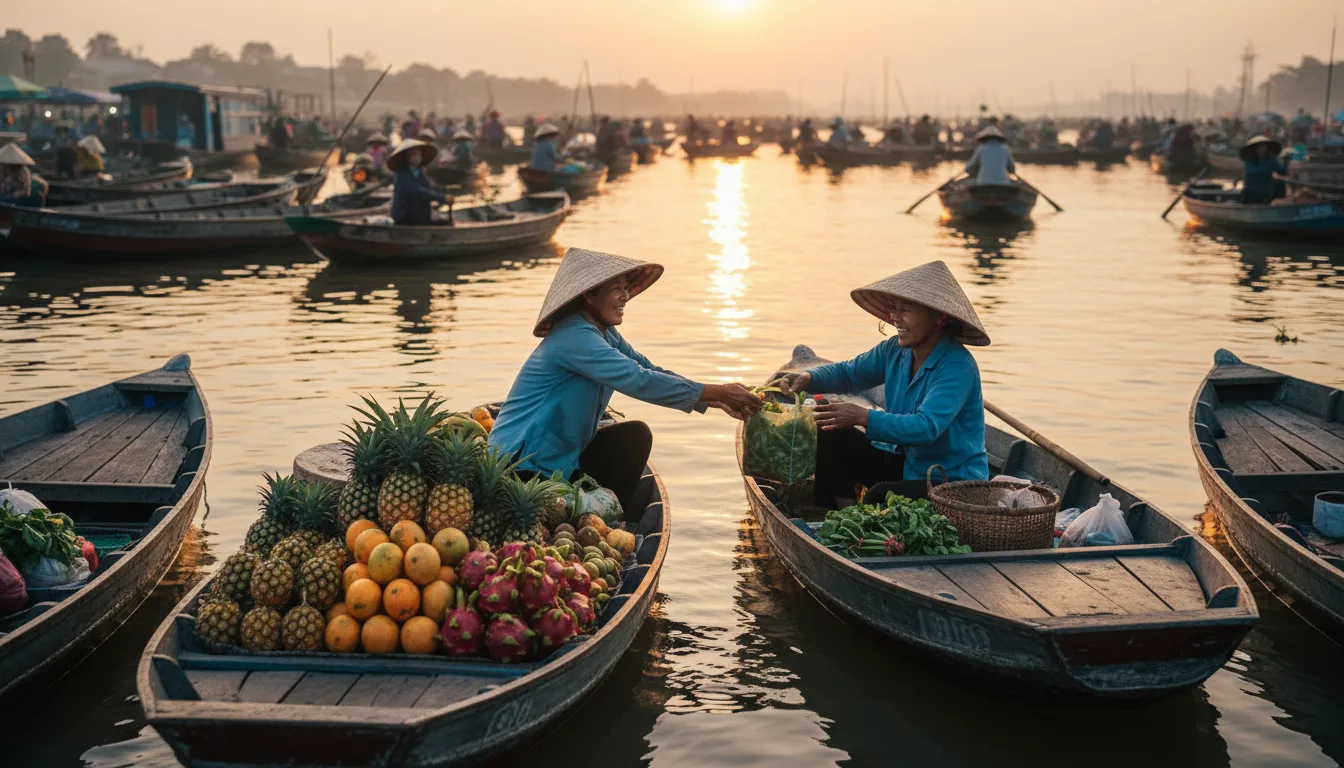
For a visitor, the best moment is often watching a transaction rather than buying something. A vendor may pull alongside a buyer, exchange a few words, pass over a bag of produce, and move on within seconds. That pace tells you a lot about local commerce in the Mekong Delta. If you want a wider food experience after the market, explore HCMC food tours for a smoother city-to-delta comparison.
A typical morning visit starts with a boat pickup in Can Tho before dawn, then a river ride of about 45 to 60 minutes depending on your departure point. When you reach the market, expect a mix of merchant boats, breakfast boats, and tourist sampans circling the same waterway. The scene is busiest near the bridge and gradually thins out as the morning moves on.
For first-time travelers, this is the key insight: the value of the visit is not only in what is sold, but in how the system works. You are seeing a working river economy, a tourism layer on top of it, and a morning routine that still feels local if you arrive early enough. If your trip continues through central Vietnam, see Hoi An tours for another highly walkable cultural stop.
Cai Rang Floating Market works by early-morning boat-to-boat trading. Vendors display goods on bamboo poles, buyers approach directly on the water, and the market is most active at sunrise. Travelers should arrive early to see real commerce, not just tourist boats, and should expect fruit, noodles, breakfast food, and moving river traffic.
If you want a deeper local-style itinerary in Vietnam, keep Cai Rang as your early morning highlight and plan the rest of your day around nearby Mekong experiences rather than rushing back too soon.
For a more complete trip planning option, browse all Toward Local tours and compare routes that fit your pace, whether you travel solo, as a couple, or with family.
Why Cai Rang Floating Market Is Worth Visiting
Cai Rang Floating Market is worth visiting if you want a rare, early-morning look at life on the Mekong Delta waterways. It is not a polished attraction, and that is exactly why many travelers still make the trip. The appeal is the mix of local commerce, boat traffic, breakfast on the water, and the feeling that you are seeing a working river culture before the day fully wakes up.
For first-time visitors, the market works best as a short, high-value experience rather than a full-day event. You get movement, sound, color, and a strong sense of place in one outing. If you enjoy adventurous trips and places that feel genuinely local, Cai Rang Floating Market can be a memorable stop on a Southern Vietnam itinerary, especially when paired with a guided boat ride through nearby canals.
Cai Rang Floating Market is worth visiting for travelers who want an early boat trip, local Mekong Delta atmosphere, and a mix of breakfast, photography, and light cultural insight. It is best for visitors who value authentic river scenery over a perfectly polished tourist attraction.
| Criterion | Why it matters | Best for | Takeaway |
|---|---|---|---|
| Local atmosphere | Shows river life in action | Culture-focused travelers | Strong reason to go |
| Tourist comfort | Simple to join by boat tour | Beginners and families | Easy half-morning plan |
The top reason travelers add Cai Rang Floating Market to a Mekong Delta itinerary is the experience itself. You are not only looking at a market, you are moving through it by boat, which changes the whole rhythm. The best moments are usually sunrise scenes, noodle breakfast stops, and quick views of fruit boats trading on the water. Even if the market is smaller than expected, the setting still feels distinctive.
Another reason is variety. In one outing you can combine a Toward Local tour collection with river cruising, local food, and street-level photography from the water. For many travelers, that makes the morning efficient and worthwhile. A soft bonus is convenience: it fits well with a Can Tho stay or a wider Southern Vietnam route without demanding a full travel day.
Popular activities are simple but effective. Most visitors choose a boat tour, eat breakfast on the river, and take photos of the boats, vendors, and morning light. A good trip usually includes:
1. Boat cruising at sunrise for the best light and fewer crowds
2. Breakfast on a noodle boat for a classic Mekong Delta moment
3. Photography of produce poles, reflections, and moving river traffic
4. Short canal stops that show daily life beyond the main market
If you like practical travel planning, this is the kind of stop that rewards early wake-up effort. It is especially useful for foreign tourists who want a local experience without needing deep language skills. Couples usually enjoy the scenic pace, solo travelers like the independence and photo opportunities, and families benefit from the short duration and easy logistics. Travelers who want a highly authentic, adventurous morning on the water are the ones most likely to enjoy it.
For a smoother trip, combine it with other Mekong Delta experiences through all Toward Local tours so you can compare routes and choose the right level of comfort. If you prefer a softer introduction, Cai Rang works well as a first taste of river life before moving on to longer or more immersive local experiences. The key is to treat it as a memorable morning, not a giant market spectacle.
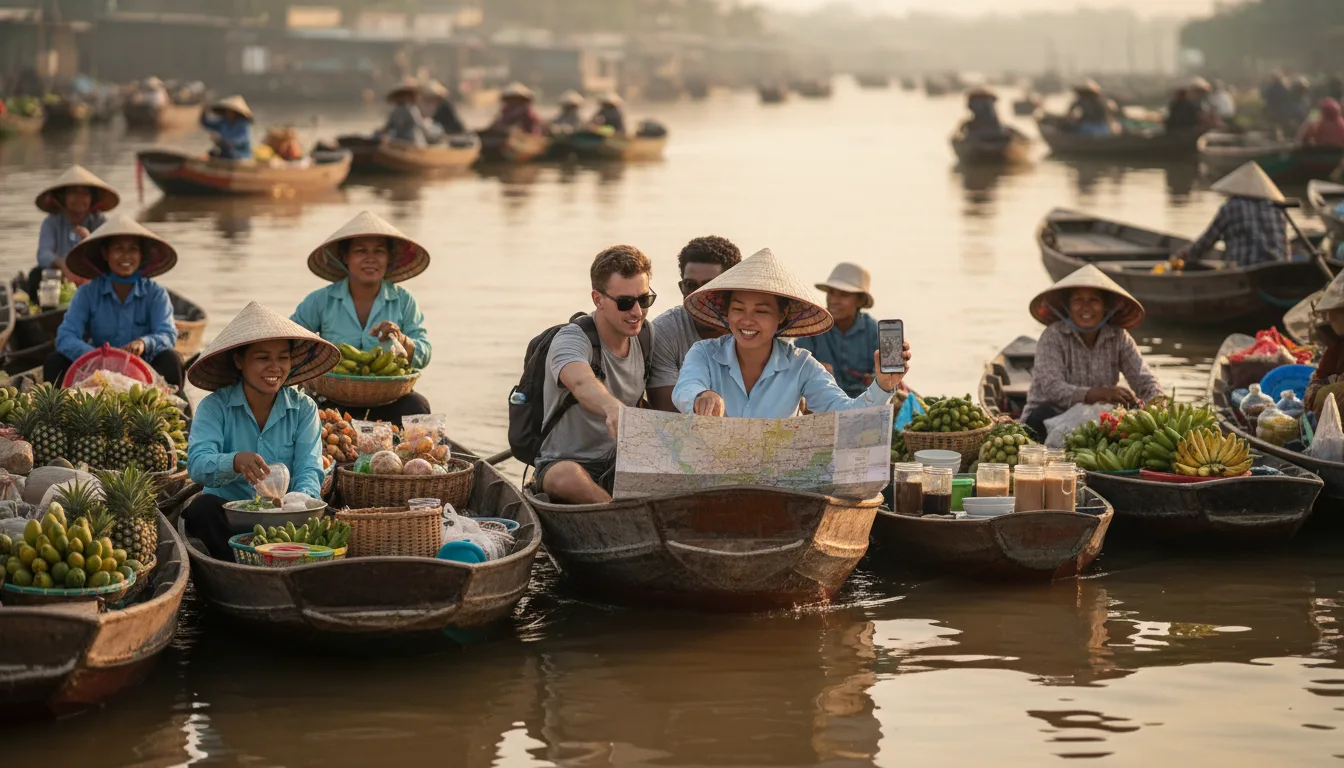
How to Plan the Best Visit to Cai Rang Floating Market
Cai Rang Floating Market is best planned as an early-morning boat trip from Can Tho, with sunrise as the sweet spot for light, cooler weather, and the most active trading. If you wait until late morning, you will mostly see tourist boats and a thinner market scene, so timing matters more here than in most Mekong Delta stops.
For first-time visitors, the easiest win is to stay in Can Tho the night before, leave before 5:30 AM, and bring only what you need for a damp, moving boat ride. A good plan reduces the common pain points: missed sunrise, overpriced add-ons, and booking a tour that looks local but delivers a generic route instead.
The best way to visit Cai Rang Floating Market is to sleep in Can Tho, leave before sunrise, and choose a small boat that visits the actual trading area first. Pack light, bring cash, and avoid tours that focus more on souvenir stops than the market itself.
Best time to go: aim for 5:30 to 7:30 AM, when vendor boats are still trading and the river is alive. By 8:30 AM, the scene often feels more like a sightseeing circuit. In practical terms, a couple or solo traveler should plan for an early wake-up, while families should expect a gentler pace and bring snacks for kids before boarding.
How to get there depends on your style. Independent travelers can base themselves in Can Tho, then take a short transfer to Ninh Kieu Wharf or a smaller pier near the river. If you prefer structure, a half-day tour is simpler, and browse all local tours to compare options before you commit.
What to bring is simple but important: cash in small notes, sunscreen, a light jacket for the ride out, and a dry bag for your phone. A mini checklist helps:
- Cash for breakfast boats and tips
- Hat and sunglasses for the return ride
- Light rain cover in wet season
- Comfortable shoes for pier transfers
Common mistakes are easy to avoid once you know them. Do not book a full-day tour if you only want the market, because many itineraries spend more time on side stops than on the water. Do not assume every boat guide actually explains the experience, and do not pay extra for vague promises of authenticity without checking what is included.
The right boat tour is usually the one with a small group, a clear departure time, and a direct stop at the trading area before any extra visits. If your trip also includes a city stay, compare it with a food-focused experience like Ho Chi Minh City food tours so you can decide whether you want a market morning or a bigger Vietnam itinerary.
For many travelers, Cai Rang Floating Market works best as one local highlight inside a wider Mekong Delta plan. It is more compact and less varied than major land attractions, but that is also the appeal: you are seeing commerce on water, not a staged theme park version of the delta. If you want a longer journey with more countryside variety, this stop pairs well with other Mekong activities, especially for adventurous couples and solo travelers who like early starts.
| Criteria | Cai Rang Floating Market | Other Mekong Delta Stops |
|---|---|---|
| Best for | Early boat culture and quick morning visit | Longer sightseeing and broader landscape variety |
| Planning tip | Go before sunrise with a small boat | Allow more time and compare route quality |
If Cai Rang is on your Vietnam list, plan it well enough to make the early wake-up worth it. Book a boat with a clear route, stay near Can Tho if possible, and choose the kind of trip that matches your travel style, whether that is independent, couple-friendly, or family-friendly.
Cai Rang Floating Market FAQ and Practical Travel Tips
Cai Rang Floating Market is easiest to enjoy when you know what to expect. First-time visitors often arrive too late, overpay for a private boat, or assume the market still looks like the classic photos online. The real experience is smaller, busier with tourist boats, and much better when planned around sunrise.
If you want a smoother trip, focus on timing, route, and what is actually worth paying for. A short, well-organized morning can still be rewarding, especially if you like local life, small boat travel, and a soft adventure that feels different from standard city sightseeing.
Common mistakes first-time visitors make
Many travelers miss the best window by starting too late. The market is most active before 7:00 AM, and after that the number of vendor boats drops fast. Another common mistake is booking the first boat offer they hear at the pier, when a shared ride is often enough and far better value.
It also helps to manage expectations. Cai Rang Floating Market is no longer a huge wholesale hub, so do not expect endless rows of produce boats. A better plan is to treat it as a local river morning with a few real trade stops, breakfast on the water, and a look at the surrounding canals.
- Arrive before sunrise
- Bring cash in small notes
- Wear light layers for the early ride
- Skip add-ons that feel rushed or unclear
Frequently asked questions about Cai Rang Floating Market
When should I go? Go early, ideally between 5:30 AM and 7:00 AM. That is when the river feels most active and the light is best for photos.
How long does it take? A typical round trip from Can Tho takes about 3 to 4 hours, depending on how many stops you add along the way.
Is it still authentic? It is more mixed than before, but there is still real local activity if you go early and choose a simple route. If you want a broader comparison, browse all Toward Local tours for other Mekong-friendly options.
| Criteria | Best Choice | Avoid | Why It Matters |
|---|---|---|---|
| Departure time | Before sunrise | After 8:00 AM | Early boats see more trade and fewer crowds |
| Boat type | Small shared boat | Last-minute private upsell | Shared boats are usually cheaper and calmer |
Should I book a tour or go independently? Independent travel works well if you stay in Can Tho and want flexibility. A tour is easier for families or short stays, especially if you prefer one booking and no early-morning logistics. If you are comparing city-based food experiences, HCMC food tours can be a good benchmark for value and convenience.
Final travel tips and a light call to action
Pack light, keep your phone charged, and bring a dry bag if you care about your camera or passport. A hoodie or thin jacket can help during the first hour on the river, and sunglasses matter more than most visitors expect on the return trip.
The most practical tip is simple: go early, stay flexible, and focus on the parts of the morning that still feel local. If you like this style of travel, Toward Local has more region-specific options that make planning easier, from river routes to Hoi An tours and beyond. A smart booking here can turn a short morning into one of the most memorable parts of your Vietnam trip.