
Burning joss paper in Vietnam is a tradition many visitors notice before they understand it, and that gap often leads to confusion at temples, family altars, and funerals. For solo travelers, couples, and families exploring local culture, knowing the purpose behind the ritual helps you observe it respectfully instead of feeling unsure.
This guide explains what burning joss paper in Vietnam means, when it happens, and how to read the social cues around it. If you are planning a deeper cultural trip, you can also explore all tours from Toward Local as a starting point for more grounded local experiences. In practical terms, joss paper is part of ancestor worship, memorial practices, and Buddhist-influenced customs, so the key is to understand the context before you join in.
| Criteria | At a temple | At a family altar | At a funeral |
|---|---|---|---|
| Purpose | Respect and prayer | Honor ancestors | Support the deceased |
| Visitor role | Observe quietly | Follow host guidance | Be discreet and solemn |
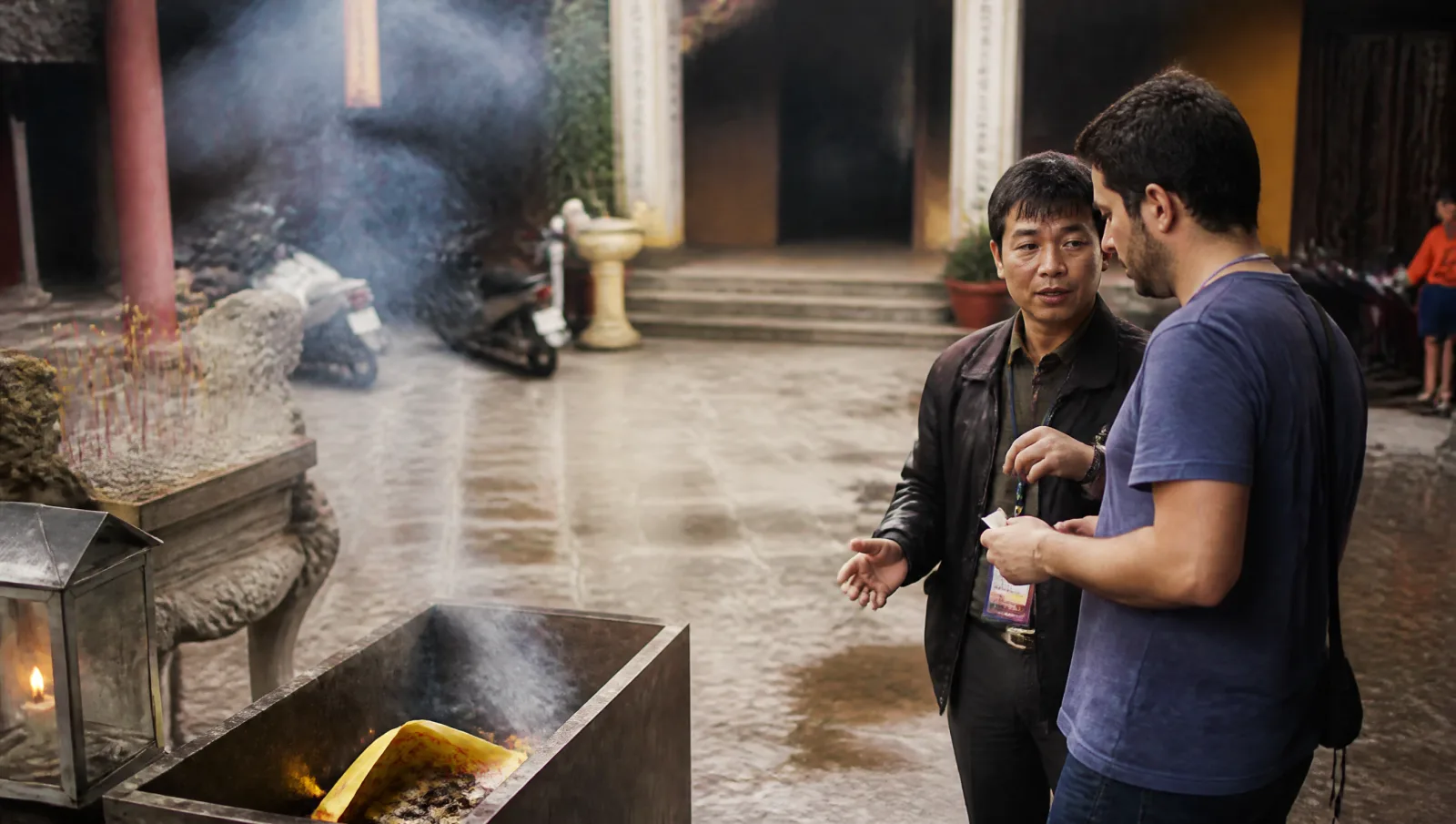
Burning joss paper in Vietnam is a ritual of sending symbolic offerings to ancestors and spirits. Visitors should watch quietly, avoid touching items without permission, and follow the lead of local hosts or temple staff to show proper respect.
A common mistake is treating the ritual as a tourist spectacle rather than a meaningful family practice. A better approach is to notice the timing, the incense, and the paper offerings, then ask a local guide when it is appropriate to take photos or simply stand back.
When you want a more complete cultural context, it helps to connect this tradition with the places where it is most often seen. In cities with active spiritual life, a guided food or heritage walk such as Ho Chi Minh City tours can add useful context without turning the moment into a performance.
For travelers, the main takeaway is simple: observe first, participate only when invited, and let local etiquette guide your behavior. That small shift makes the ritual easier to understand and the experience far more meaningful.
If you want to experience Vietnam with more local insight, choose a guide who can explain customs like joss paper burning clearly and respectfully. That is often the difference between seeing a ritual and truly understanding it.
Understanding burning joss paper in Vietnam starts with respect, not action. Follow the custom carefully, ask before joining, and you will avoid the most common mistakes while gaining a deeper view of Vietnamese spiritual life.
What Burning Joss Paper in Vietnam Means in Vietnamese Culture
Burning joss paper in Vietnam is a ritual way to send symbolic money and gifts to ancestors and spiritual beings, especially during festivals, death anniversaries, and temple visits. For many visitors, it can look like a simple act of burning paper, but for locals it carries respect, memory, and family duty.
If you are traveling through Vietnam and want to understand local life beyond the usual sights, this tradition is a small but meaningful window into how Vietnamese people honor the invisible world. Seeing it in a market lane, at a family altar, or outside a pagoda helps you read the culture with more confidence and less confusion.
At its core, joss paper is made to resemble useful items in the afterlife, such as cash, clothes, or daily necessities. The idea is not about material value in the modern sense, but about showing care for those who have passed away and keeping family ties active across generations.
In practice, you may notice different paper offerings depending on the occasion. In one home, a family might burn simple paper money before a death anniversary meal, while at a temple, worshippers may offer larger bundles during a seasonal ceremony. local cultural tours often explain these moments in a respectful way, so travelers can observe without misreading the ritual.
The deeper meaning connects ancestor worship, spirits, and filial piety. Vietnamese families often believe that ancestors remain part of daily life, so offerings become a quiet way to ask for protection, express gratitude, and show that family lines do not end with death.
A useful way to think about it is this: the ritual is less about the paper itself and more about intention. For example, a child who helps prepare offerings with parents is learning respect, continuity, and responsibility in one small action.
| Criteria | Meaning | What visitors see | Why it matters |
|---|---|---|---|
| Ancestor worship | Offerings to family spirits | Paper money, incense, food | Shows respect and continuity |
| Filial piety | Duty to honor parents and ancestors | Family members praying together | Explains why ritual is taken seriously |
For travelers, the best approach is simple: watch quietly, do not interrupt, and follow local cues if you are invited to participate. If you are planning a deeper cultural day in southern Vietnam, pairing this understanding with a Ho Chi Minh City food tour can give you a fuller view of how tradition and everyday life meet on the street.
In short, burning joss paper in Vietnam is a cultural language of remembrance. Once you understand that, the smoke is no longer just smoke, it becomes a sign of love, duty, and a living relationship between the present and the past.
How Burning Joss Paper in Vietnam Is Practiced
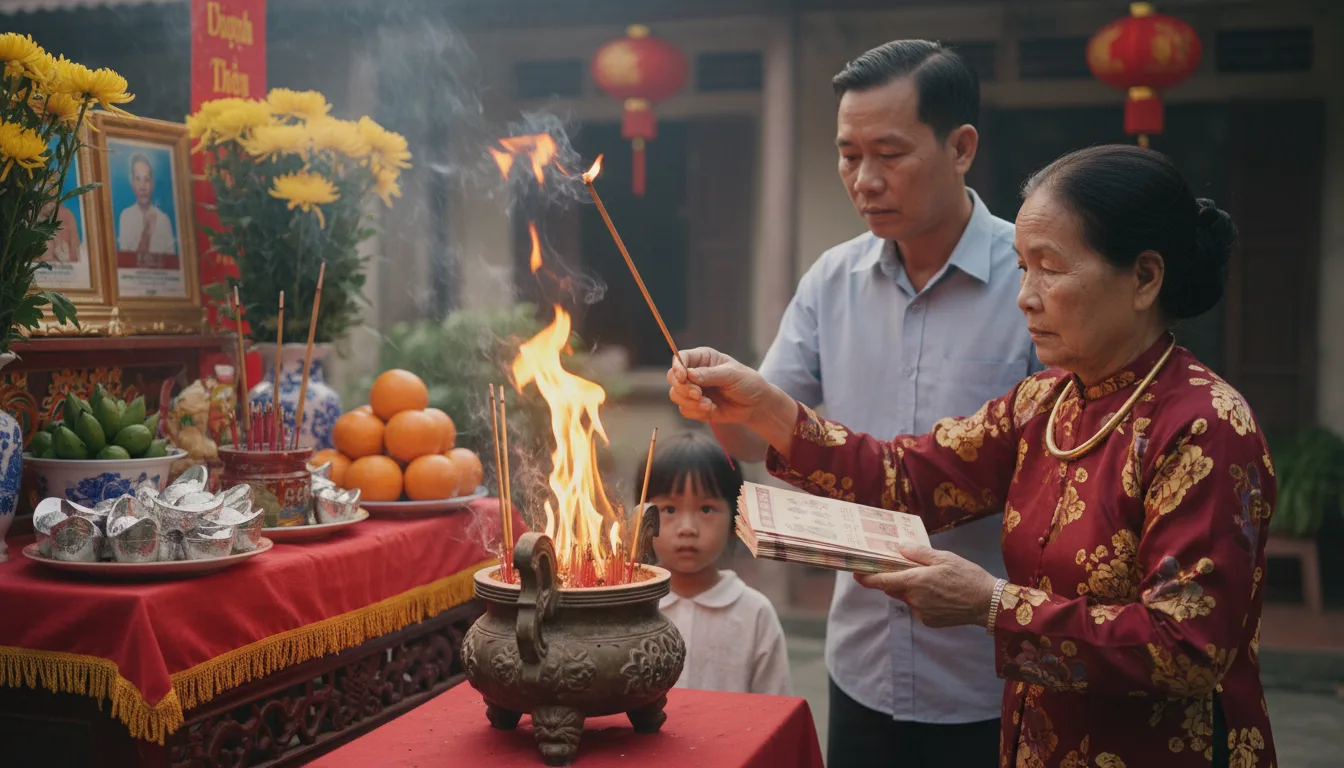
Burning joss paper in Vietnam is practiced as a respectful offering to ancestors, household guardians, and sometimes deities. For first-time visitors, the ritual can look simple, but the timing, place, and items matter. Understanding the basic steps helps you observe without interrupting daily life or reading the scene the wrong way.
In homes, temples, and small neighborhood altars, the practice follows a clear rhythm: prepare the offerings, light incense, make a quiet wish or prayer, and burn the paper at the right moment. If you are planning a culture-focused trip, this is one of the most visible local traditions you may notice during Toward Local tours in older city districts, especially around family altars and temple courtyards.
Burning joss paper in Vietnam usually means offering paper money or symbolic paper goods to honor ancestors and spiritual figures. People place the items on an altar, pray, then burn them in a safe container or furnace. The ritual is common at home, in temples, and during death anniversaries, lunar holidays, and special family occasions.
Typical steps in a joss paper offering ritual
The usual flow is straightforward. People first clean the altar, place fresh flowers, fruit, tea, or rice, then light incense before burning the paper. The burning is often done after the prayer, not before, because the ritual is about showing respect in a calm, ordered sequence.
A practical example: in a family home, an elder may say a short prayer, the younger members stand quietly, and the paper is burned in a metal pot or outdoor area. A small detail many visitors miss is that the smoke is less the focus than the intention behind the act. If you are exploring heritage streets on Hoi An tours, you may see this tradition beside wooden ancestral altars in preserved houses.
Common items used in paper offerings and when they are burned
Joss paper can include paper money, gold and silver ingots, clothing, houses, phones, or daily-use items made in paper form. The exact set depends on the family, the occasion, and local custom. Paper money is the most common item, while larger symbolic objects usually appear during funerals, anniversaries, or major ancestor days.
| Criteria | Home altar | Temple offering | Special occasion |
|---|---|---|---|
| Typical items | Paper money, incense, fruit | Simple paper money, flowers | Paper clothes, larger symbolic sets |
| When burned | After prayer at home | At the temple’s designated burner | During anniversaries, holidays, memorial days |
A simple rule is to match the scale of the offering to the occasion. At temples, offerings are often modest and orderly, while family events can be more elaborate. If you want to observe the custom in a wider cultural setting, Da Nang tours can also place you near active local neighborhoods where ancestor altars are part of daily life.
Real-life examples in homes, temples, and during special occasions
At home, burning joss paper often happens on the first and fifteenth day of the lunar month, on death anniversaries, or before major family travel. In temples, monks or staff may guide visitors to a shared burner, and the process is usually quieter and more regulated. During Lunar New Year, the ritual may feel more visible because families combine incense, food, and paper offerings in one ceremony.
For travelers, the key insight is to observe discreetly and follow the host or temple lead. Do not step into a ritual area without invitation, and avoid assuming every burning is the same. A short, respectful visit can teach more than a rushed one, especially in neighborhoods where tradition is still part of everyday routine and not staged for tourists.
For a deeper local experience, choose a route that includes markets, old houses, or temple districts, where this practice appears naturally in daily life. That is often where cultural understanding becomes real, not just something you read about.
Soft travel idea: If your trip includes culture, food, and local customs, a small-group walking route can help you see these rituals in context while still respecting private family spaces.
Practical takeaway: Burning joss paper in Vietnam is a family and spiritual act with clear steps, modest materials, and meaningful timing. Watch quietly, keep your distance, and learn from the setting rather than the smoke.
When and Why People Burn Joss Paper in Vietnam
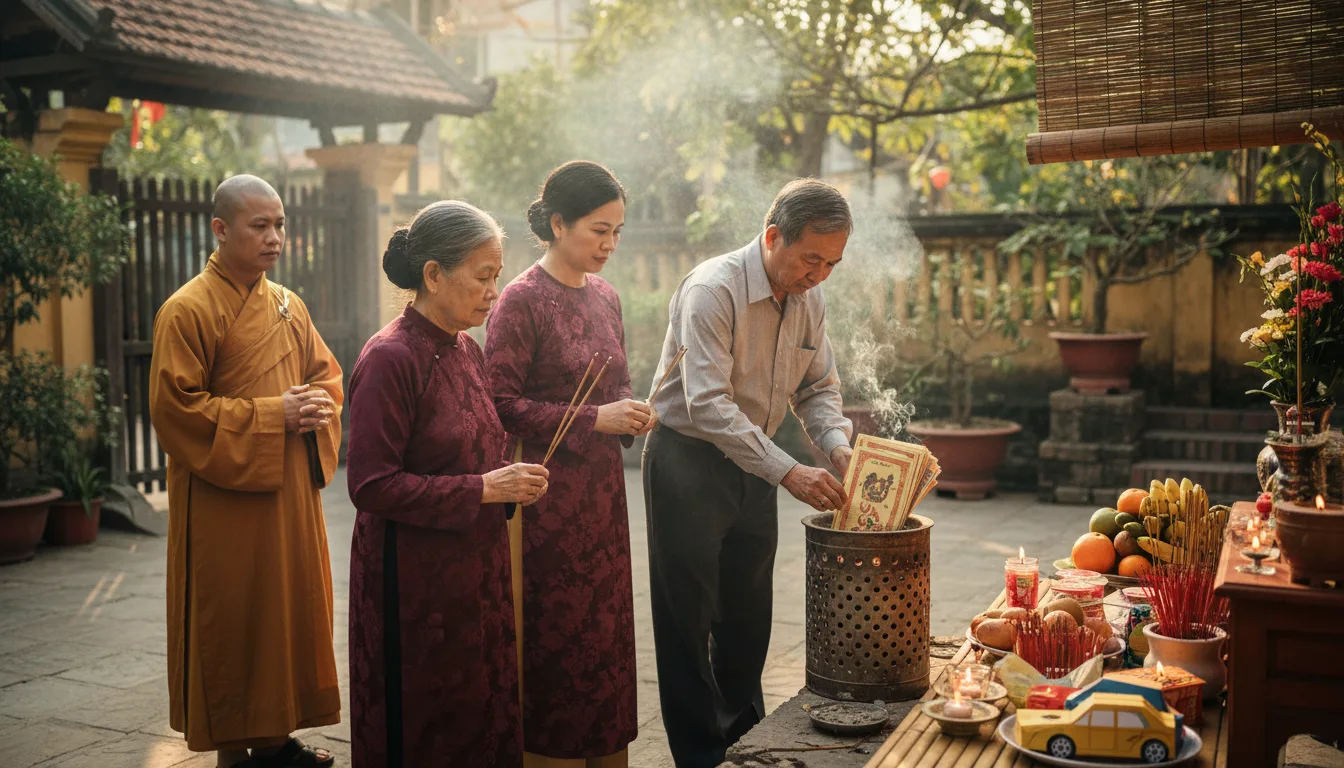
Burning joss paper in Vietnam is a ritual of sending care, respect, and symbolic goods to ancestors and spirits. For first-time visitors, it can look surprising, but the practice is usually tied to specific dates, family memory, and local belief rather than daily life. Understanding when it appears helps you read the scene with confidence instead of confusion.
The tradition is most visible during Tet, funerals, and death anniversaries, when families gather at altars or temples. In cities and rural neighborhoods alike, the smoke often signals a moment of remembrance. For travelers exploring local Saigon experiences, this is one of the clearest ways to see how Vietnamese spirituality stays present in everyday life.
Joss paper is burned in Vietnam during important family and religious occasions to honor ancestors and communicate care across the spiritual world. The practice is common at Tet, funerals, and death anniversaries, and the meaning can vary by region and household tradition.
It is not random, and it is not only about religion. Families often burn paper offerings because they believe the gesture supports ancestors in the afterlife and keeps the relationship between the living and the dead active. In practice, it also creates a shared family ritual that marks a major life event with order and respect.
- Tet: used to welcome a new year with blessings and ancestral attention
- Death anniversaries: offered to remember and care for departed relatives
- Funerals: burned to guide and support the deceased during transition
A useful travel insight is that the amount, timing, and items burned can differ widely. Some families keep the ritual small and private, while others prepare larger offerings with paper clothes, money, and symbolic objects. If you want to pair cultural context with a guided food stop, browse all Toward Local tours for routes that fit slow, local-style exploration.
Regional differences matter too. In southern Vietnam, you may notice more visible street-side burning, while northern families may emphasize altar-based rituals and tighter family rules. Even within one city, practice can change from household to household, so the safest approach is to observe quietly and follow local cues.
For travelers, the key is simple: treat the smoke as a sign of memory, not spectacle. Stay a respectful distance, avoid stepping over offerings, and do not assume every family does it the same way. If your trip includes central Vietnam, Hoi An cultural tours can also help you notice how local customs shift from one community to another.
| Criteria | Tet | Death Anniversary | Funeral |
|---|---|---|---|
| Purpose | Welcome blessings and honor ancestors | Remember and support departed relatives | Guide the deceased through transition |
| Typical scale | Often moderate to large | Usually family-led and focused | Varies by family, often more formal |
The practical takeaway is that burning joss paper is best understood as a family-centered act of respect shaped by belief, occasion, and place. If you are planning a deeper local trip and want more than surface-level sightseeing, this ritual is one of the clearest signs that Vietnam’s spiritual life is woven into daily culture. For a softer next step, you can explore Da Nang local tours and compare how tradition feels across different regions.
To experience it respectfully, watch first, ask before joining, and let the family lead. That approach will help you understand the tradition without interrupting it, while also making your trip feel more grounded, human, and memorable.
How to Respect Local Customs When You See Burning Joss Paper in Vietnam
Burning joss paper in Vietnam is a religious and cultural act, not a performance for visitors. If you see smoke near a temple, roadside altar, home entrance, or cemetery, the safest response is simple: pause, watch quietly, and give people space. For adventurous travelers, this small habit shows respect fast and helps you avoid awkward misunderstandings.
Most locals do not expect foreigners to know every rule, but they do notice attitude. Keep your voice low, do not step into a ritual area, and never treat the scene like a photo stop. A little distance, patience, and curiosity go much further than questions asked too early.
For travelers and first time visitors, the main rule is to observe before acting. If someone is lighting paper, wait until the ritual is finished before moving closer. If you want to take a photo, ask first and keep it discreet. Near family altars or small neighborhood shrines, standing to the side is usually better than facing directly into the offering space.
Practical etiquette is easy to remember: remove sunglasses if you are entering a temple, avoid pointing your feet toward altars, and do not touch offerings unless invited. On quiet streets, you may also want to step around the smoke instead of walking through it. If you are building a local travel route, consider combining cultural stops with experiences like Ho Chi Minh City food tours so you can learn the context with a guide.
A useful takeaway: silence matters more than perfection. Vietnamese families are usually forgiving when visitors are unfamiliar, but they appreciate calm behavior. In practice, this means no loud commentary, no joking about the smoke, and no rushing through the space while someone is paying respect to ancestors.
| Criteria | Good behavior | Bad behavior | Why it matters |
|---|---|---|---|
| Near altars | Stand aside and wait | Walk straight through | Shows respect for offerings |
| Taking photos | Ask first and keep distance | Film closely without permission | Avoids invading private ritual space |
Common mistakes near altars, temples, and cemeteries are often small but noticeable. Do not lean on altars, do not step over offerings, and do not speak loudly in front of memorial spaces. In cemeteries, keep your movements slow and avoid standing directly on grave markers or ceremonial layouts. If you are unsure, copy the behavior of the quietest local person nearby.
This tradition also has parallels across Asia, but each place feels different. In some Chinese communities, paper burning is tied closely to ancestral care, while in parts of Korea and Japan, visitors may see different forms of memorial respect, incense, or seasonal offerings. Vietnam often feels more neighborhood based and personal, which is why respectful distance matters so much when you see burning joss paper in Vietnam.
If you want a deeper local experience without guessing the rules alone, join a guided route that includes cultural stops and food. That way, you learn what the smoke, the altar, and the ritual mean in context, while still enjoying the trip at your own pace. For more regional planning, explore all Toward Local tours and choose an experience that fits your style.
In short, the best response is calm observation, polite distance, and no assumptions. Respect the space, ask before photographing, and let the ritual finish before you move on. That is the easiest way to travel well in Vietnam and still feel confident in local settings.
FAQ About Burning Joss Paper in Vietnam and Key Takeaways
Burning joss paper in Vietnam is a ritual practice that appears in temples, family altars, and some neighborhood ceremonies. For first-time visitors, the key question is not only what it means, but how to observe it respectfully without getting too close to the smoke, the flame, or the sacred space.
This chapter answers the most common questions in a practical way. If you are planning local experiences in Hoi An, a guided walk through Hoi An heritage streets can help you see rituals in context, while learning when to stay quiet, when to ask, and when to simply watch.
Burning joss paper is a traditional offering used to show respect to ancestors and spiritual beliefs in Vietnam. Visitors should observe quietly, avoid stepping into ritual areas, and never assume they should join unless invited by locals.
People often ask whether the ritual is religious, cultural, or both. In practice, it is often both. In a family home, joss paper may be burned during ancestral worship. In a temple, it may appear during seasonal ceremonies or special days. The safest approach is to watch body language first: if locals are focused, stay back; if someone explains the meaning, listen and do not interrupt.
A common misconception is that visitors must participate to show respect. That is not true. Respect can be shown through silence, distance, and awareness of local norms. Another misunderstanding is that the ritual is purely symbolic and harmless in every setting. In reality, smoke, open flame, and crowded spaces can be uncomfortable, especially for children or older travelers. A simple rule is to keep your hands free, remain on the side, and follow the host’s lead.
| Criteria | Best Practice | What to Avoid | Why It Matters |
|---|---|---|---|
| Observation | Stand quietly at the edge | Walk through the ritual area | Protects space and focus |
| Participation | Join only if invited | Touch offerings without permission | Shows cultural respect |
For travelers who want deeper local context, a soft way to explore is by pairing ritual observation with a food or heritage route, such as all Toward Local tours, where guides can explain how daily life, belief, and neighborhood culture connect. This is especially useful for solo travelers and couples who prefer meaningful experiences over checklist sightseeing.
The final takeaway is simple: observe first, copy later. Keep your voice low, avoid blocking smoke paths, and do not photograph sensitive moments unless allowed. If you are unsure, ask one short question or wait for cues from the host. That small restraint is often what turns a tourist moment into a respectful local encounter.
Key tips:
- Stay at a respectful distance from the altar or burning area
- Do not step over offerings, ash, or ritual tools
- Wear modest clothing in temples or family homes
- Ask before taking photos or videos
- Let locals guide the level of participation
If you are building a Vietnam trip around authentic neighborhood life, this is one of those moments where awareness matters more than action. For travelers who want expert help choosing the right local experience, Da Nang cultural tours and nearby heritage routes can add context without overcomplicating the day.