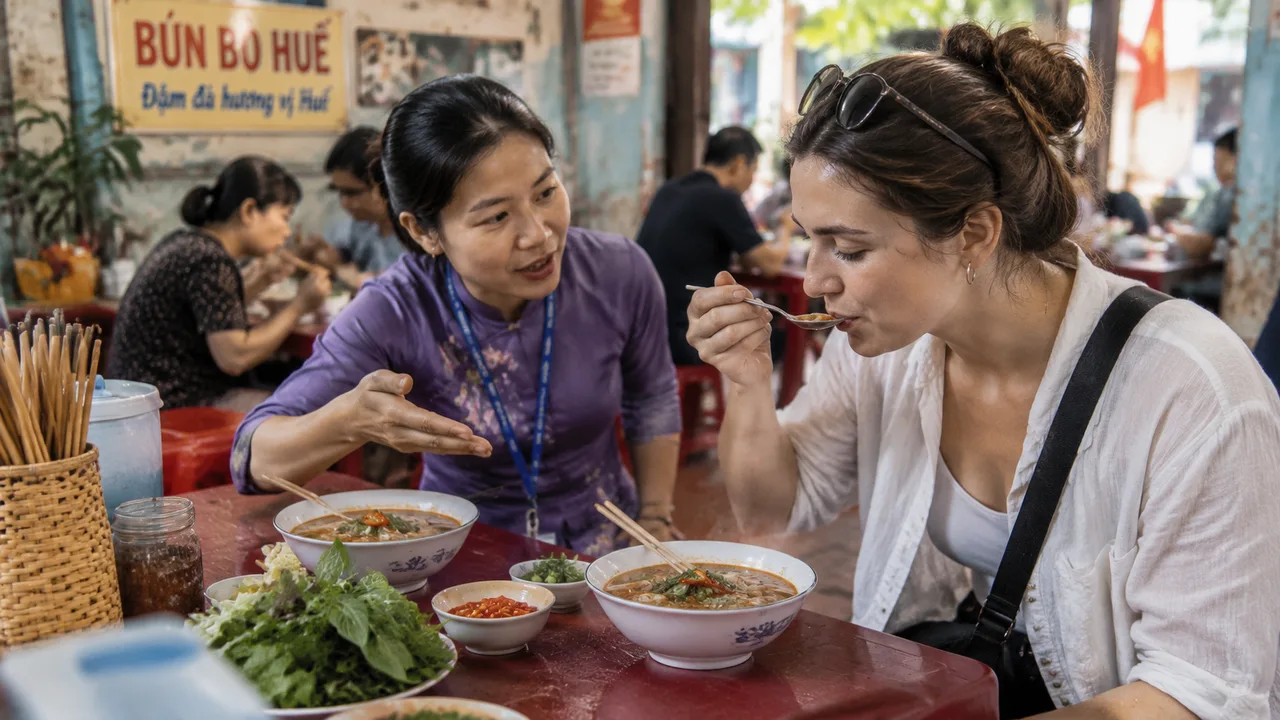

Why do Hue people like spicy food? The question often comes after a visitor’s first bowl of bun bo Hue, when the chili feels much hotter than expected. Heat is a noticeable part of many local meals, but it is not the whole story: history, regional ingredients, and eating habits all help explain the reputation. Knowing what to expect makes it easier to enjoy the food without overdoing the spice.
Hue cuisine reflects influences built over generations, while the city’s cool, damp winter may make warming dishes especially appealing. Fresh Vietnamese chili also brings fragrance and sharpness, not just heat, and people in Hue vary in how much they enjoy. If you are planning a wider trip, explore local tour options alongside your food stops, then ask for less chili when ordering if you prefer a gentler first taste.
Why Do Hue People Like Spicy Food? Cultural and Historical Roots
Why do Hue people like spicy food? The answer lies less in one royal recipe or a single climate theory than in a regional taste shaped by history, household cooking, and central Vietnam’s fondness for bold seasoning. For visitors, the key is knowing that chili is often served alongside a dish, so you can choose how much heat to add.
Hue’s years as Vietnam’s imperial capital helped establish a reputation for precise seasoning, contrast, and careful presentation. Royal meals were elaborate, but everyday food grew from family kitchens and local ingredients too. Dishes such as bun bo Hue show how chili can deepen a savory broth, while fresh chilies and chili paste let diners adjust the heat themselves.
Imperial heritage and everyday cooking
Royal culinary traditions valued balance and detail; they do not mean every Hue dish is fiery or every resident eats the same way. Recipes vary between households, restaurants, and seasons.
Why chili became familiar in central Vietnam
Chili adds aroma and sharpness as well as heat, complementing fermented sauces and rich broths. If you enjoy tasting local food across Vietnam, explore food and culture tours in other destinations too.
At a glance: Hue’s reputation for spicy food reflects a mix of refined culinary traditions and regional habits. Chili is commonly offered fresh or as a condiment, allowing diners to control the intensity. Not every dish is hot, and asking for less chili is a practical way to enjoy the flavors without overwhelming your palate.
| What you encounter | How it shapes the meal |
|---|---|
| Chili in broth or sauce | Adds warmth and a layered, savory edge |
| Fresh chili served separately | Lets each diner choose the heat level |
When ordering, try a small amount first and add more as you go. That way, you can experience Hue’s characteristic intensity while still tasting the herbs, broth, and other carefully balanced flavors.
Why Do Hue People Like Spicy Food in the Local Climate?
Why do Hue people like spicy food? The answer is not simply that chili makes rainy days or humid weather easier to endure. Hue’s food traditions, local ingredients, and the pleasure of balancing bold flavors all help explain why heat has a familiar place at the table.
The climate offers context, not a rule. Seasonal rain and cooler, damp days can make a hot bowl of noodles especially comforting, but people’s tastes vary, and cultural habits matter just as much.
quick answer: Why Hue food is often spicy
Hue’s fondness for chili reflects a long-standing food culture and a taste for vivid, balanced flavors. Rainy, cool days may make warm dishes feel especially comforting, but climate alone does not explain local preferences. Chili also adds aroma and intensity to savory foods, and diners can usually adjust the heat to suit their taste.
Hue’s Rainy Seasons, Humidity, and Eating Habits
Hue has a tropical monsoon climate, with a notably wet season. On a damp morning, a bowl of bún bò Huế can feel warming and satisfying; that everyday comfort is different from claiming spicy food prevents illness or is necessary to cope with the weather.
Meals also reflect habits learned at home and the flavors people enjoy. Fresh chili, chili paste, or a spicy condiment may be offered alongside a dish, so diners can choose their own level of heat. For travelers planning food stops across the country, browse local Vietnam tours for more ways to explore regional cooking.
How Chili Adds Warmth, Aroma, and Contrast
Chili does more than make a dish hot. Its sharp, fragrant kick can cut through rich broth and bring contrast to salty, savory, or fermented notes. A little can make familiar ingredients taste more vivid, while a generous serving gives the meal the intensity many Hue diners enjoy.
| What shapes the experience | What it can add | What it does not prove | Visitor tip |
|---|---|---|---|
| Cool, rainy weather | A comforting setting for hot dishes | That climate determines taste | Try a warm dish on a wet day |
| Chili with savory flavors | Aroma, heat, and contrast | That every local meal is very spicy | Ask for chili on the side |
Curious travelers can start with a small amount, taste, then add more. Ask for less chili if needed; the point is to enjoy Hue’s flavor, not to prove your tolerance.
When you sit down for a local meal, take it at your own pace and follow your curiosity. Taste the broth first, add chili gradually, and discover which balance feels right to you.
How Chili Appears in Hue’s Best-Known Dishes
Why do Hue people like spicy food? In Hue, chili is part of the flavor, not just an extra challenge. It appears in broths, dipping sauces, and fresh condiments, so visitors can often choose how much to add rather than avoid local dishes altogether.
Quick guide: Bún bò Huế often arrives with a warming broth and chili oil, while bánh khoái is served with a dipping sauce that may contain chili. Fresh chilies and chili pastes are commonly offered separately. Start with a small taste, then add more gradually; heat varies by restaurant and by condiment.
Bún Bò Huế, Bánh Khoái, and Other Local Favorites
Bún bò Huế is the dish where many visitors first notice the heat. Chili oil may already be blended into the broth, so ask for a mild bowl before ordering if you are sensitive to spice. With bánh khoái, check the dipping sauce before using it, or dip lightly to control each bite.
For a broader food-focused itinerary, browse local tours across Vietnam and look for experiences that include time to ask vendors about ingredients.
| Where chili appears | What to expect | How to manage heat |
|---|---|---|
| Bún bò Huế broth | Chili oil may be cooked in | Request mild broth when ordering |
| Bánh khoái sauce | Chili may be mixed into the dip | Taste a little before dipping |
| Fresh chili and chili oil | Often served on the side | Add a small amount at a time |
Fresh Chilies, Chili Oil, and Condiments
Look for sliced fresh chili, chili oil, or a thicker chili paste on the table. Their strength can differ, and a small slice can be surprisingly hot. Taste a tiny amount first, especially if you are sharing dishes with children or anyone unaccustomed to spice. This lets you enjoy Hue’s layered flavors without turning the meal into a heat test.
Ready to try Hue’s signature dishes? Start gently, ask how the chili is served, and add heat at your own pace.
Is Hue Food Spicier Than Food in Other Parts of Vietnam?
Featured answer: Hue food often tastes hotter than dishes many visitors encounter elsewhere in Vietnam, but there is no fixed regional rule. Chili may be mixed into a recipe or served separately, and heat varies by cook and restaurant. Ask for less chili and taste condiments gradually to find a comfortable level.
Hue, Northern Vietnam, and Southern Vietnam Compared
Why do Hue people like spicy food? Chili is part of the region’s distinctive seasoning tradition, and it can bring a sharp, warming contrast to dishes such as bun bo Hue. That reputation is useful to know, but it does not mean every Hue meal is intensely hot.
| Region | Common impression | What to expect | Useful tip |
|---|---|---|---|
| Hue and Central Vietnam | Often bold, with noticeable chili | Heat may be built into a dish or added at the table | Ask before ordering |
| Northern Vietnam | Often more restrained in chili | Fresh herbs and savory balance may stand out | Check the chili on the side |
| Southern Vietnam | Often balances sweet, sour, and savory notes | Spice levels still differ by dish and cook | Taste before adding sauce |
These are broad tendencies, not rankings. A family-run Hue eatery may serve mild food, while a restaurant elsewhere may offer a fiery dipping sauce. Even the same dish can change from one kitchen to another.
How to Choose a Spice Level That Suits You
- Ask for less chili, or request that chili and spicy sauces come on the side.
- Try a small amount first; sliced fresh chili can be much hotter than the broth.
- For children or anyone sensitive to heat, tell the server before the dish is prepared.
A simple request such as less spicy is usually enough, though a quick confirmation helps when ordering a local specialty. If you want to sample regional dishes with guidance, browse Toward Local food tours and choose an experience that suits your appetite for adventure.
What Visitors Should Know About Hue’s Spicy Food
Why do Hue people like spicy food? Chili is a familiar part of the region’s cooking, but visitors should not assume every dish will set their mouth on fire. Heat varies by recipe and restaurant, and it is often easy to adjust at the table.
Common Mistakes and Tips for First-Time Tasters
Quick guide: Hue cuisine is not uniformly spicy. Ask whether chili is cooked into the dish or served separately, request less chili when ordering, and taste a small amount before adding more. In bún bò Huế, chili oil commonly brings the heat; shrimp paste adds a savory depth, not necessarily extra spice.
Do not judge a dish by its red color alone: some broths look fiery but taste mild, while fresh chili on the side can be intense. If you have allergies or dietary requirements, ask about ingredients such as shrimp paste, fish sauce, and peanuts rather than asking only for less spice. When planning tastings in other cities too, browse local food tour options.
| What you notice | What to do |
|---|---|
| Chili served on the side | Add a little at a time |
| Chili oil in the broth | Ask for less chili before ordering |
FAQs: Hue Cuisine, Chili, and Spice Levels
Are all Hue dishes spicy? No. Many dishes are mild unless chili is added.
What makes bún bò Huế spicy? Usually chili oil or fresh chili; the cook and serving style matter.
Can visitors ask for less chili? Yes. Say less chili, please, or show the phrase to the server. Some chili can be removed, though heat already mixed into broth may remain.
Is Hue food spicier than food in other Vietnamese regions? It is often known for bolder seasoning, but spice levels vary across Vietnam and from one kitchen to another.
Try a local bowl at a level that feels right for you, then add chili only if you want more.