
Banh mi history begins with a delicious puzzle: how did a crisp, airy baguette become the vehicle for bright herbs, savory pâté, and tangy pickled vegetables? For travelers, the first bite can be as surprising as ordering from a busy street stall without knowing what is inside. This guide explains how French bread became a distinctly Vietnamese sandwich, so you can recognize the influences behind every layer.
Rather than tracing the sandwich to one inventor or a single date, its story follows decades of change: French colonial influence introduced wheat bread, while Vietnamese cooks adapted ingredients, flavor, and format to local tastes and daily life. Today, that evolving street food is recognized around the world. For a closer look at its roots while exploring the city, join Ho Chi Minh City food tours that bring local dishes into context.
Banh Mi History and Its French Colonial Roots
Banh mi history began with French colonial rule, when baguettes and imported wheat flour entered Vietnamese cities. At first, bread was costly and commonly served with French-style accompaniments rather than as a handheld sandwich. Vietnamese bakers later adapted the loaf and fillings to local ingredients, budgets, and everyday routines.
Banh Mi History and Its French Colonial Roots
French forces began their conquest of Vietnam in 1858, and colonial rule reshaped urban life over the decades that followed. Along with cafés and bakeries came the baguette and wheat flour, which had to be imported because wheat was not suited to Vietnam’s climate.
When the Baguette Arrived in Vietnam
In cities such as Saigon, bread was initially associated with French residents and wealthier diners. A baguette might be served with butter, pâté, ham, or cheese as part of a meal, not packed with local garnishes for eating on the move. Import costs kept it beyond the reach of many Vietnamese households.
How Vietnamese Bakers Adapted French Bread
As bread became more available, Vietnamese bakers and vendors adjusted it for local tastes and practical needs. They worked with the flour and ingredients they could obtain, while smaller portions helped make bread more affordable. The familiar portable sandwich emerged later, as vendors combined bread with Vietnamese-style fillings and vegetables.
- Early bread: A costly baguette, often served alongside cold cuts and spreads.
- Local adaptation: A more accessible roll shaped around local ingredients and quick meals.
| Feature | Early French-style bread | Later local adaptation | Why it changed |
|---|---|---|---|
| Role | Part of a plated meal | Portable everyday food | Convenience for city life |
| Access | Costly imported flour | Smaller, locally filled portions | Affordability and local supply |
For travelers, this history is easiest to understand while exploring the city’s food stalls and bakeries. A Ho Chi Minh City food tour can offer context alongside the tasting. The key insight is that banh mi was not simply imported intact: Vietnamese cooks transformed bread into a flexible street meal. Join a local food walk to discover how that adaptation still shapes what vendors serve today.
How Banh Mi History Shaped the Modern Sandwich
Banh mi history is a story of local adaptation, not a single inventor or exact birth date. French colonial rule introduced wheat bread and familiar fillings, but Vietnamese bakers and vendors reshaped them into a lighter, portable sandwich, reflecting changing tastes and the resourcefulness of urban food culture.
At first, bread was often served alongside French-style ham, pâté, butter, or cheese. Over time, Vietnamese cooks brought the ingredients together inside the loaf, making an affordable meal that could be carried through busy streets. The transformation gathered pace in Saigon, where vendors adapted recipes for local customers and daily routines.
For travelers exploring the city, a stop on a Ho Chi Minh City food tour can make those layers of history easier to taste and understand.
The Rise of the Vietnamese-Style Baguette
Vietnamese bakers developed rolls with a thin, crisp crust and a light, airy interior. Their smaller size made them practical for individual servings, while a delicate crumb held fillings without overwhelming them. The result was distinct from simply placing French ingredients beside a full-sized baguette.
| Feature | French-style bread service | Vietnamese-style banh mi | Why it mattered |
|---|---|---|---|
| Bread | Long baguette, often served at the table | Smaller, crisp roll with a light center | Easy to carry and fill |
| Fillings | Served alongside the bread | Layered inside with vegetables and herbs | A complete street-side meal |
Saigon and the Sandwich’s Defining Fillings
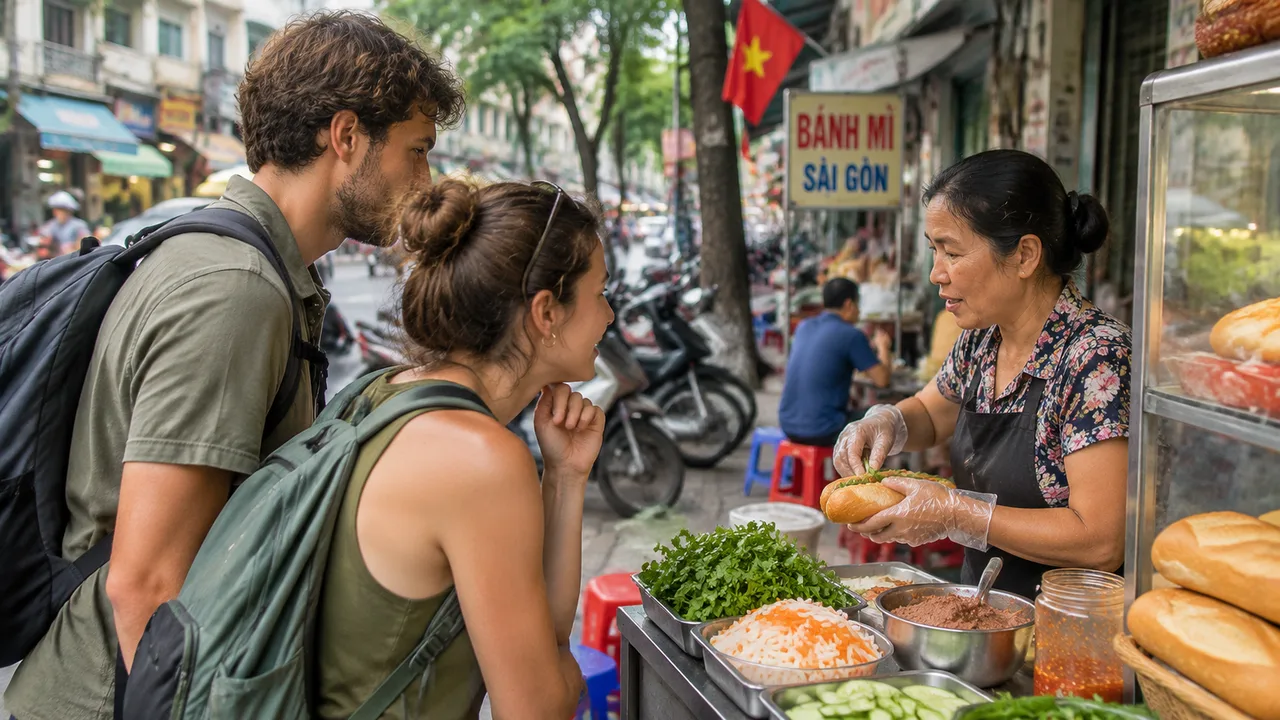
By the mid-20th century, Saigon’s vendors were combining pâté and meats with pickled carrot and daikon, cucumber, cilantro, chili, and sauces. Each element balanced the others: savory richness, sweet-sour crunch, freshness, heat, and seasoning. Accounts differ about who first assembled the modern sandwich, so its development is best understood as shared urban creativity.
- Richness: pâté, mayonnaise, and sliced meats.
- Contrast: pickled vegetables, herbs, cucumber, and chili.
That balance still makes each bite feel both familiar and distinctly Vietnamese. To explore the sandwich where its modern form took shape, discover local Saigon food experiences and taste how neighborhood vendors continue to make it their own.
Banh Mi History Beyond Vietnam
Banh mi history did not stop at Vietnam’s borders. Migration, especially the movement of Vietnamese people after 1975, carried familiar breads, fillings, and food traditions into new communities, where independent businesses helped the sandwich find a wider audience.
For travelers, its global reach offers a useful clue: a banh mi can adapt to local tastes without losing the crisp roll, lively herbs, and balance of savory, tangy, and fresh flavors that make it recognizable.
Vietnamese Diaspora and the Spread of Banh Mi
After 1975, Vietnamese refugees and migrants established bakeries, restaurants, and grocery shops in places including the United States, Australia, and France. These businesses served community staples, preserved regional food traditions, and introduced customers from other backgrounds to the sandwich.
In cities such as California’s San Jose and Australia’s Sydney, Vietnamese-owned bakeries made banh mi an affordable everyday meal. In France, it joined a food landscape already familiar with baguettes, while Vietnamese fillings gave the bread a different character. When exploring Saigon’s own street-food roots, visitors can discover local vendors on Ho Chi Minh City food tours.
From Community Food to Global Favorite
How did banh mi become popular abroad? Vietnamese migration established the first customer base; family-run food businesses made it widely available; and curious diners helped it move from neighborhood staple to recognized street food. Local versions may vary, but the sandwich’s Vietnamese identity remains clear.
| Market | How it spread | What often remains |
|---|---|---|
| United States | Vietnamese bakeries and restaurants | Pickled vegetables and herbs |
| Australia | Neighborhood takeaway shops | Crisp bread and savory fillings |
| France | Vietnamese food businesses | Vietnamese herbs and seasoning |
New markets have added options such as grilled chicken, tofu, or locally favored sauces. the takeaway is that adaptation helped banh mi travel, but its defining contrast of crisp bread, rich filling, and fresh, sharp accompaniments keeps it recognizable. Try one from a local vendor on your next food-focused trip.
Regional Banh Mi Traditions and Changing Interpretations
The banh mi history is not the story of one fixed recipe. Across Vietnam, vendors shape the sandwich around local tastes, available ingredients, and the pace of daily life. For travelers, that means a familiar-looking roll can offer a noticeably different balance of herbs, seasoning, richness, and heat from one neighborhood to the next.
Northern and Southern Vietnamese Styles
As a broad tendency, northern versions are often more restrained in seasoning, while southern sandwiches may include a more generous mix of herbs, pickles, sauces, and fillings. These are useful points of comparison, not rules: recipes differ between cities and even between stalls on the same street.
On a food walk, compare the crisp bread and savory fillings at a local counter with the brighter, herb-forward combinations you may find elsewhere. A Ho Chi Minh City food tour can help visitors notice those small differences while exploring busy markets and neighborhood streets.
| Aspect | Northern tendency | Southern tendency | Modern versions |
|---|---|---|---|
| Flavor balance | Often savory and measured | Often lively, with herbs and pickles | May add new sauces or seasoning |
| Fillings | Cold cuts and familiar meats | Broad mix of meats and vegetables | Vegetarian or fusion ingredients |
Traditional Fillings and Modern Variations
Common choices include grilled pork, cold cuts, pâté, and egg. Newer menus may offer tofu, plant-based pâté, or locally inspired fusion fillings. A version still reads as banh mi when the crisp roll and contrasting, generously layered fillings remain central, even if the ingredients change.
Quick guide: classic fillings often pair savory meat with crunchy pickles and herbs; vegetarian versions replace meat while keeping that contrast; fusion versions add new flavors without losing the sandwich format.
Ask the vendor which fillings are made in-house and how spicy the chili is. For another regional perspective, explore Da Nang food experiences and taste how local preferences shape the everyday sandwich.
There is no single correct order. Choose a traditional combination first, then try a variation to understand what changes and what stays recognizable.
Banh Mi History FAQs and Common Misconceptions
Banh mi history in brief: French colonial rule introduced wheat bread to Vietnam, but Vietnamese bakers and cooks reshaped it into a local sandwich. Its modern form developed in Saigon during the mid-20th century, combining crisp rolls with varied fillings, herbs, and pickled vegetables. Migration later carried regional versions to cities around the world.
Frequently Asked Questions About Banh Mi History
When did banh mi first appear? Bread arrived during the French colonial period in the 19th century. The filled, portable sandwich familiar today took shape later; there is no universally confirmed invention date.
Is banh mi French or Vietnamese? French influence introduced the baguette, but the sandwich’s flavor, format, and everyday street-food role are Vietnamese. It is best understood as a Vietnamese creation shaped by colonial history.
Where did the modern sandwich develop? Saigon, now Ho Chi Minh City, is widely associated with its development. Vendors adapted bread and fillings for affordable, convenient local meals.
How did it spread globally? Vietnamese migration, especially after 1975, helped establish banh mi shops abroad; travel and wider interest in Vietnamese food expanded its reach.
| Common claim | More accurate view |
|---|---|
| Banh mi is simply a French baguette sandwich | Vietnamese bakers and vendors made it their own |
| It has one fixed recipe | Fillings and styles vary by place and vendor |
What Makes Banh Mi Distinctly Vietnamese?
Vietnamese baking gives the roll its delicate, crisp crust and light interior. Fillings may include grilled meat, cold cuts, or tofu, balanced with cucumber, cilantro, chili, and tangy carrot and daikon pickles. These fresh contrasts reflect local tastes and the resourceful street-food tradition, not a single required ingredient list.
Try a sandwich from a neighborhood stall, then compare styles as you travel. For a guided introduction to local food stops, explore Ho Chi Minh City food tours and keep room to discover regional variations.