

Hanoi motorbike ban 2026 is becoming one of the most searched travel updates for visitors and residents who depend on scooters for daily movement. If you are planning a city stay, the big question is simple: will the streets you expect to use still be easy to cross, ride, and reach in time?
The short answer is that the policy is mainly about emissions control, traffic pressure, and a shift toward cleaner transport, especially in central districts. For travelers, this matters because it can affect taxi availability, last-mile trips, and the way you explore the Old Quarter, so it is smart to plan with flexible transport options and check trusted local updates before you go.
What Is the Hanoi Motorbike Ban 2026?
Hanoi motorbike ban 2026 refers to a phased restriction on fossil-fuel motorbikes inside the city’s central traffic ring, starting with the most crowded core areas. For visitors, that matters because the Old Quarter and nearby streets are exactly where many first-time travelers want to stay, explore, and move around fast.
The policy is not a full citywide shutdown overnight. It is part of a wider low-emission push tied to congestion, air quality, and public transport reform. In practice, that means fewer gas bikes in the most sensitive zones, more pressure for cleaner mobility, and more planning for anyone building a short city break around Hanoi.
The Hanoi motorbike ban 2026 is a staged move to reduce gas-powered motorbikes in central Hanoi, beginning with Ring Road 1. It aims to cut pollution, ease congestion, and push the city toward cleaner transport. Travelers should expect gradual changes, not an instant citywide ban.
Why it matters on the ground is simple: Hanoi already has dense traffic, narrow streets, and heavy daily motorbike use. A rider in the Old Quarter may now see more enforcement, different parking rules, and stronger demand for electric transport. For travelers comparing city experiences, this is also why all Toward Local tours can be useful when you want a trip that still feels local but avoids transport stress.
A practical example: if you are staying near Hoan Kiem Lake, a short ride that used to rely on a gas motorbike may shift toward an EV taxi, walking route, or a cleaner transfer. The real takeaway is not fear, but awareness. The city is adjusting access, and smart travelers will adjust their plans with it.
| Criteria | Cột 1 | Cột 2 | Cột 3 |
|---|---|---|---|
| What it is | Staged gas-bike restriction | Central Hanoi first | Cleaner transport push |
| Why travelers care | Route and access changes | Parking and transfer impact | More planning needed |
If you are planning a local-style trip, the best move is to stay flexible, choose walkable neighborhoods, and keep an eye on transport updates before arrival. For deeper destination planning beyond Hanoi, our Ho Chi Minh City tours can help if you want a contrasting urban experience with a different traffic rhythm.
Policies like this rarely affect tourists evenly. They hit hardest in the most central, crowded districts, which is exactly where experience matters most. So the ban is not just a transport story. It is a signal that Hanoi is changing how its core city life works.
How the Hanoi Motorbike Ban 2026 Could Work
Hanoi motorbike ban 2026 is likely to begin as a phased restriction, not a citywide switch overnight. For travelers, expats, and solo visitors, the key question is less about politics and more about how movement through the Old Quarter, the central districts, and future low-emission zones will change in real time.
The most practical way to read the policy is as a traffic management rollout: first define the zones, then tighten access, then expand enforcement. That approach matters because Hanoi is a city where a short ride can cross busy streets, markets, and hotel corridors in minutes, so even small rule changes can affect airport transfers, day tours, and evening plans.
In simple terms, the plan could work in three layers: zone setting, vehicle restrictions, and public transport upgrades. A visitor booking a local Vietnam tour may feel the impact most in central Hanoi, where ride-hailing, taxis, and shuttle services will likely adapt before private motorbikes are fully phased out.
Hanoi’s 2026 motorbike ban could start inside Ring Road 1, then expand outward in later stages. The policy would likely combine low-emission zones, stricter enforcement, and better public transit so residents and visitors still have practical ways to move through the city.
| Criteria | Stage 1 | Stage 2 | Stage 3 |
|---|---|---|---|
| Area | Ring Road 1 and core districts | Expanded central zones | Broader ring-road coverage |
| Likely action | Access limits and awareness push | Stronger checks and fees | Fuller electric shift and transit reliance |
City authorities would set the rules, traffic enforcement would make them real, and public transit would absorb the pressure. That means better buses, more electric vehicles, and clearer parking controls near tourist-heavy streets. If you plan to explore Hanoi on foot and by car, it is smart to keep an eye on routes that may sit inside the new boundary, especially around Hoi An tours style trip planning expectations where convenience and timing matter.
Policy success will depend on whether alternatives arrive before restrictions tighten. If electric buses, cleaner taxis, and charging stations scale early, the city can reduce friction for families and couples. If not, the ban risks creating confusion at street level, which is exactly where visitors will feel it first.
The strongest read is this: expect a gradual rollout, visible signage, checkpoint-style enforcement in key zones, and a public transit push aimed at making the switch feel manageable rather than disruptive. For travelers, that means planning transfers earlier, choosing accommodation with easy access, and following the newest route updates before arrival.
Why the Hanoi Motorbike Ban 2026 Could Happen
Hanoi motorbike ban 2026 is not just a headline for policy watchers; it is a response to a city that has outgrown its traffic model. For travelers, especially solo visitors, couples, and families who explore Hanoi on foot or by ride-hailing, the real question is how the city will balance cleaner air with everyday mobility.
The short answer is that the ban could happen because Hanoi is trying to solve three problems at once: congestion, pollution, and road safety. That makes the policy easy to understand, but difficult to roll out. If you are planning a trip, this matters because the city may look and feel different around the Old Quarter, major ring roads, and transport hubs by 2026.
Hanoi may move toward a motorbike restriction in 2026 because city leaders want to cut emissions, reduce traffic pressure, and improve safety. The policy is tied to long-term transport planning, electric vehicle infrastructure, and a gradual shift away from gasoline-powered motorcycles in central districts.
At the core of the debate is air quality. Hanoi has faced severe PM2.5 pollution, and motorbikes are part of a much larger emissions mix. The policy logic is simple: if a city keeps adding vehicles faster than its roads and air filters can absorb them, the public health cost keeps rising. That is why the Hanoi motorbike ban 2026 is being framed as a health and planning decision, not just a traffic rule.
A practical example is the Ring Road 1 zone. This area includes dense streets, tourist corridors, and constant mixed traffic. In that setting, even a small reduction in gasoline motorbikes can ease noise, reduce exhaust exposure, and make crossings safer for pedestrians. For visitors, that could mean cleaner walking routes but stricter access rules in central areas.
Cities usually start with the hardest areas first, because that is where the pollution, congestion, and public pressure are most visible.
Hanoi is also building the case through public transport expansion and long-term city planning. If electric buses, metro lines, parking controls, and charging points scale up together, a motorbike restriction becomes more realistic. This is where travelers should watch the city’s infrastructure, not only the law itself. A ban without alternatives creates disruption; a ban with alternatives can change how the city works.
For a smoother local experience, consider pairing your city walk with a curated route such as all Toward Local tours, especially if you want less stress while navigating busy neighborhoods. That is useful if your trip includes food stops, heritage streets, and evening exploration in areas where traffic rules may change.
To compare how Vietnamese cities are shaping visitor routes and local travel experiences, the table below shows the basic policy logic behind a motorbike restriction.
| Criteria | Short term | Medium term | Travel impact |
|---|---|---|---|
| Air quality | Target polluted central zones | Expand low emission areas | Cleaner walking and sightseeing |
| Transport planning | Set access limits and fees | Grow bus and rail capacity | More reliance on taxis and metro |
For travelers who like adventurous, local-first trips, the key takeaway is timing. Policies like this usually arrive in stages, so your experience may depend on the district, the time of day, and the type of transport you use. If you are also exploring the south, you can compare the pace of city travel with HCMC food tours to see how another major Vietnamese city handles dense urban movement.
In short, Hanoi is not banning motorbikes because it wants less movement. It is considering tougher rules because it wants a more livable city. If you are visiting in 2026, plan for stronger traffic controls, more public transport use, and fewer assumptions about easy scooter access in central Hanoi. For a trip that still feels local but stays flexible, book early and build in transport alternatives.
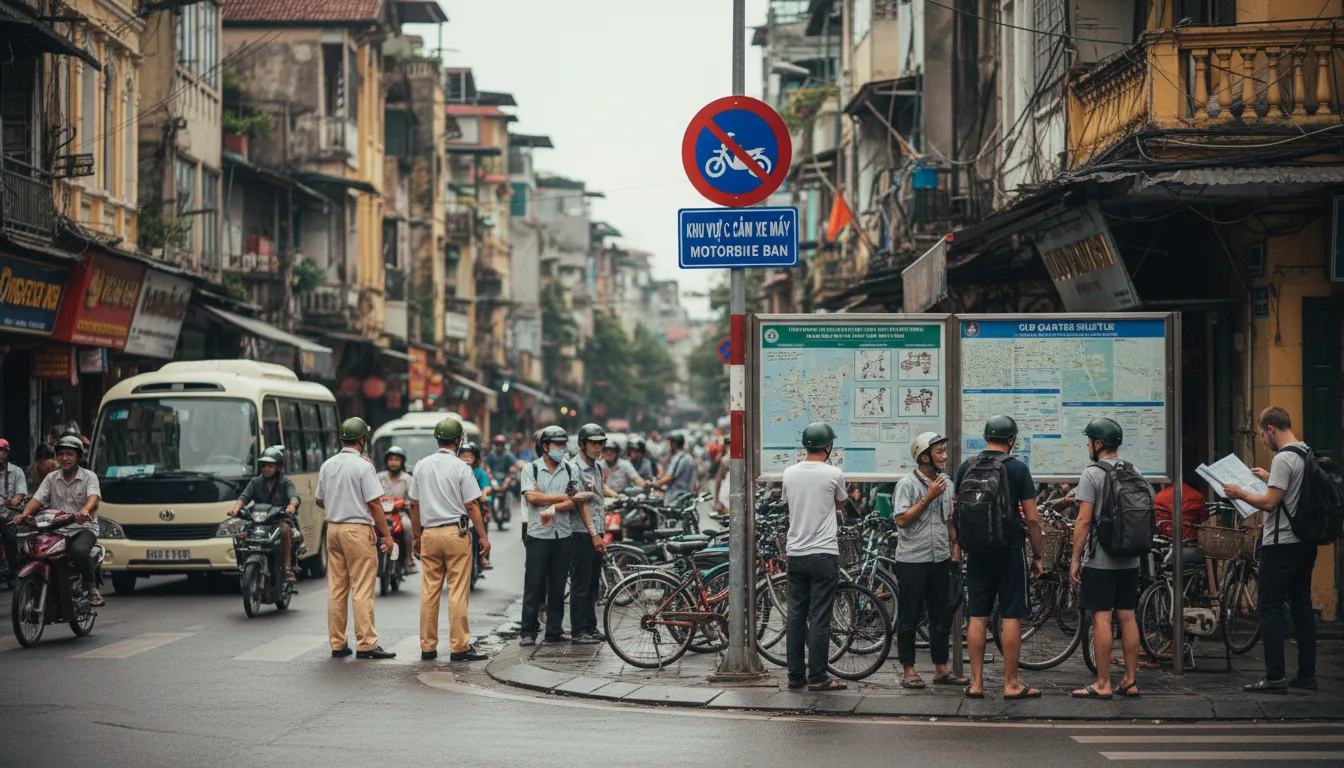
What the Hanoi Motorbike Ban 2026 Means for Riders and Visitors
For travelers, the Hanoi motorbike ban 2026 is less about politics and more about how you move through the city. If you are planning a short stay, an adventurous solo trip, or a family visit, the practical question is simple: will the ban make getting around harder, or just different? The answer depends on where you stay, when you travel, and how flexible your route is.
In central districts, especially near the Old Quarter and Ring Road 1, expect tighter access rules, fewer gas motorbikes, and a stronger push toward public transport and ride-hailing. That means smoother air, but also more planning. A visitor who understands the change early can avoid delays, save money, and still enjoy local neighborhoods without relying on a scooter at every step.
Featured insight: The Hanoi motorbike ban 2026 is most relevant inside the city core, where short trips, hotel transfers, and evening food runs will shift toward buses, metro, taxis, and walking. Tourists do not need to panic, but they should plan slightly more in advance, especially if their hotel is deep in the Old Quarter.
Who feels it most?
- Daily commuters may face longer transfer times and more crowded buses during peak hours.
- Delivery drivers will need route changes, parking adjustments, and possibly electric vehicle upgrades.
- Tourists may notice fewer informal motorbike options and more reliance on app-based transport.
For example, a couple staying near Hoan Kiem Lake could walk to breakfast, take a local tours collection for a guided day out, then use a taxi or ride-hailing app for dinner across town. That mix is often faster than trying to navigate the center by motorbike, especially in rush hour.
| Criteria | Bus | Metro | Ride-hailing |
|---|---|---|---|
| Best for | Budget trips and short hops | Longer city transfers | Door-to-door convenience |
| Trade-off | Slower at peak time | Limited station coverage | Higher cost in traffic |
The best alternatives are not one-size-fits-all. Buses work well if you are patient and traveling light. Metro is the cleaner option for crossing wider distances. Taxis and ride-hailing are still the most comfortable choice for late arrivals, rainy days, and family travel. Walking remains the smartest option for compact sightseeing zones, where the real experience is in the side streets, coffee stops, and street food stalls.
If you are building a Vietnam itinerary, this is also a good moment to think beyond one city. Many travelers pair Hanoi with Hoi An tours or other regional experiences, then return to Hanoi with a clearer sense of how local transport works. That broader planning mindset is useful because city movement in Vietnam is changing fast, and the easiest trips will be the ones booked with flexibility.
Quick decision guide:
- Stay central and walk more if your trip is short.
- Use metro or bus for planned daytime travel.
- Choose taxis or ride-hailing for comfort, rain, or airport transfers.
- Check your hotel location before arrival if you want to avoid traffic stress.
For visitors, the real takeaway is simple: the ban changes transport habits, not the value of Hanoi itself. If you adapt to mixed mobility, the city becomes easier to enjoy, not harder.
To make your trip smoother, book time in advance for food, culture, and neighborhood exploration, and use transport as part of the experience rather than a problem to solve. If you want a flexible way to discover more of Vietnam with less friction, explore the full Toward Local tours and plan around the routes that fit your travel style best.
Common Questions, Mistakes, and What to Do Next
Hanoi motorbike ban 2026 is one of the most searched travel questions right now because the rules sound clearer than they actually are. Many visitors assume the ban means all motorbikes disappear at once, or that the whole city will be off-limits. In reality, the update is staged, location-based, and still evolving through official notices.
For travelers, the smart move is not panic but verification. A solo traveler planning a flexible route through the Old Quarter, or a couple booking a short city break, should watch for road-zone updates, enforcement dates, and transport alternatives before deciding how to move around. That is especially important if you are combining Hanoi with Toward Local tours or comparing city logistics with HCMC food tours later in the trip.
The biggest misunderstanding is treating every headline as final law. What matters is the official scope, the exact ring-road boundary, and whether a rule affects private riders, commercial drivers, or only selected streets. If you are checking updates, use this quick filter:
| Criteria | What to check | Why it matters | Travel action |
|---|---|---|---|
| Official source | Government or city notice | Confirms the rule is real | Save the link before your trip |
| Zone details | Ring road or district map | Shows where access changes | Adjust hotel and route plans |
A practical example helps. If you are staying near the Old Quarter, you may still reach many places by walking, taxi, or private transfer even if certain motorcycle routes are restricted. Families and first-time visitors should prepare a backup plan with app-based rides, hotel pickup, or walking clusters so the day does not depend on a single vehicle type.
Rules in Vietnam often move faster in pilot zones than in public expectation, so the safest travel habit is to verify within 48 hours of arrival. Check city announcements, transport news, and your hotel briefing, then confirm again if your itinerary crosses central Hanoi or connects to day trips.
The Hanoi motorbike ban 2026 is not a single citywide shutdown. It is a phased policy focused on specific zones, especially central areas. Travelers should verify the latest official map, confirm the enforcement date, and plan around taxi, walking, or transfer options instead of assuming every road will be restricted.
FAQ, practical preparation tips, and a light CTA for monitoring official sources
Common questions are usually simple: Will tourists be fined, can taxis still enter, and will electric scooters be allowed. The answer depends on the final enforcement rules, so the best preparation is to stay flexible, keep one backup route, and choose accommodation with easy access to major roads. If you want a smoother local experience, consider building part of your schedule around guided walking or food-focused activities in cities like Da Nang tours, where transport planning is often easier for short stays.
A few mistakes to avoid:
1. Booking a hotel without checking the zone map
2. Assuming every motorbike ban applies to all travelers equally
3. Relying on social media posts instead of official notices
4. Leaving airport and city transfers unplanned
Before you travel, monitor Hanoi government updates, ask your hotel about current access rules, and keep an eye on transport announcements for the exact area you will visit. If the policy changes again, your trip will still feel easy as long as you have a backup plan and a clear source of truth.
For adventurous travelers, the real win is not avoiding the change but adapting early. That means checking official sources, choosing a flexible itinerary, and booking experiences that do not depend on one vehicle type. If Hanoi is part of a broader Vietnam route, reviewing all city options now will make the rest of the trip much smoother.