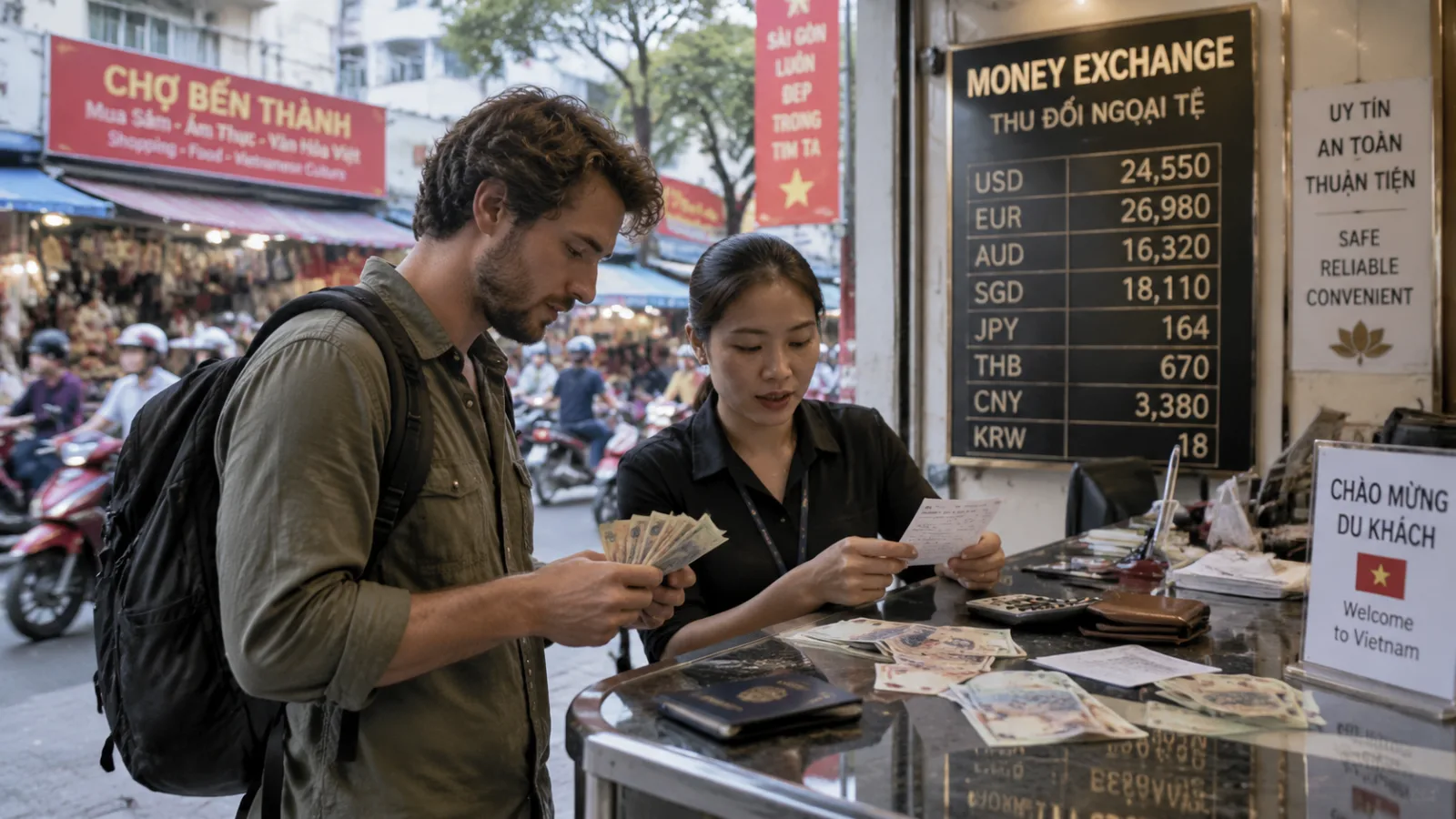

Vietnam currency exchange matters because the dong looks simple at first, yet the numbers can confuse even experienced travelers. A taxi fare, a street-food bill, or a hotel deposit can feel cheap until you realize you are reading prices in thousands, and that is where bad rates and rushed decisions usually cost money.
The practical fix is straightforward: learn the Vietnamese dong, compare safe exchange options, and avoid pressure at the first counter you see. Banks, airport desks, ATMs, and licensed exchange counters all work differently, and knowing when to use each one helps travelers, expats, and first-time visitors keep more value in their pocket while moving through Vietnam with less stress.
The safest way to handle Vietnam currency exchange is to bring a mix of cash and cards, exchange only what you need at licensed counters or banks, use ATMs at major bank branches, and always check the final rate before confirming any transaction.
For most travelers, a smart routine is to exchange a small amount at the airport for transport, then use a bank or licensed counter for better value later in the trip. If your itinerary includes local food tours in Ho Chi Minh City, having smaller VND notes ready makes it easier to pay for market stops, coffee, and add-ons without slowing the group down.
| Criteria | Best for | Speed | Rate value |
|---|---|---|---|
| Airport counter | First arrival cash | Fast | Lower |
| Bank or licensed counter | Better travel budget | Moderate | Better |
When you understand that comparison, Vietnam currency exchange stops being a guess and becomes part of your travel planning. That is especially useful for solo travelers, couples, and families who want local experiences without wasting time on payment confusion. If you are heading north next, checking Hoi An tours can also help you plan cash needs around lantern markets, tailors, and small vendors who still prefer physical money.
What Vietnam Currency Exchange Means in Practice
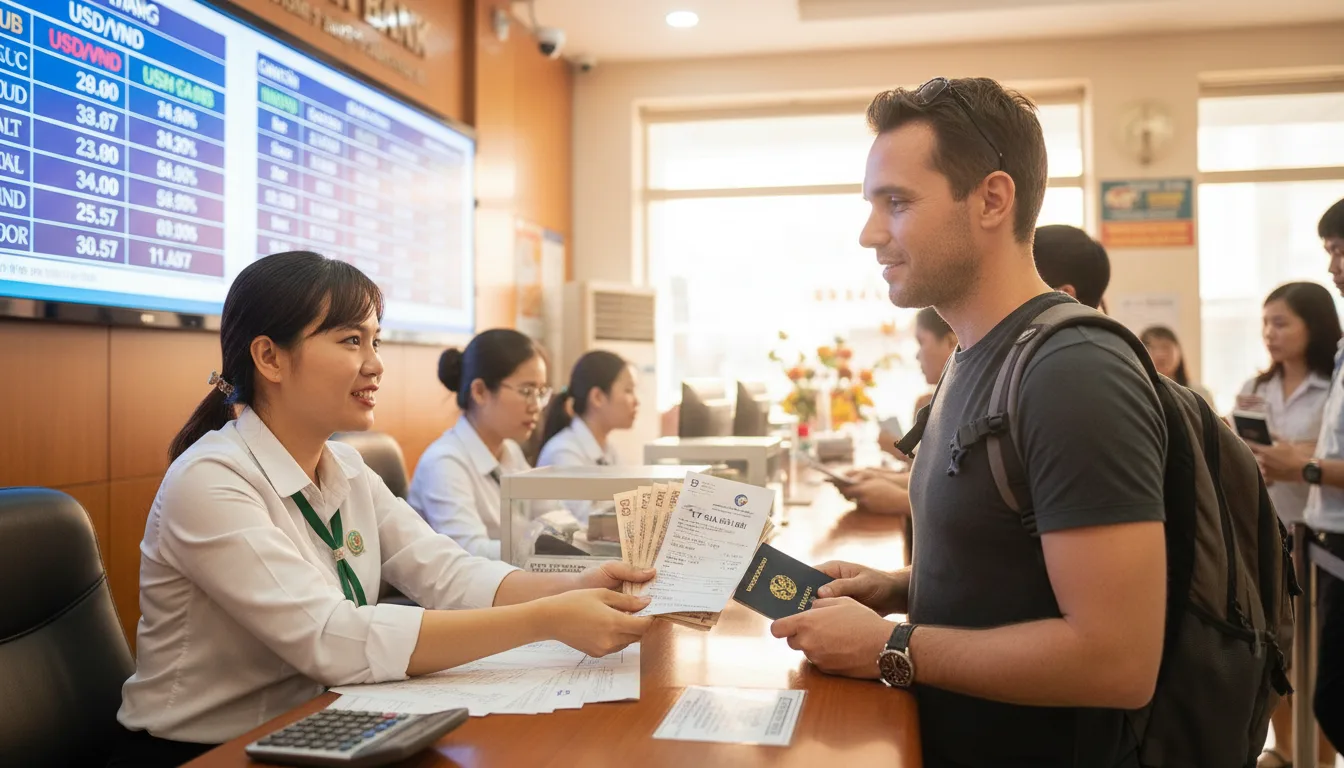
Vietnam currency exchange means turning your foreign money into Vietnamese dong, the local cash used for most everyday spending. For first-time visitors, the key point is simple: prices may look small, but the numbers are in thousands, so knowing the exchange rate helps you avoid overpaying and makes budgeting easier from the moment you land.
In practice, travelers usually exchange money on arrival, before hotel check-in, or when they need cash for street food, taxis, and small shops. If you are planning a guided local experience, having some VND ready is useful because many neighborhood vendors still prefer cash over cards.
Vietnam still runs on a strong local cash economy, especially outside premium hotels and modern malls. Cards are accepted in many urban places, but acceptance changes fast between venues, and small fees can apply. That is why the exchange rate matters not only for big purchases, but also for daily items like coffee, snacks, and short rides.
Vietnam currency exchange is the process of converting foreign currency into VND, the money used across Vietnam. Travelers need it for airport arrival, cash-only services, street spending, and backup funds. Cash remains important in many places, while card payments are more common in hotels, chains, and larger stores.
| Criteria | Cash | Card | Best use |
|---|---|---|---|
| Street food and local markets | Best choice | Rarely accepted | Small daily purchases |
| Hotels and restaurants | Useful backup | Often accepted | Higher-value spending |
A practical rule is to keep a small amount of VND in your wallet and use card or ATM withdrawals for larger expenses. If you are staying in beach cities or planning Hoi An tours, cash is still the easiest way to pay for rides, market snacks, and local services that may not support cashless payments.
For safer spending, check the exchange rate before you swap money, compare options, and avoid changing too much at the airport unless you only need a small starter amount. Strong planning here saves time, reduces fees, and makes everyday travel in Vietnam much smoother.
How Vietnam Currency Exchange Works Step by Step
Vietnam currency exchange usually becomes simple once you know where to change money and what reduces the amount you receive. At the airport, in a bank, at a jewelry shop, or from an ATM, the process is different in speed, cost, and convenience, so the best choice depends on whether you need a small emergency amount or a full travel budget.
The main challenge is not finding Vietnamese dong, but avoiding weak rates, hidden fees, and card charges that quietly lower your cash. If you check the rate before landing, keep your passport ready when needed, and compare options near your hotel, you can protect more of your travel budget from the start.
The best way to get Vietnamese dong is to compare airport counters, banks, jewelry shops, and ATMs before exchanging. Your final amount depends on the market rate, service fee, ATM fee, and spread. For most travelers, a small airport exchange plus a larger local exchange later gives the best balance of convenience and value.
Here is the typical step by step flow. You arrive, decide how much cash you need for the first day, then choose one of four channels: airport counter, bank branch, jewelry shop, or ATM. Airport counters are easiest but usually less favorable. Banks are safer and clearer. Jewelry shops in major cities can offer competitive rates. ATMs are fast, but your bank and the local machine may both add costs.
Example: if you exchange 100 USD at a jewelry shop, the displayed rate may look better than the airport, but the final value still depends on the spread built into the quote. If you withdraw VND from an ATM, the screen may ask whether to charge in your home currency or VND. Choose VND, because dynamic conversion often adds a worse rate. A good rule is to check the live rate on your phone before inserting your card, so you know whether the offer is fair.
Practical details matter. Some banks and exchange counters ask for a passport or ID, especially for larger amounts. ATMs often set daily limits, sometimes around 2 to 5 million VND per withdrawal, and your own bank may also cap card usage. Card network support matters too, since Visa and Mastercard are usually the easiest, while some cards fail on certain machines. Always keep the receipt, because it helps with rate checks and can solve problems if cash is short or a machine keeps the card.
| Criteria | Best For | Main Cost | Speed |
|---|---|---|---|
| Airport counter | First arrival cash | Weaker rate | Very fast |
| Bank or jewelry shop | Larger exchange | Service fee or spread | Moderate |
If you are planning to explore a city after landing, it often helps to exchange only a small amount first and then compare rates closer to your hotel or on a day trip route. Travelers heading out for local tours in Vietnam often find that having mixed cash and card access makes transport, food, and entrance fees much easier to manage.
Before your trip, save a screenshot of today’s USD to VND rate and note your bank’s overseas withdrawal fee. That small step makes it much easier to spot an unfair exchange quote.
For the safest result, exchange a small amount at the airport, then use a bank, trusted counter, or ATM with a known card network once you are settled. If you want to stay flexible while traveling, keep your receipts, compare every rate, and avoid converting at the first screen that appears.
The cheapest option is not always the most practical. The best Vietnam currency exchange choice is the one that gives you enough VND for the day without forcing you to pay unnecessary fees twice.
Best Ways to Exchange Money in Vietnam
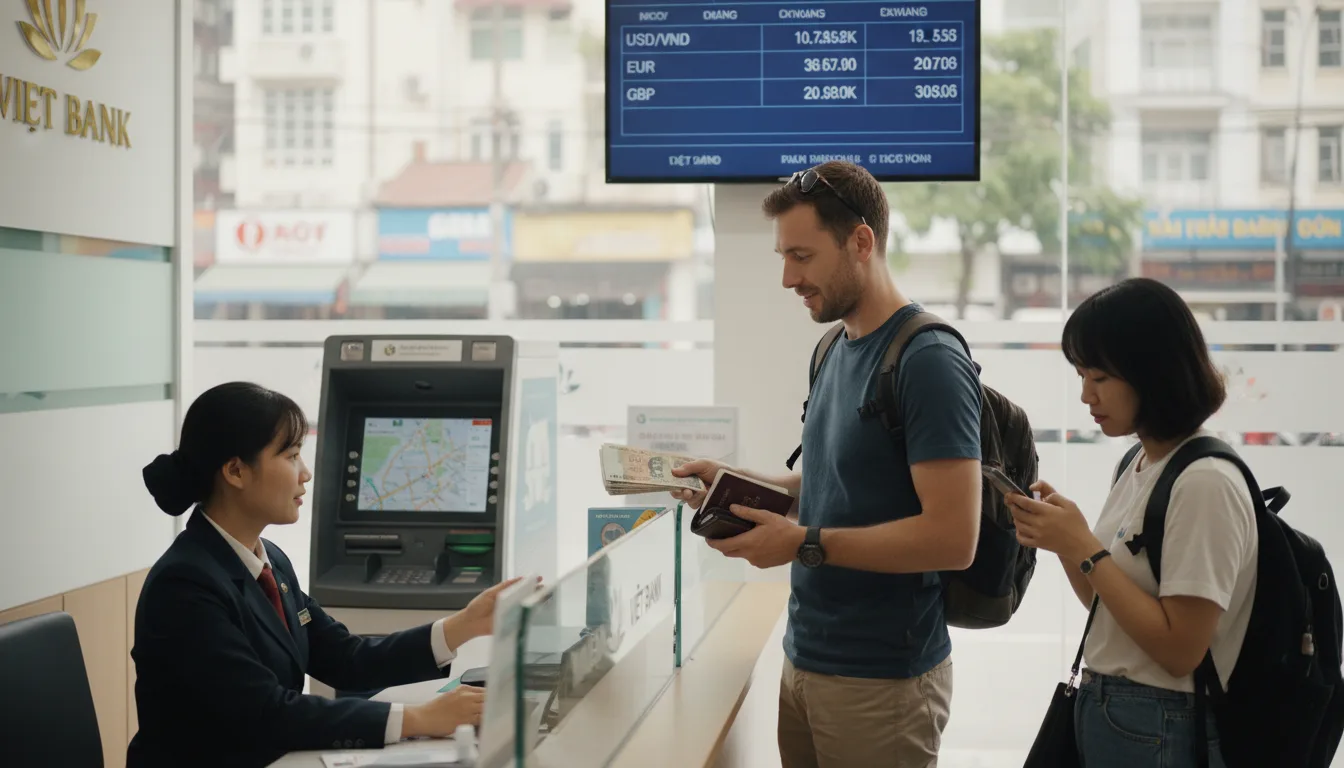
Vietnam currency exchange is easiest when you match the method to your travel moment. If you want the best rate, a licensed exchange counter or bank is usually stronger than an airport desk. If you need cash right after landing, the fastest option is often an ATM or a small airport withdrawal, especially after a late-night arrival.
The right choice also depends on how much you need, where you are staying, and how comfortable you are carrying cash. Solo travelers and couples moving between cities often do better with a mix of ATM withdrawals and one planned exchange, while families may prefer the safety and predictability of a bank or hotel desk for the first day.
Here is the quick decision guide: use airports for urgency, banks for trust, licensed counters for rate quality, hotels for convenience, and ATMs for flexible small withdrawals. For a deeper trip plan that keeps your first day smooth, browse local Vietnam tours while you organize your money stops.
| Criteria | Banks | Licensed counters | ATMs |
|---|---|---|---|
| Best for | Large exchanges and safety | Strong rates and speed | Small cash and convenience |
| Main drawback | Slower hours and paperwork | Need to verify license | Foreign card fees |
| Typical traveler | First-time visitors | Rate-focused travelers | Late arrivals |
Feature summary: airports trade rate quality for speed, hotels trade value for comfort, banks trade time for security, and ATMs trade fees for instant access. A practical example is this: withdraw a small amount at the airport, then exchange the rest later at a bank or licensed counter once you are settled in the city.
If you are landing in a place like Hanoi or Ho Chi Minh City and heading straight to dinner, an ATM near the arrivals hall is often enough to cover a taxi and a meal. If you are staying longer, a licensed counter in the city usually gives better value, and Ho Chi Minh City experiences become easier to enjoy when you are not overpaying on exchange fees.
Late-night arrival: use an airport ATM or hotel desk for a small amount only. Large exchange: choose a bank or trusted licensed counter during business hours. Need quick cash: an ATM is usually the fastest. Best rate priority: compare a few counters in the city before handing over money, because even nearby places can differ on fees and spread.
If you want to move through Vietnam with less hassle, exchange only what you need for the first 24 hours and keep the rest for a better-rate stop later. That simple approach protects your budget and keeps your travel day flexible.
For adventurous travelers, this is the smartest pattern: small emergency cash on arrival, then one planned exchange once you know your neighborhood and can compare options calmly. It works well for solo travelers, couples, and families who want both safety and better value. When you are ready to explore, see all Toward Local tours and pair your money plan with a smoother route through the country.
Choose the exchange method that fits your first stop, not the one that feels fastest in the moment. In most cases, that means airport only for survival money, bank or licensed counter for the real exchange, and ATMs as the backup when you just need Vietnamese Dong quickly.
How to Choose the Right Vietnam Currency Exchange Option
Choosing the right Vietnam currency exchange option starts with a simple rule: protect your money first, then look for the best rate. For most travelers, the best choice depends on where you are, how much cash you need, and whether speed matters more than saving a small spread.
Vietnam currency exchange can be easy if you compare fees, safety, location, and processing speed before handing over your cash. A good option should feel transparent, legal, and practical for your trip, especially if you are arriving late, traveling solo, or moving between cities with local tours in Vietnam and need reliable cash access along the way.
The best Vietnam currency exchange option is usually the one that balances rate, safety, and convenience. Use licensed banks or trusted exchange counters for better value, avoid unclear fees, and keep airport exchanges only for small emergency amounts. Travelers should compare the total amount received, not just the headline rate.
| Criteria | Best choice | Watch out for | Best for |
|---|---|---|---|
| Rate | Licensed banks and trusted counters | Tourist hotspot traps with poor spreads | Larger exchanges |
| Safety and speed | Airport for small cash, banks for larger sums | Unlicensed money changers and hidden fees | First arrivals and cautious travelers |
If you are a tourist staying 3 to 7 days, exchange only what you need for the first two days, then top up once you understand local spending. Digital nomads often do better with card withdrawals plus a small cash float, while long-term visitors should compare monthly banking fees against local exchange spreads. In Ho Chi Minh City, a meal-focused day may use more cash than expected, so a HCMC food experience can help you see how quickly small notes disappear in real life.
A practical decision guide is simple: if you need convenience, use an airport counter for a small amount and move on; if you want better value, use a licensed bank or reputable exchange shop in the city; if you need emergency money, keep one card and one small cash reserve separate. Avoid unlicensed money changers, vague commission language, and exchange booths near major tourist attractions that advertise convenience but quietly build the cost into the rate. In Da Nang and Hoi An, travelers planning a beach stay or heritage trip often benefit from checking rates once they settle in, especially if they book Da Nang day tours or explore the old town for several days.
If you want a smoother arrival, plan your first exchange before landing, then compare your next top-up after you have seen local prices.
For most visitors, the safest approach is to split your money into three parts: daily spending cash, backup emergency cash, and card-based reserves. That structure keeps you flexible if an ATM fails, a shop rejects cards, or you suddenly decide to extend your trip. It also helps couples and families avoid one person carrying all the cash, which is a small but useful security habit in busy markets and transport hubs.
Choose the option that gives you a fair net amount, a clear process, and enough flexibility for the way you actually travel in Vietnam. If the exchange feels rushed, unclear, or too good to be true, walk away and find a licensed alternative nearby.
Common Mistakes, FAQ, and Smart Tips for Vietnam Currency Exchange
Vietnam currency exchange is easiest when you avoid the common traps that catch first-time visitors: overchanging at the airport, skipping rate checks, or relying on the first counter you see. The best approach is simple: compare before you pay, keep some small bills ready, and use a provider that can explain the rate clearly.
If you are planning a city break, beach route, or food-focused trip, this matters even more because daily spending changes by destination. A short ride in Ho Chi Minh City, a street food stop in Hanoi, or a day trip from Da Nang can all need different amounts of cash, so a little planning protects your budget and keeps the trip smooth.
The safest way to handle Vietnam currency exchange is to use reputable banks or licensed counters, compare live rates, carry a mix of small and large VND notes, and keep your receipt. Airports are convenient for a small starter amount, but they are rarely the best value for your full budget.
| Criterion | Best Choice | Why It Works | Watch Out |
|---|---|---|---|
| Arrival cash | Airport counter for a small amount | Fast and useful for taxi or SIM purchase | Rates are usually weaker |
| Best value | Licensed bank or trusted exchanger | Better rates and clearer process | May take a few extra minutes |
Common mistakes are easy to fix once you know them: do not exchange all your money at the airport, do not trust unofficial desks without checking the rate, and do not assume cards will work everywhere. Small vendors, local markets, and many taxis still prefer cash, so keeping a cash reserve is smarter than depending only on plastic. If you are staying in the south and want to build a flexible day plan, you can also look at local Ho Chi Minh City tours while keeping your spending money ready for street food and transport.
Smart tips for better value are practical, not complicated. Compare rates before exchanging, use clean and newer USD notes if you bring dollars, and ask for smaller denominations because 500,000 VND notes are not ideal for every purchase. Save your exchange receipt in case you need to change leftover cash later, and keep part of your money separate from your wallet for security.
Is it better to exchange money before arriving in Vietnam?
Usually no, because local rates are often better once you land.
Can you use US dollars in Vietnam?
Sometimes in tourist settings, but VND is the normal payment method.
Are ATMs safe and reliable in Vietnam?
Yes, when you use machines attached to banks or malls, but avoid isolated machines at night.
What is the best currency to bring to Vietnam? USD is the most practical for exchange, especially if the notes are clean and recent. How much cash should travelers carry? Most visitors do well with enough cash for one or two days, then topping up as needed. For a beach or food trip, that often means a mix of card and around 2 to 3 million VND for flexibility.
If your itinerary includes central Vietnam, it can help to plan spending around transport and day tours, especially when you are booking Hoi An experiences or moving between towns. That keeps your cash use efficient and reduces the need for frequent withdrawals.
Before you exchange, check live rates, choose a reputable provider, and decide how much cash matches your route. If you want the safest option, use only what you need on arrival, then switch to a better local counter or ATM after you settle in.
For travelers who want more local experiences, the same rule applies to tours and transport: plan ahead, compare options, and keep your budget flexible. If you are ready to explore deeper, you can review all Toward Local tours and pair your money plan with the right trip style.