
Vietnamese funeral traditions can feel unfamiliar to visitors because a farewell is often a family gathering shaped by mourning customs and respect for ancestors. You may notice relatives keeping vigil, offering incense, or welcoming neighbors who come to pay their respects. If you encounter a ceremony while traveling, knowing why these gestures matter can help you respond with care rather than uncertainty.
Practices differ across Vietnam according to religion, region, and each family’s wishes, so there is no single script to expect. This guide explains common funeral rites, their cultural meaning, and practical etiquette, including when to observe quietly and how to avoid intruding. That context can also enrich your time exploring communities through locally led Vietnam tours, where respectful curiosity matters.
What Are Vietnamese Funeral Traditions?
Vietnamese funeral traditions express grief, respect for the deceased, and continuing ties between generations. For visitors, the key is to understand that these ceremonies are family occasions, not cultural performances; practices vary widely, and a respectful invitation or local explanation matters more than assumptions.
In brief: Vietnamese funerals are rites of mourning shaped by family responsibility, ancestor reverence, religious belief, and local custom. Relatives may gather to pay respects, offer incense, and accompany the deceased through burial or cremation. The form and timing vary, so visitors should follow the family’s guidance and treat ceremonies as private unless invited.
The meaning of funerals, mourning, and ancestor reverence
A funeral marks a death and gives relatives and neighbors a shared way to grieve and show respect. In many households, remembrance continues after the ceremony through prayers, offerings, or care for an ancestral altar. These practices reflect a belief in family bonds that endure beyond death, though beliefs differ among individuals and communities.
How family, community, religion, and local customs shape practice
There is no single script. A family’s choices may reflect Buddhist, Catholic, other religious, or nonreligious beliefs, alongside regional customs and practical circumstances. In some communities, neighbors help with food or arrangements; in others, the ceremony is more private. If you are exploring local culture, a locally led Vietnam tour can offer context in everyday settings without turning a family’s grief into a sightseeing stop.
| Influence | What it may shape | What visitors should know | Best approach |
|---|---|---|---|
| Family | Rituals and arrangements | Choices differ household to household | Follow the family’s lead |
| Religion and locality | Prayers, timing, and customs | There is no nationwide template | Ask before joining or photographing |
The most useful rule is simple: accept an invitation graciously, dress modestly, keep a quiet presence, and ask before taking photographs. When no invitation is offered, learn through museums, community-led cultural experiences, or conversation with a trusted local guide instead.
How Vietnamese Funeral Traditions Unfold
Vietnamese funeral traditions vary by region, religion, family preference, and whether burial or cremation is chosen. In many communities, relatives gather for a wake, receive visitors, accompany the deceased in a procession, and continue remembrance through later offerings or anniversaries.
From death notification and the wake to the funeral procession
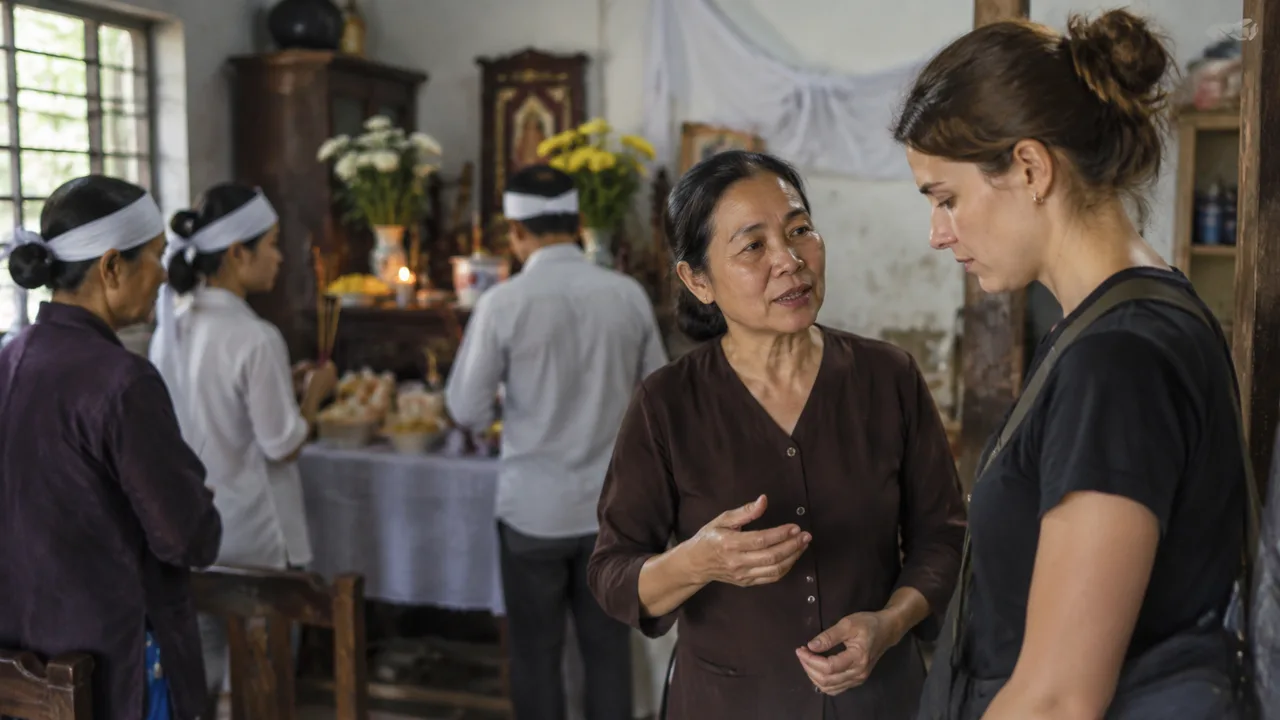
Close relatives usually notify family and friends, then prepare a place for visitors to pay respects. At a wake, guests may offer condolences, bow or follow the family’s lead, and leave a small contribution if appropriate. Customs differ, so quiet observation is more considerate than assuming every household follows the same rites.
For example, a traveler passing a neighborhood wake should dress modestly, keep voices low, and avoid photographing mourners unless invited. Some funerals include a procession from the home or funeral hall to the cemetery or crematorium. A respectful local guide can explain public customs during small-group cultural experiences without treating a private grieving moment as a spectacle.
Burial, cremation, offerings, and remembrance after the funeral
Families may choose burial or cremation according to beliefs, practical circumstances, and personal wishes. Afterwards, relatives may bring flowers, incense, food, or other offerings to a grave, home altar, or memorial site. Ancestor remembrance can continue on death anniversaries and family occasions, but the details are not universal.
At a glance: A wake receives visitors, a procession accompanies the deceased, and burial or cremation is followed by family remembrance. Customs vary, so follow the hosts’ cues, speak softly, dress modestly, and ask before taking photographs or joining a ritual.
| Stage | What visitors may see | Respectful response |
|---|---|---|
| Wake | Family and guests paying respects | Keep quiet and follow the family’s lead |
| Procession | A group accompanying the deceased | Give space and do not photograph without permission |
| Remembrance | Offerings at a home altar or grave | Observe from a respectful distance |
For a deeper understanding of everyday life in Vietnam, choose experiences led by locals and keep private ceremonies private.
Buddhist, Catholic, and Regional Variations in Vietnamese Funerals
Vietnamese funeral traditions vary by faith, region, and family, so visitors should not expect one fixed ceremony. Knowing a few common differences can help you understand what you see and avoid treating a private farewell as a tourist attraction.
Buddhist rites may include chanting and offerings, while Catholic services center on prayer and church ritual. Across the north, central coast, and south, details also shift; the family’s wishes matter more than a regional checklist.
Key differences between Buddhist and Catholic funeral rites
Quick guide: Buddhist funerals commonly feature monks or chanting, incense, and offerings, with practices shaped by the family’s tradition. Catholic funerals usually include prayers, scripture, and a Mass or church service. In both, relatives and community members gather to mourn and support the family.
| Feature | Buddhist | Catholic |
|---|---|---|
| Common elements | Chanting, incense, offerings | Prayer, scripture, church rites |
| Who guides rites | Monks or family-led practice | Priest and parish community |
Northern, central, and southern customs—and why practices vary by family
Regional differences may show in mourning clothes, music, food, timing, and how relatives gather. A family in one city may follow a long-standing village custom; another may adapt the service to work schedules, migration, or personal belief. These are tendencies, not rules.
If you encounter a ceremony while travelling, keep distance, dress modestly, and ask before taking photographs. For a respectful introduction to everyday local life, browse locally led Da Nang tours instead of approaching a private funeral. Choose a guide who welcomes questions and follow the family’s cues.
Funeral Etiquette: What Visitors Should Know
Vietnamese funeral traditions vary by region, religion, and family, so follow the hosts rather than assuming every ceremony follows the same script. Visitors are generally welcome when invited, but modest clothing, quiet condolences, and asking before taking photographs help show respect.
Quick guide: Wear subdued, modest clothes; offer a brief condolence; follow cues before burning incense or presenting flowers; keep phones silent; and do not photograph mourners or the deceased without permission. At a burial or cremation, stay with the group and follow the family’s instructions.
Clothing, condolences, incense, and offerings
Choose dark or neutral clothing that covers shoulders and knees. A simple phrase such as I am sorry for your loss is enough; a local host can help with wording if needed. Flowers or a small contribution may be appropriate, but customs differ, so ask the family or organizer before bringing anything.
Incense is often offered at a family altar, but visitors should wait to be invited or copy the host’s example. In Hoi An, a guided local culture experience can help visitors understand regional customs outside a funeral setting.
Behavior at each stage
| Stage | What to do | What to avoid | Visitor cue |
|---|---|---|---|
| Wake | Speak softly and offer condolences | Loud conversation or flash photos | Follow the family’s lead |
| Ceremony and farewell | Stand quietly and join only when invited | Touching ritual objects without asking | Stay with your host |
At a wake, visitors may come and go, while formal rites and the final journey to burial or cremation are more structured. Silence your phone, avoid blocking the procession, and ask before leaving. If unsure, a discreet question to your host is more respectful than guessing.
Modern Changes and Common Questions About Vietnamese Funerals
Vietnamese funeral traditions are adapting to city life, cremation, and families spread across countries, but respect for the deceased and support for relatives remain central. For visitors, the practical challenge is knowing what to expect when ceremonies vary by region, religion, and family preference.
In large cities, families may hold a wake at a funeral home rather than at home, making attendance easier for relatives and neighbors. Cremation is also increasingly chosen, while Vietnamese communities abroad often combine familiar rites with local rules and facilities. The setting changes; offerings, prayers, and time together still matter.
How modern life is changing funeral practices
There is no single modern format. A family may arrange a short service in an urban funeral hall, then cremate the body and keep the ashes at a temple or family altar. Others continue with burial and later visits to the grave. In diaspora communities, ceremonies may take place over a weekend to accommodate work schedules and travel.
For travelers exploring local culture, a guided visit to Vietnamese neighborhoods and traditions can provide context without treating a private funeral as a sightseeing stop. Never photograph mourners or enter a ceremony unless invited.
Common questions about Vietnamese funerals
How long does a funeral last? A wake often lasts one to several days, but timing depends on family wishes, religion, and arrangements. The main service and procession may happen on a particular day within that period.
Can non-family members attend? Often, yes. Friends, neighbors, colleagues, and acquaintances may pay respects. If unsure, ask a mutual contact before arriving.
What happens after burial? Relatives may return to the grave to make offerings or observe anniversaries and remembrance days. Customs differ, so follow the family’s lead.
What should visitors bring? A simple condolence envelope or flowers may be appropriate, but practices vary. Ask a local host; otherwise, a quiet, respectful visit is better than guessing.
Quick guide: Funeral length varies from a day to several days; non-family visitors are commonly welcome when invited or known to the family; burial may be followed by remembrance visits; ask before bringing flowers or money.
| Situation | What to expect | Visitor approach | Best choice |
|---|---|---|---|
| Urban funeral home | Organized wake and service | Follow posted or host guidance | Offer brief condolences |
| Home or community ceremony | More intimate family setting | Attend only when welcome | Ask before taking photos |
When in doubt, dress modestly, speak softly, and let relatives guide you. A local host can help you understand the invitation and customary gesture before you go.