
Tra Que Vegetable Village is one of the easiest ways to experience the real pace of Hoi An, especially if you want something more local than the usual old town walk. Many first-time visitors come expecting only green fields, then realize the village also shows how farmers grow herbs, how daily work is organized, and why this place feels so calm compared with the busier center.
If you are planning a short trip and want a stop that feels authentic without being complicated, Tra Que Vegetable Village fits well. You can visit in a few hours, join practical activities, and still keep your day flexible. For travelers who value culture, light adventure, and meaningful local contact, it is a smart addition to a Hoi An itinerary, especially when paired with Hoi An tours that focus on real neighborhood experiences.

What Is Tra Que Vegetable Village and Why Is It Famous?
Tra Que Vegetable Village is one of the easiest ways to understand rural life around Hoi An without leaving comfort behind. Travelers come here for fresh air, active farm experiences, and a slower pace that feels genuinely local. It is famous because it combines working vegetable gardens, heritage farming methods, and hands-on activities in a small area close to town.
For first-time visitors, the real appeal is not just the scenery. It is the chance to see how local families grow herbs and vegetables for daily life and restaurants, then join them for a short farm session or cooking stop. If you want a deeper local day trip, Hoi An tours can help you pair Tra Que with other nearby experiences in a smooth itinerary.
What Tra Que Vegetable Village is: a compact farming community on the edge of Hoi An, known for its clean soil, organic-style growing practices, and rows of herbs, greens, and spices. The village is easy to explore on foot or by bicycle, which makes it ideal for couples, solo travelers, and families who want light adventure without a difficult schedule.
What makes it stand out is the rhythm of daily work. Farmers still water crops by hand, prepare soil with careful timing, and rotate vegetables based on season and demand. A practical example: if you arrive early, you may see people using traditional watering tools, then later watch a short cooking demo using produce picked minutes before. That is the kind of simple but memorable detail travelers usually remember most.
| Criteria | Best for | Visit style | Why it works |
|---|---|---|---|
| Morning visit | Early risers and photographers | Cool, active, scenic | Best light and farmer activity |
| Late afternoon | Families and relaxed travelers | Soft pace, easy walking | Lower heat and calm atmosphere |
The local farming heritage and cultural context are the reason the village feels more authentic than a standard sightseeing stop. Tra Que has long been tied to Hoi An’s food culture, especially fresh herbs that shape central Vietnamese dishes. In practice, that means the village is not a display set for tourists. It is a living agricultural area where daily work still supports local households and nearby kitchens.
There is also a clear cultural layer in the way visitors are welcomed. Many farm activities are shared directly by local people, which creates a better experience than passive viewing. If you are planning a broader local day, you can combine it with all tours of Toward Local and choose the most suitable pace for your group.
When and why travelers should visit: choose Tra Que Vegetable Village in the dry season or on a morning when you want a quiet, active break from Hoi An Old Town. Visit if you like walking, cycling, cooking, or seeing how a destination works behind the scenes. Skip it only if you want nightlife or major landmarks. For everyone else, it is one of the most rewarding short trips near Hoi An.
Tra Que Vegetable Village is a local farming area near Hoi An where visitors can see organic-style gardens, join farm activities, and learn about traditional Vietnamese agriculture. It is famous for its fresh herbs, cultural heritage, and easy half-day visits that suit solo travelers, couples, and families.
Soft planning tip: if you only have one free morning in Hoi An, Tra Que is a strong choice because it gives you real local contact without a long transfer or heavy itinerary.
Best time to visit:
Early morning for farm activity and cooler weather
Late afternoon for softer light and easier walking
Dry months for the clearest outdoor experience
Why travelers return:
Real local interaction
Fresh food culture
Relaxed countryside setting
Easy pairing with Hoi An sightseeing
If you want a local experience that feels useful, calm, and easy to fit into a short trip, Tra Que Vegetable Village is a smart addition to your Hoi An plan. It gives you the kind of authentic rural insight many travelers look for, while still staying simple enough for a first visit. For a smoother day and a better route, explore Hoi An tours and build it into a custom local experience.

How Tra Que Vegetable Village Works as an Organic Farming Community
Tra Que Vegetable Village is a living organic farming system, not just a sightseeing stop. If you want a local, hands-on experience in Hoi An, this is where visitors can see how families grow herbs, vegetables, and seasonal produce with simple methods shaped by generations of practice.
The appeal is not only the fresh food. It is the rhythm of the work, the soil care, the water routine, and the way farmers connect the garden to the kitchen. For travelers who prefer authentic places, this village offers a clear look at how community-based farming still supports daily life, local meals, and small-scale tourism.
Tra Que Vegetable Village is an organic farming community in Hoi An where local families grow herbs and vegetables using traditional soil preparation, natural fertilizing, hand watering, and seasonal planting. Visitors can join farm activities, learn the growing cycle, and taste dishes made from ingredients harvested directly from the fields.
The traditional growing process starts with soil loosening, compost enrichment, and careful bed shaping. Farmers rely on seaweed-based fertilizer and hand watering rather than heavy machinery, which keeps the gardens small, clean, and highly managed. A visitor may notice that each plot looks simple, but the workflow is precise.
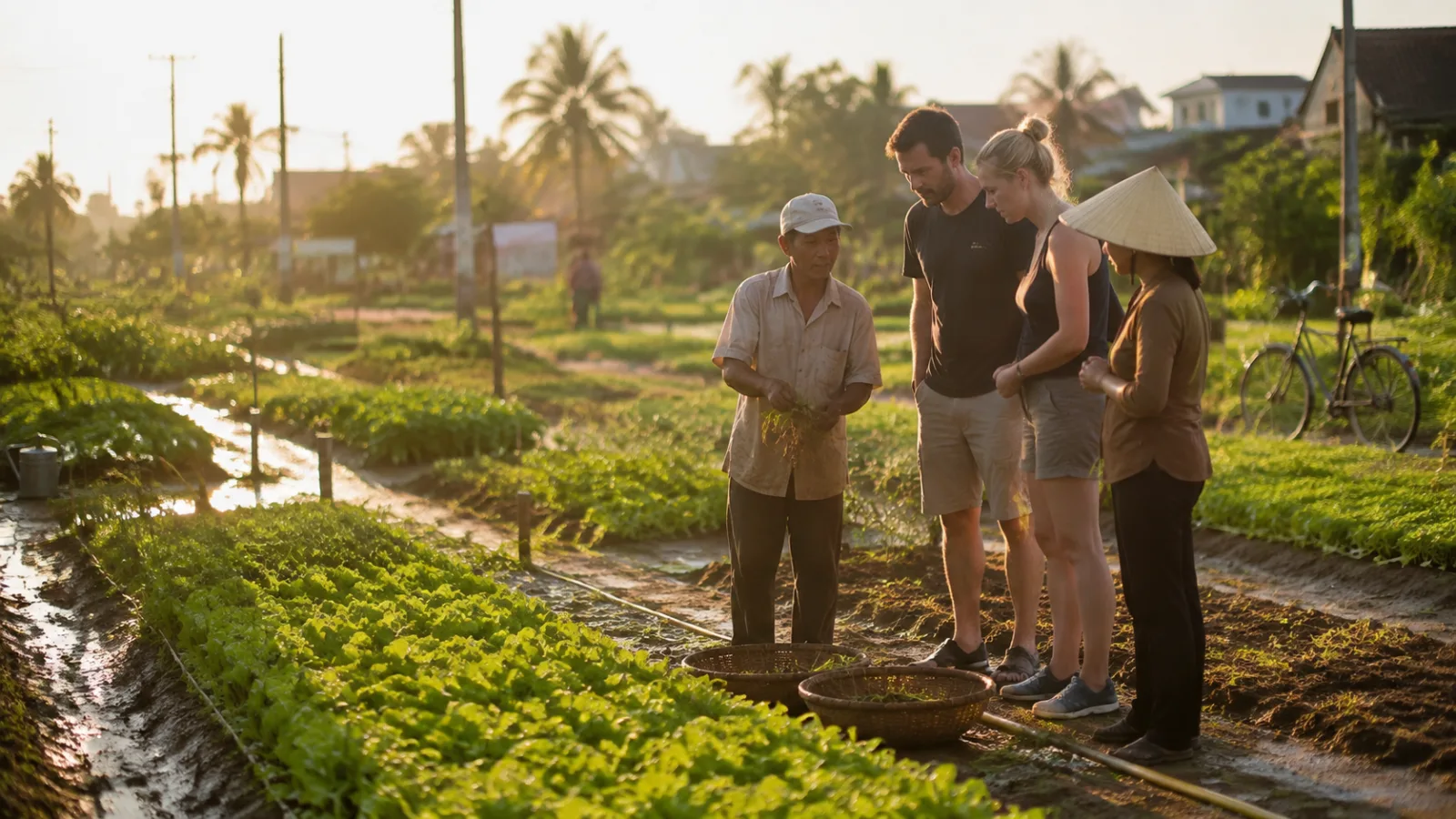
For example, a local farmer may guide guests through these steps: prepare the soil, plant seedlings, water with a small basket, and harvest only when the leaves are tender. This is why a visit to Hoi An tours with local guides often feels more personal than a standard sightseeing stop. The insight is simple: the village works because every family follows the same ecological routine, and that consistency protects both the crop quality and the community identity.
| Criteria | Cột 1 | Cột 2 | Cột 3 |
|---|---|---|---|
| Farming method | Hand tools | Natural compost | Seasonal rotation |
| Visitor value | See real farm work | Learn local produce | Taste fresh dishes |
Key crops include mint, basil, lettuce, coriander, Vietnamese herbs, and leafy greens that grow well in warm coastal weather. Seasonal produce changes slightly through the year, so the best visits often reveal a mix of young herbs and mature vegetables ready for harvest. Families who book a local experience tour usually see the same garden used for both market supply and cooking classes.
When you visit, the farm-to-table flow becomes easy to understand: harvest in the morning, rinse in the village, cook shortly after, and serve while the herbs are still fragrant. That is the real value of Tra Que Vegetable Village. It is practical, local, and designed around freshness rather than performance.
Soft travel tip: if you enjoy slow, authentic activities, combine the village with a nearby Hoi An countryside route so the farm visit feels connected, not rushed.
A real visit usually begins with quiet paths, working farmers, and rows of bright green beds under open sky. Visitors may join watering, seed planting, or a short cooking session, then move from field to table in one smooth experience. This is the kind of activity that suits solo travelers, couples, and families who want something local, active, and easy to enjoy.
If you want a deeper connection to Hoi An, plan the village visit with time for lunch or a food-focused stop after the fields. The strongest reason to come is not just to watch farming, but to understand how a small organic community keeps its identity alive through daily work, shared knowledge, and fresh harvests.
Why Tra Que Vegetable Village Is Worth Visiting
Tra Que Vegetable Village is worth visiting because it gives travelers a rare mix of hands-on farming, fresh local food, and a slower pace that feels very different from central Hoi An. For first-time visitors, it solves a common problem: how to find something local, active, and meaningful without spending a full day on transit.
It is especially appealing for couples, solo travelers, and families who want a light adventure with real cultural value. If you are planning a relaxed Hoi An day trip, Hoi An tours can make the visit easy to combine with cycling, cooking, or a countryside lunch.
Tra Que Vegetable Village is a small farming community near Hoi An where visitors can join local farm work, learn how herbs and vegetables are grown, and taste fresh dishes prepared with village produce. It is ideal for travelers who want an authentic cultural stop that is active, scenic, and easy to fit into a half-day itinerary.
Main benefits for cultural travelers and food lovers
The main value of Tra Que Vegetable Village is authenticity. You are not just looking at gardens, you are entering a working local landscape where herbs, leafy vegetables, and traditional growing methods are still part of daily life. That makes it especially strong for travelers who want more than a photo stop.
- Cultural insight: learn how local farmers prepare soil and manage crops by hand
- Food connection: see where Hoi An dishes get their fresh herbs and greens
- Calm atmosphere: enjoy a quieter setting than the old town
A small but important insight is that the village experience feels best when you slow down. Watching a farmer rinse vegetables or explain composting may sound simple, but for many visitors it becomes the most memorable part of the trip.
| Criteria | Cột 1 | Cột 2 | Cột 3 |
|---|---|---|---|
| Best for | Food lovers | Cultural travelers | Families |
| Top value | Fresh ingredients | Local farming insight | Easy half-day activity |
Popular activities, including farming and cooking experiences
The most popular activities here are practical and easy to enjoy, even if you are not especially active. Visitors usually start with a short garden walk, then join farmers for simple tasks such as watering, raking, planting, or harvesting herbs. The work is light, but it gives a clear picture of how much care goes into each bed.
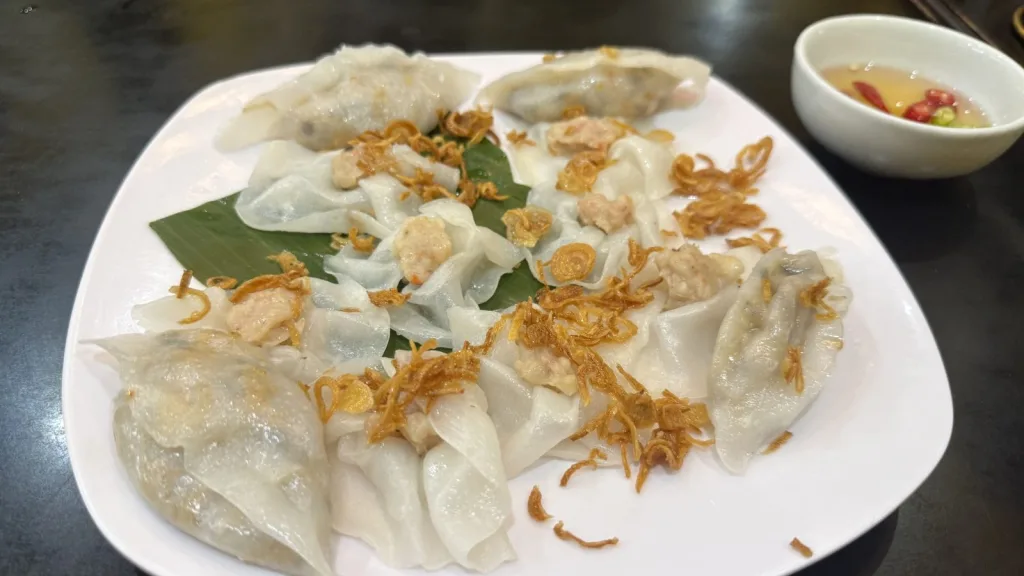
Cooking experiences are another strong reason to visit Tra Que Vegetable Village. Many guests join a local class after the farm visit, where they prepare dishes like banh xeo, fresh spring rolls, or mi Quang using ingredients from the garden. For travelers who enjoy all tours of Toward Local, this is one of the easiest ways to combine food learning with countryside exploration.
The best experiences here are usually not the fastest ones. A slower pace gives you more time to ask questions, try the tools, and notice details that most tour groups miss.
Best reasons to include it in a Hoi An day trip
Tra Que works well in a Hoi An day trip because it is close to the Ancient Town, simple to reach, and flexible in timing. You can visit in the morning for cooler weather or in the late afternoon when the light is softer and the fields feel more peaceful.
It also balances out the rest of a typical Hoi An itinerary. If your day already includes walking streets, lanterns, and riverside cafés, the village adds a more grounded local experience. A bike ride there can turn the transfer itself into part of the trip, which is ideal for adventurous travelers.
- Short distance from Hoi An center
- Easy to combine with cycling or food tasting
- Good fit for solo travelers, couples, and families
If you want to make the visit smoother, consider a local guide or a small-group itinerary that includes farming, lunch, and return transport. That saves time and helps you experience the village in a more natural way.
For travelers who want a genuine local stop with real activities, Tra Que Vegetable Village is one of the smartest additions to a Hoi An itinerary. Book it as part of a curated day trip and you will get a calmer, richer, and more memorable experience than a standard sightseeing stop.
Tra Que Vegetable Village vs Other Hoi An Experiences
Tra Que Vegetable Village is the right choice when you want a local, hands-on experience instead of a crowded sightseeing stop. For many first-time visitors to Hoi An, the challenge is not finding something to do, but choosing an activity that feels authentic, relaxed, and still worth the time. This chapter helps you compare the village with the Ancient Town and nearby countryside tours so you can match the visit to your travel style.
In practical terms, Tra Que works best for travelers who enjoy slow discovery, simple food culture, and direct contact with local life. If your ideal day includes walking, learning, and taking photos in a real farming setting, Tra Que Vegetable Village gives you that balance better than many standard tours. If you want heritage streets, shopping, or a fuller city atmosphere, the Ancient Town may fit better. For a broader countryside day, consider pairing the village with one of the Hoi An tours that includes villages, rice fields, or river activities.
Tra Que Vegetable Village is best for travelers who want an authentic, low-pressure experience near Hoi An. It is more hands-on than the Ancient Town, quieter than most countryside tours, and ideal for visitors who value local food, farming culture, and a short trip with strong cultural value.
| Criteria | Tra Que Vegetable Village | Hoi An Ancient Town | Nearby Countryside Tours |
|---|---|---|---|
| Best for | Hands-on local culture and farming | History, architecture, shopping, cafes | Rural scenery and mixed activities |
| Travel pace | Slow and relaxed | Busier and more social | Flexible, often more active |
The biggest advantage of Tra Que is its simplicity. You can join a short farming session, watch vegetables being watered, and learn how local herbs are used in cooking. For couples and solo travelers, that creates a calm but memorable experience. For families, it is easy to understand and safe to manage, especially if children enjoy nature and light activities. The trade-off is that the village is not packed with major attractions, so the visit is short unless you add a cooking class or meal.
If you are comparing tour styles, choose Tra Que when you want depth over volume. Choose the Ancient Town when you want iconic landmarks and evening energy. Choose a wider countryside tour when you want more movement and variety in one day. A useful rule is simple: if your trip is about connection, go local; if it is about sightseeing, go central. If you want both, combine Tra Que with a broader local tours collection and keep your schedule light.
If you want help building the right Hoi An day trip, choose a route that matches your pace, not just the most famous stop. A well-planned visit to Tra Que Vegetable Village often feels richer than a rushed itinerary because it gives you time to see, taste, and understand the place.
For adventurous travelers, the village is ideal as a short immersive stop before or after the Ancient Town. For families, it works best in the morning or late afternoon when the weather is cooler. For couples, the quiet garden setting adds a calm, photogenic break from the busier center. For solo travelers, it is one of the easiest ways to connect with real local life without needing a full-day commitment.
In short, Tra Que Vegetable Village is not trying to compete with Hoi An’s famous streets. It offers a different kind of value: slower, greener, and more personal. If your travel style leans toward authentic local experiences, it deserves a place on your Hoi An itinerary.
If you are ready to experience Tra Que the right way, book a tour or build a custom local day around it before availability fills up. The best visits are the ones that fit your pace, your interests, and the kind of memory you want to bring home.
Travel Tips, FAQs, and Final Planning Advice
Tra Que Vegetable Village is easiest to enjoy when you arrive with a clear plan, not a packed schedule. Many first-time visitors expect a big sightseeing site, then miss the real value: slow farm routines, local interaction, and hands-on activities. The smartest approach is to match your timing, transport, and expectations to the village rhythm.
For travelers who want a local, adventurous stop near Hoi An, this chapter helps you avoid the most common mistakes, answer practical questions, and decide whether to book a guided experience or visit on your own. If you want a broader day plan, all Toward Local tours can help you compare options before you go.
One useful shortcut is this: come early, wear shoes you can clean easily, and leave enough time to join one activity properly instead of rushing three. That single choice usually improves the whole visit.
| Criteria | Best for | Not ideal for | Visitor tip |
|---|---|---|---|
| Early morning visit | Photos, cooler weather, active farmers | Late sleepers, tight morning schedules | Arrive before the heat and before crowds |
| Guided activity | Families, couples, first-time visitors | Travelers who only want a quick photo stop | Choose one hands-on experience and stay with it |
Common mistakes visitors make in Tra Que Vegetable Village usually come from moving too fast or arriving unprepared. The village is small, but the experience is richer when you understand the flow.
- Visiting at midday, when the heat is strongest and the farm work slows down
- Expecting a museum-style attraction instead of a living farming community
- Wearing white sneakers or clothes that are hard to clean after garden activities
- Skipping the local guide and missing the story behind the herbs, soil, and watering methods
- Trying to fit Tra Que into a packed itinerary without time for a real activity
A practical example: a couple who arrives at 6:30 a.m. can usually watch farmers work, join a quick gardening session, then finish with breakfast or a cooking class nearby. A family visiting at noon often gets less value because children are tired, the heat is stronger, and the garden feels less active.
If you want a smooth half-day plan, pair the village with a food-focused stop in town or a relaxed ride through the countryside. For travelers combining local culture with a bigger itinerary, Hoi An tours are often the easiest way to keep the day balanced.
Frequently asked questions about hours, tickets, and activities usually start with one point: the village is best experienced as a live working area, not a quick attraction. Opening times and activity access can vary by provider, season, and whether you visit independently or through a tour.
- What are the best hours to visit? Early morning and late afternoon are the most comfortable
- Do you need a ticket? Some experiences are free to enter, while hands-on activities, guides, and meals may be paid
- What can you do there? Farming demos, vegetable planting, cooking classes, walking, and photo stops
- How long should you stay? Most visitors need one to three hours, depending on whether they join activities
A useful rule is to check what is included before you go, especially if you want a guided farm session or cooking lesson. That small detail changes the value of the visit more than people expect. For travelers who want a smooth city-to-countryside day, small-group Hoi An tours can remove the guesswork.
Tra Que Vegetable Village is best visited early in the morning or late afternoon for cooler weather, active farming scenes, and better photos. Most visitors spend one to three hours there, often combining a garden walk, a farming demo, or a cooking class. Tickets and activity fees depend on the provider and package.
Simple CTA: how to plan your visit with confidence starts with three decisions. First, choose your time of day. Second, decide whether you want a self-guided stop or a hands-on experience. Third, build in enough time for the village to feel unhurried. That is what makes the visit memorable.
If you are traveling solo, keep it light and flexible. If you are a couple, plan for photos and a slow walk. If you are a family, choose one interactive activity so children stay engaged. If you want help turning that into a clean itinerary, browse Toward Local tours and match the experience to your travel style.
Final planning advice: book the kind of visit that fits how you like to travel, not just what looks popular online. Tra Que rewards curiosity, patience, and a little open time in your day. Plan it well, and the village becomes more than a stop; it becomes one of the most authentic parts of your Hoi An trip.