
Ba Thien Hau Pagoda is one of Ho Chi Minh City’s most meaningful temple visits, especially for travelers who want more than a quick photo stop. This Chinese temple in District 5 blends faith, incense, and living community traditions, making it a strong introduction to Vietnamese heritage for first-time visitors, solo travelers, couples, and families.
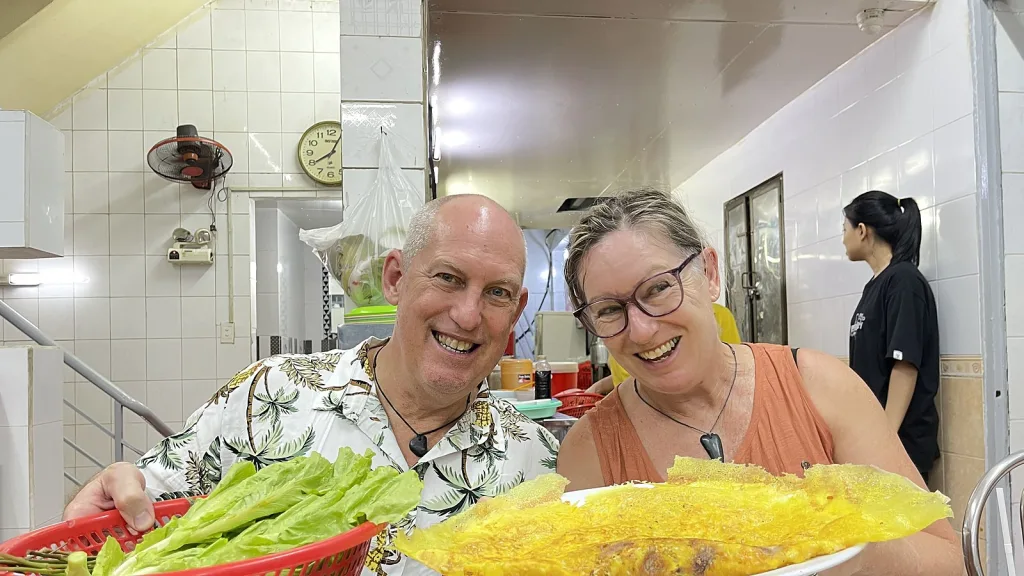
If you are planning a district 5 attraction that feels local, this pagoda answers the usual questions in one stop: why it matters, what to look for, and how much time to allow. You will see carved wood, smoky altars, and details that reveal how Chinese-Vietnamese culture still shapes daily life here, while a nearby food stop can turn the visit into an easy half-day plan.
What Is Ba Thien Hau Pagoda and Why Is It Important?
Ba Thien Hau Pagoda is one of the most recognizable Chinese temples in Ho Chi Minh City, and it draws travelers who want a real local experience rather than a polished tourist stop. If you are planning a first walk through Chinatown, this temple gives you an easy way to understand the city’s spiritual life, immigrant history, and street-level rhythm in one visit.
For many visitors, the challenge is not finding a temple, but knowing why this one matters. The answer is simple: Ba Thien Hau Pagoda combines living worship, preserved heritage, and everyday community use. That makes it useful for solo travelers, couples, and families who want context, not just a quick photo.
Ba Thien Hau Pagoda is a historic Chinese temple in Ho Chi Minh City dedicated to the sea goddess Mazu. It is important because it reflects the city’s Chinese-Vietnamese heritage, remains an active place of worship, and offers visitors a clear window into local beliefs, rituals, and community life.
The temple is located in District 5, where many streets still reflect the commercial and cultural influence of the Chinese-Vietnamese community. When travelers compare it with other local experiences, they often combine it with food or neighborhood walks such as Ho Chi Minh City food tours, because the area works best when you see both the temple and the surrounding district together.
A simple way to understand the pagoda is through three layers:
- Religious role: locals pray for protection, health, and safe journeys
- Historical role: it preserves the legacy of early Chinese settlers
- Cultural role: it shows how worship and daily life still connect in modern Saigon
One practical insight: if you visit in the morning, you will usually see incense, offerings, and quiet devotion in a more authentic setting. That is when the pagoda feels most alive, especially for travelers who prefer meaningful places over crowded highlights. If your trip continues beyond the city, you can also explore all Toward Local tours for other local-first itineraries.
| Criteria | What You See | Why It Matters | Best For |
|---|---|---|---|
| Active worship | Incense, altars, daily offerings | Shows living tradition, not just heritage | Culture-focused travelers |
| Historic setting | Old Chinatown streets and temple architecture | Explains the city’s Chinese-Vietnamese roots | First-time visitors and families |
For adventurous travelers, the real value is not only the temple itself but the story it tells about Ho Chi Minh City. Ba Thien Hau Pagoda helps you read the neighborhood, understand local faith, and move through the city with more context. If you want a deeper local route, a soft next step is to pair it with a guided city experience that saves time and adds interpretation.
Final takeaway: Ba Thien Hau Pagoda is important because it is both a sacred site and a cultural landmark. Visit it to see how faith, migration, and daily life come together in one of Saigon’s most atmospheric neighborhoods, then continue your trip with a local itinerary that makes the area easier to explore.
How to Visit Ba Thien Hau Pagoda the Right Way
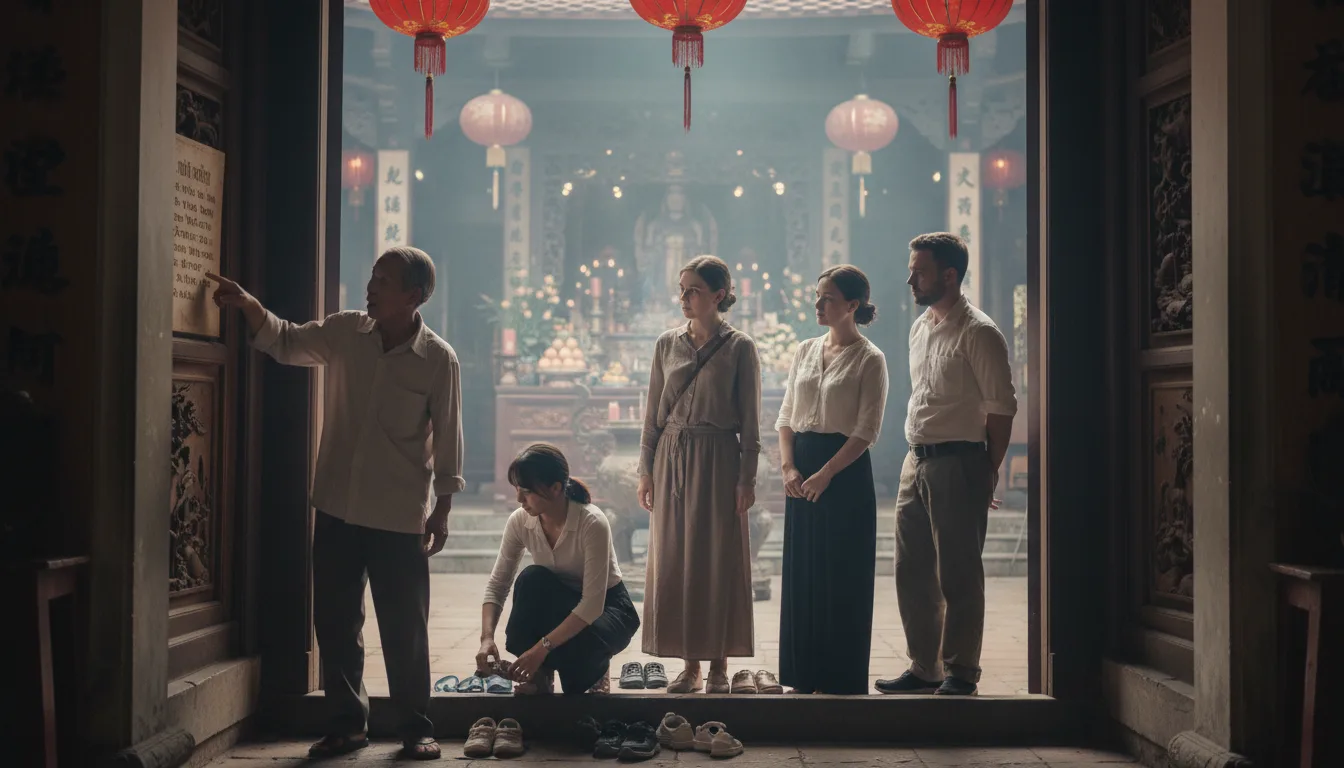
Ba Thien Hau Pagoda is easiest to enjoy when you plan the visit around local rhythm, not tourist habits. The pagoda sits in Cholon, Ho Chi Minh City’s historic Chinese quarter, so the surrounding streets can feel busy, layered, and a little overwhelming at first. The fix is simple: arrive with enough time, dress modestly, and keep your visit quiet and respectful.
If you are coming for the first time, treat it as a working temple, not just a photo stop. That mindset helps with everything from entrance behavior to how you move around the altar space. For travelers combining culture and food, a stop here pairs well with local HCMC food tours, especially if you want to understand the district beyond the pagoda walls.
Visit Ba Thien Hau Pagoda by heading to Cholon early, wearing modest clothes, speaking softly, and respecting worshippers. The temple is open daily, but the best experience comes during quieter morning hours when incense is lighter, crowds are smaller, and rituals are easier to observe without interrupting local prayer.
Location matters because traffic and parking can shape your whole visit. Use a taxi or ride-hailing app if you are staying in central District 1, then allow extra time for the final approach through narrow streets. In practical terms, that means no rushing, no loud group behavior, and no blocking the entrance while you take photos.
| Criteria | Best Choice | Why It Works | Traveler Tip |
|---|---|---|---|
| Arrival time | Early morning | Less crowded and cooler | Better for photos and rituals |
| Transport | Taxi or ride-hailing | Simple and direct | Avoid parking stress in Cholon |
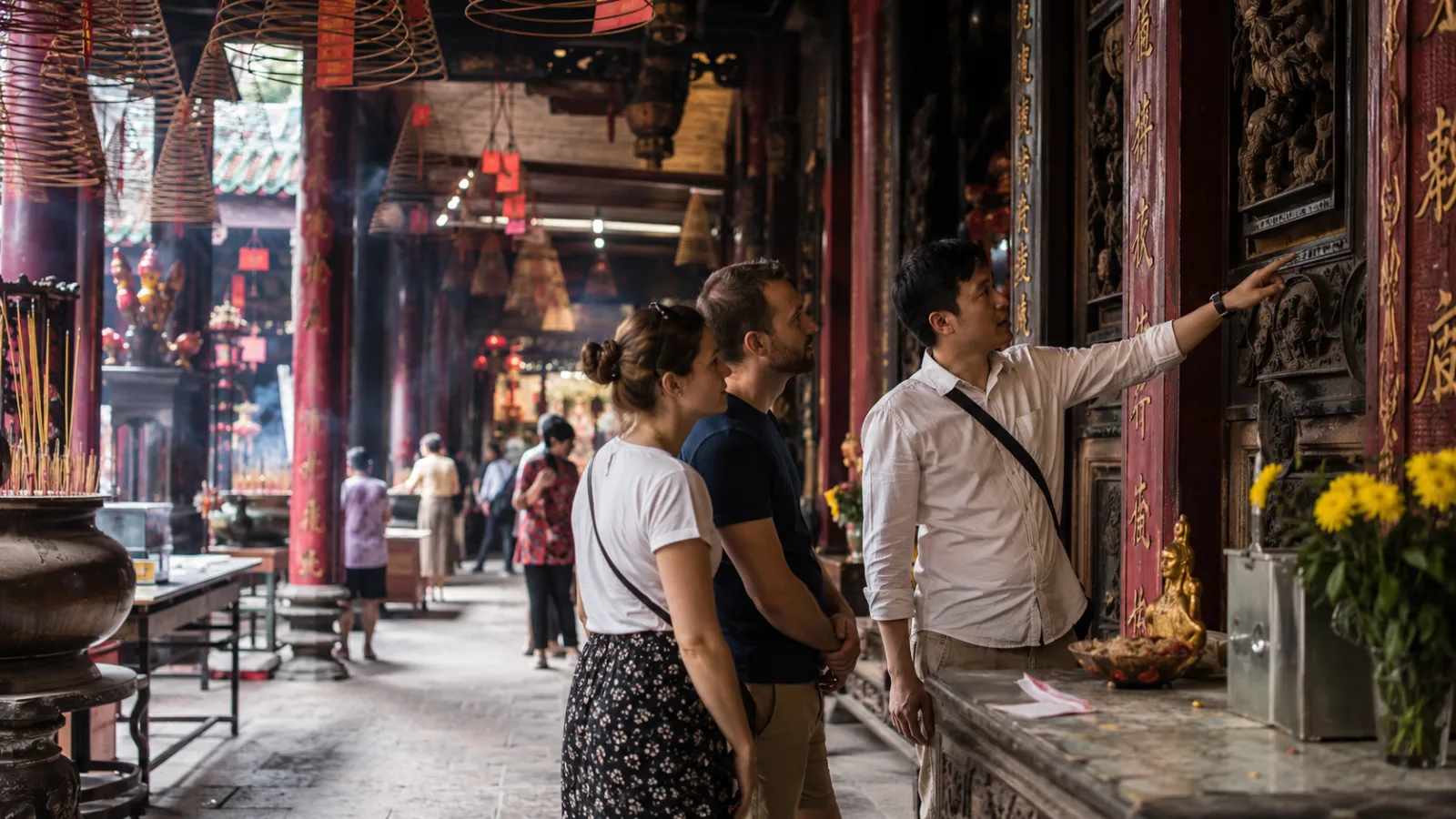
Inside, expect incense, prayer tablets, red and gold details, and worshippers making offerings. A useful rule is to observe first, then move slowly. If you are planning a broader city day, all Toward Local tours can help you build a local itinerary without wasting time on generic routes.
For etiquette, keep these basics in mind: cover shoulders and knees, do not point at statues, and avoid stepping into ceremonial spaces unless invited. Many visitors light incense, bow lightly, and leave a small donation. That simple sequence is enough to show respect without feeling lost, and it keeps your visit smooth, calm, and genuinely local.
If you want to see Ba Thien Hau Pagoda in a way that feels authentic, pair it with a guided neighborhood walk or food stop nearby. That way, you get context, not just a quick checklist visit.
Book your local Ho Chi Minh City experience in advance so you can visit at the right time, avoid crowded hours, and understand the temple’s cultural meaning from the start.
What to See at Ba Thien Hau Pagoda
Ba Thien Hau Pagoda is best understood as a living temple, not a quick photo stop. For first-time visitors, the main challenge is knowing what matters inside the busy hall and what is simply decorative. Focus on the altar layout, the roof details, and the ritual atmosphere, because those elements explain why this place remains important to local worshippers and curious travelers alike.
The most rewarding visit comes when you slow down and read the space in layers. A good rule is to look first at the central altar, then the side altars, then the woodwork above your head. If you are planning a broader day in the city, you can pair this stop with local Ho Chi Minh City tours, which helps you connect the pagoda with nearby neighborhoods and food streets.
Featured insight: The best things to see at Ba Thien Hau Pagoda are not just sacred objects, but the way architecture, incense, and devotion work together in one compact space.
| Criteria | Main hall | Side spaces | Best value |
|---|---|---|---|
| What to notice | Central altar, offerings, worship activity | Smaller shrines and detail work | Overall temple atmosphere |
| For photos | Incense haze and symmetry | Carved beams and rooftop details | Quiet angles with natural light |
Start with the main altar, where the strongest sense of devotion is visible in flowers, candles, and offerings left by local worshippers. Then look for the smaller altars along the sides, which often reveal how the temple supports different layers of belief and family prayer.
The traditional Chinese architecture is easy to miss if you only glance around. Notice the curved roofline, painted beams, ceramic figures, and dense carved panels. These details matter because they show craft, status, and symbolic protection. For travelers who enjoy more local, walkable experiences, this kind of texture is what makes the visit feel real. If you are building a wider itinerary, all Toward Local tours can help you combine temple stops with market and street food time.
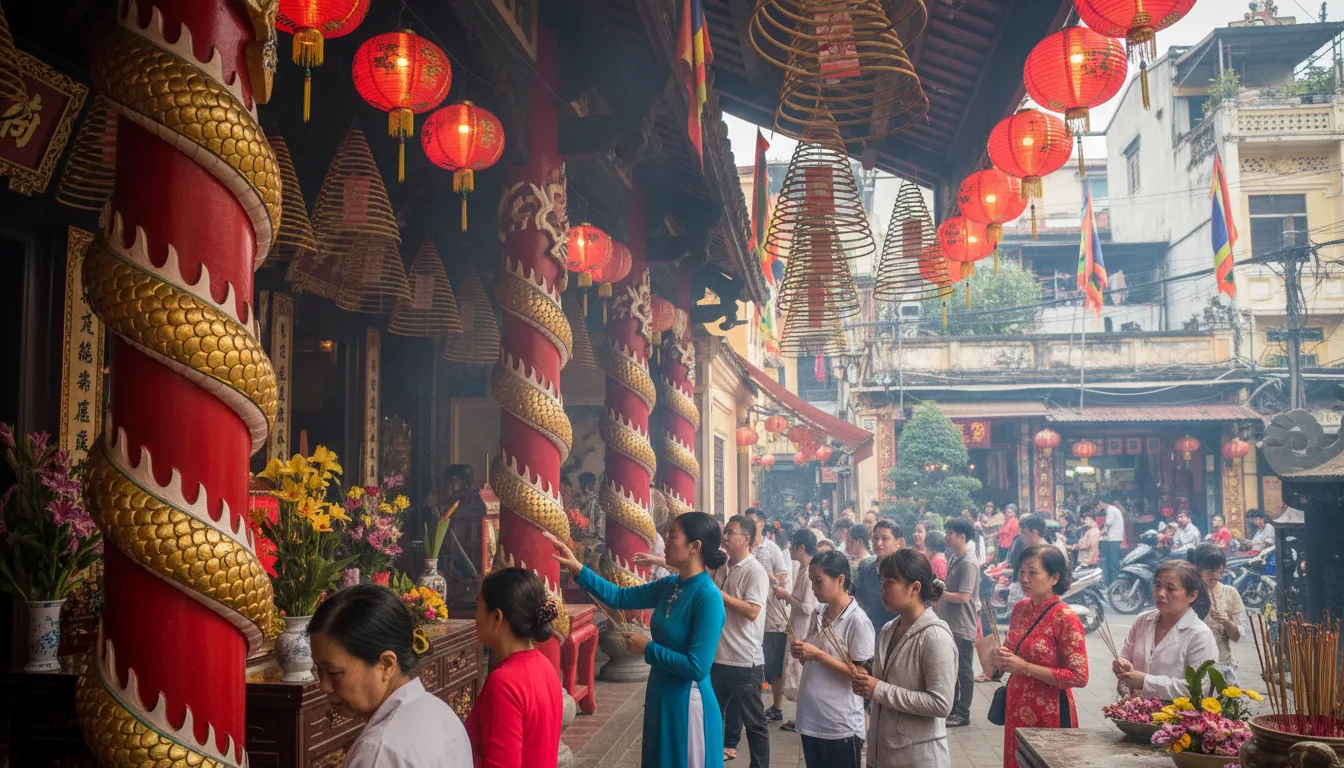
Incense rituals are another highlight, and they are also the best clue that this is an active place of worship. Visitors often see people lighting sticks, pausing for a wish, then placing them carefully in the burners. Keep your voice low, watch where others stand, and wait for a clear moment before taking photos near the smoke.
For photo-worthy spots, try the front courtyard, the doorway framing, and the view upward toward the roof ornaments. The light is often softer in the morning, which makes the red tones and incense haze stand out better. If you are traveling solo, as a couple, or with family, this temple rewards patience more than speed, and that is exactly why Ba Thien Hau Pagoda stays memorable.
Ba Thien Hau Pagoda vs. Other Temples in Ho Chi Minh City
Ba Thien Hau Pagoda is a strong choice if you want a temple visit that feels local, active, and easy to combine with a Chinatown walk. Compared with larger city landmarks, it offers a tighter cultural experience: incense, rooftop detail, daily worship, and a neighborhood rhythm that still feels lived in. For first-time visitors, that makes the visit easier to understand and more memorable.
In Ho Chi Minh City, many temples serve different travel goals. Some are best for grand architecture, others for quiet reflection, and some for photo stops. Ba Thien Hau Pagoda stands out because it gives you a clear look at Chinese-Vietnamese heritage without requiring a long detour or a formal tour. If you are building a route around authentic city culture, this is where the visit becomes both practical and meaningful.
Ba Thien Hau Pagoda is best for travelers who want a compact, local, and culturally rich temple experience in Ho Chi Minh City. It combines Chinese-Vietnamese heritage, active worship, and a neighborhood setting that feels authentic, making it easier to compare with bigger, more tourist-heavy religious landmarks.
| Criteria | Ba Thien Hau Pagoda | Notre Dame Cathedral | Jade Emperor Pagoda |
|---|---|---|---|
| Best for | Local culture and active worship | Colonial landmark viewing | Spiritual atmosphere and ornate detail |
| Travel feel | Compact, neighborhood-based, authentic | Central, busy, iconic | Quiet, symbolic, temple-focused |
For adventurous solo travelers and couples, the temple works well because it gives context fast. You can spend 30 to 45 minutes here, then continue into the surrounding streets for food and market browsing. That is why many visitors pair the stop with local HCMC food tours, especially when they want culture and street life in one route.
If you are comparing options, think in simple terms: choose Ba Thien Hau Pagoda for heritage, choose a major cathedral for city icons, and choose other temples for scale or silence. A small but useful insight is that the best temple visit is not always the most famous one; it is the one that matches your pace, attention span, and interest in local life.
Who should visit? Solo travelers who like layered city culture, couples who want a photogenic but calm stop, and families who prefer short visits with clear educational value. It is also a smart add-on for travelers planning broader cultural routes through Vietnam, including all Toward Local tours, because it fits naturally into a half-day exploration.
If you want a temple stop that feels genuine rather than staged, add Ba Thien Hau Pagoda to your Ho Chi Minh City plan and build the rest of your route around nearby local streets, food, and heritage spots.
For the best experience, visit Ba Thien Hau Pagoda early in the day, move slowly through the incense-filled halls, and combine it with a curated local tour so you can see how this landmark compares with the city’s other major religious sites in real time.
Tips, Common Mistakes, FAQ, and Final Travel Advice
Ba Thien Hau Pagoda rewards travelers who slow down, observe details, and move with respect. This chapter helps first-time visitors avoid common mistakes, answer practical questions, and make a smarter visit whether you are traveling solo, as a couple, or with family. A little preparation goes a long way here, especially if you want a local experience instead of a rushed stop.
The easiest way to enjoy the pagoda is to plan around calm hours, dress modestly, and keep your visit short but attentive. If you are building a deeper city route, you can pair it with Ho Chi Minh City food tours or other nearby local experiences so the day feels balanced rather than crowded. The goal is not to see more, but to notice better.
Common Visitor Mistakes to Avoid
Many visitors come to Ba Thien Hau Pagoda with good intentions but miss the atmosphere because they treat it like a quick photo stop. The most common mistakes are arriving at the busiest time, speaking loudly near worshippers, and wearing outfits that feel too casual for a sacred site. A simple rule works well: enter quietly, watch how locals move, and follow the flow of the space.
Another frequent issue is focusing only on the front gate and main altar. The real experience includes the incense details, side altars, and the rhythm of people praying throughout the temple. If you like slow cultural travel, this is where the visit becomes memorable. For adventurous planners who enjoy building a broader route, a full local tours list can help you combine the pagoda with other authentic stops in the city.
| Criteria | Better choice | Why it helps | Best for |
|---|---|---|---|
| Visit time | Early morning | Quieter, cooler, more respectful | Solo travelers and couples |
| Outfit | Modest clothing | Fits temple etiquette and feels natural | Families and first-time visitors |
To visit Ba Thien Hau Pagoda well, go early, dress modestly, speak softly, and watch how local worshippers behave. Avoid treating it like a selfie-only stop. A respectful, 30 to 45 minute visit is usually enough to see the incense coils, altar details, and the temple’s local atmosphere.
Key FAQs and a Simple CTA for Planning Your Trip
FAQ 1: How much time do I need? Most travelers need 30 to 45 minutes, though photographers and culture lovers may stay longer if the temple is quiet and they want to observe rituals carefully.
FAQ 2: Is it suitable for families and solo travelers? Yes. The pagoda is compact, easy to navigate, and rewarding for travelers who enjoy local culture, but children should be reminded to stay calm and avoid touching offerings.
FAQ 3: What should I do next? Keep your day flexible and combine the visit with a nearby neighborhood walk or a local food stop. That mix gives you both culture and context, which is often what makes a trip feel special.
If you want a smoother itinerary, choose one temple visit, one neighborhood walk, and one food experience instead of overpacking the day. That balance works especially well for visitors from Europe, North America, Korea, and Japan who want something authentic without feeling rushed. When you are ready to plan beyond the pagoda, explore Da Nang tours for a different local pace or keep browsing the full local network to shape a trip that fits your style.
Final advice: Ba Thien Hau Pagoda is best experienced as part of a wider local day, not as a standalone checklist item. Arrive with curiosity, leave with more attention to the city around you, and use that rhythm to build a better trip. If you want help turning that idea into a real route, start with a soft local tour search and choose the experience that matches your pace.