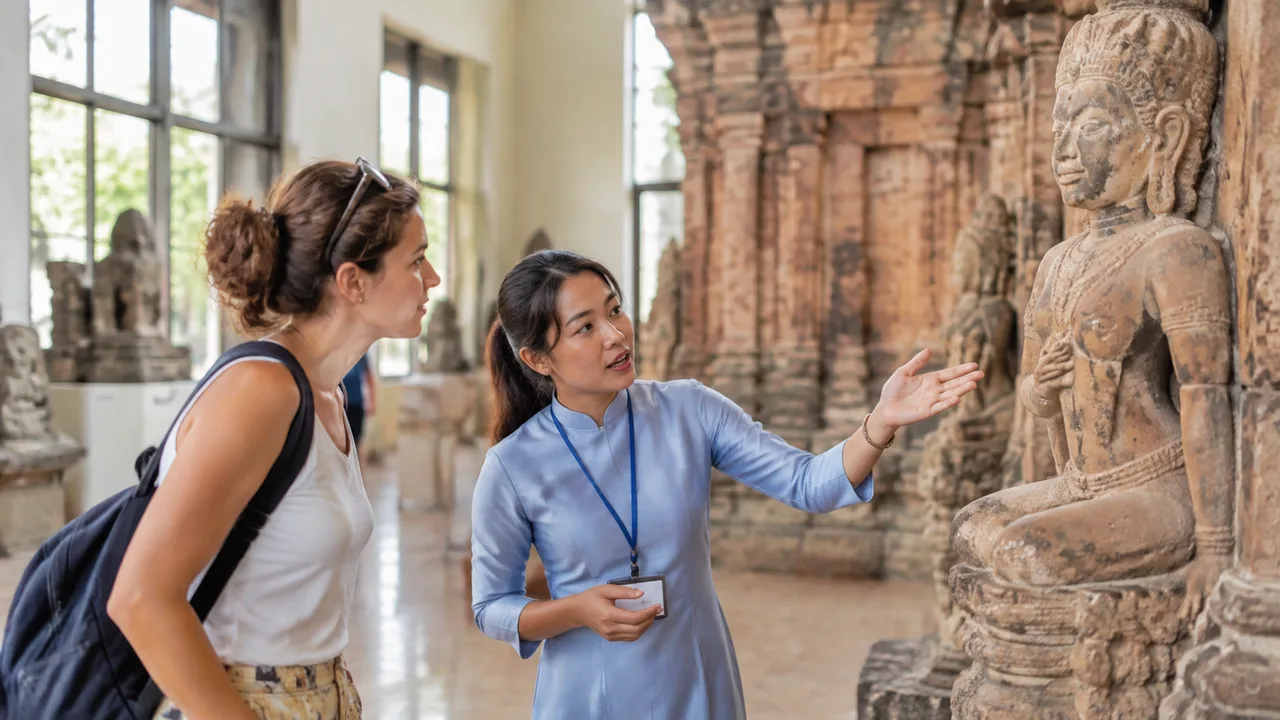

Cham Sculpture Museum Da Nang is one of the city’s most rewarding cultural stops, but it can be hard to know whether a museum belongs on a packed itinerary. This quiet collection offers a close look at the art and beliefs of the ancient Cham civilization without requiring a full-day excursion, making it a practical choice for curious travelers with only a few hours in the city.
Inside, visitors can see sandstone sculptures, temple carvings, and galleries organized around archaeological sites, with an audio guide helping explain the details. Allow time to explore at an unhurried pace, then weigh this central Da Nang museum against a longer trip to My Son Sanctuary. If you are building a flexible city itinerary, browse Da Nang tour options alongside your museum visit.
What to Know Before Visiting Cham Sculpture Museum Da Nang
Cham Sculpture Museum Da Nang is a compact, calm introduction to the Champa Kingdom, but a little context makes the stonework far more rewarding than a quick walk-through. This guide explains why the collection matters and what to check before setting out, so you can plan around current museum arrangements rather than rely on old travel listings.
The museum is central and easy to pair with a riverside walk, yet hours, ticket prices, and visitor services can change. Use the practical details below as a starting point, then confirm them with the museum or a current local source on the day you visit.
The museum’s history and its connection to the Champa Kingdom
Opened in 1919, the museum preserves sculpture and architectural fragments from Cham religious sites across central Vietnam. These works reflect the Champa Kingdom’s changing Hindu and Buddhist traditions, as well as the skill of artists who carved sandstone for temples and sanctuaries.
Quick overview: Cham Sculpture Museum Da Nang opened in 1919 and displays sculptures recovered from historic Cham sites, including My Son and Tra Kieu. Its galleries help visitors connect individual carvings with the wider Champa Kingdom, whose influence shaped central Vietnam for centuries. Allow time to look closely; small details often explain more than a fast gallery circuit.
Location and what to check before arriving
The museum is at 02 2 Thang 9 Street in central Da Nang, close to Dragon Bridge. A taxi or ride-hailing car is convenient from beach districts; from nearby riverfront hotels, walking may be practical. Travelers planning a broader Da Nang local experience can fit the museum around other city stops.
Before leaving, verify the current opening schedule and admission fee. Listings have reported daily hours of 7:00 a.m. to 5:00 p.m. and a 60,000 VND ticket, but these details may change. Ask about English audio-guide access and any restrictions on photography when you arrive.
| Planning detail | Useful starting point | What to confirm |
|---|---|---|
| Opening hours | Listings report 7:00 a.m. to 5:00 p.m. | Daily schedule and holiday changes |
| Admission | Reported at 60,000 VND | Current price and payment options |
For a more meaningful visit, choose a few galleries to explore rather than trying to study every object. Check the latest details before you go, then make the museum part of a flexible Da Nang day rather than a tight schedule.
What to See Inside Cham Sculpture Museum Da Nang
Cham Sculpture Museum Da Nang is easiest to understand when you follow its regional galleries rather than rushing from one statue to the next. The collection brings together temple sculptures linked to My Son, Tra Kieu, and Dong Duong, offering a compact introduction to the beliefs and artistic styles of central Vietnam.
Inside the museum, look for regional galleries, sandstone temple carvings, and figures associated with Hinduism and Buddhism. My Son, Tra Kieu, and Dong Duong works show how Cham art varied by place and period. Check each label for the findspot, material, and original architectural use to connect an object with its setting.
Read the collection by place
Use the gallery names as a simple route. My Son pieces often connect with temple architecture, while Tra Kieu and Dong Duong displays reveal different approaches to carving and religious imagery. Rather than treating every room as a checklist, compare repeated motifs and notice how the details change.
- My Son: look for altar and architectural fragments.
- Tra Kieu: compare carved reliefs and decorative forms.
- Dong Duong: notice Buddhist imagery alongside other sacred works.
Spot materials and meaning
Sandstone is prominent, and close inspection can reveal jewelry, folds, hair, or animal forms cut into the surface. Shiva and Ganesha are among the Hindu figures to recognize; Buddhist images offer another perspective on Cham religious life. A useful mini exercise is to identify the figure first, then check the label for its site and function.
| Gallery clue | What to notice | Why it helps |
|---|---|---|
| Regional label | My Son, Tra Kieu, or Dong Duong | Connects art to place |
| Carved figure | Material, symbols, and fine details | Reveals beliefs and craft |
For a more local-paced day, pair the museum with a walk through central Da Nang; browse Da Nang tour options if you want help planning nearby stops. Take your time with a few objects rather than trying to see everything. For a guided day that adds context beyond the galleries, explore the available tours before you go.
How to Plan Your Cham Sculpture Museum Da Nang Visit
Plan your Cham Sculpture Museum Da Nang visit around a focused hour or two, not a rushed stop between attractions. A simple gallery route, a little context from the audio guide, and a nearby riverfront walk make the museum rewarding for solo travelers, couples, and families.
Quick plan: Allow 60–90 minutes for the galleries, begin with the major regional collections, then pause at the standout altars and sculptures. Add travel time and a nearby sight if you have half a day. Check current opening hours and ticket details before setting out.
Suggested visit length and a practical route through the galleries
For a first visit, spend about 60–90 minutes inside. Start with the galleries arranged by archaeological site, such as My Son and Tra Kieu, to see how Cham sculpture varies by place and period. Then slow down for the best-known works, including the My Son E1 and Tra Kieu altars and the Tara Bodhisattva.
- Allow 10 minutes to orient yourself and access the audio guide.
- Use 35–55 minutes to explore the galleries at a comfortable pace.
- Keep 10–20 minutes for close viewing, notes, or a quiet break.
If you enjoy reading labels or sketching details, leave extra time; the stone carvings reward looking closely rather than hurrying past.
Getting there and combining nearby sights
The museum is close to the Han River and Dragon Bridge, so a taxi or ride-hailing car is practical from beachside hotels, while central riverfront stays may be walkable. Pair the visit with a stroll to Dragon Bridge or Han Market, and explore local Da Nang experiences if you want a guide to connect the museum with the city’s everyday life.
| Plan | Best for | Allow | Pair with |
|---|---|---|---|
| Museum stop | Tight schedule | 60–90 minutes | Riverfront walk |
| Easy half-day | Unhurried visit | 2–3 hours | Han Market or Dragon Bridge |
Da Nang’s heat and sudden showers can make an indoor museum a useful midday stop. In wet weather, use a car or ride-hailing service rather than relying on a long walk; around tour schedules, confirm pickup times and museum access directly. For a relaxed, locally informed day, arrange a Da Nang tour that fits your pace and interests.
Cham Sculpture Museum or My Son Sanctuary: Which Should You Choose?
Quick answer: Choose the Cham Sculpture Museum for a short, comfortable introduction to Cham art in central Da Nang. Choose My Son Sanctuary for an adventurous half-day among ancient temple ruins and forested hills. Your best fit depends on travel time, walking comfort, and whether you prefer close-up artifacts or the atmosphere of an archaeological landscape.
What feels different about each visit
The Cham Sculpture Museum Da Nang keeps the experience compact and indoors. In about an hour, you can see carved sandstone figures and architectural pieces recovered from Cham sites, including My Son. It suits a rainy afternoon, a city itinerary, or travelers who want historical context without a long transfer.
My Son Sanctuary puts that history in its original setting. The temple towers sit in a green valley, and reaching them involves transport from Da Nang followed by walking on outdoor paths. Expect heat, uneven surfaces, and more time on your feet. A guide can help explain the ruins and their religious details; independent visitors can explore at their own pace.
Choose by time, mobility, and travel style
| Factor | Cham Sculpture Museum | My Son Sanctuary |
|---|---|---|
| Time | About one hour in the city | Several hours including travel |
| Walking and comfort | Mostly indoors, easier in hot or wet weather | Outdoor paths, uneven ground, sun exposure |
| Best for | Artifacts, independent city exploring | Ruins, scenery, guided day trips |
If you have only a free hour between city stops, the museum is the practical choice. If ancient architecture and a more immersive day matter more, make room for My Son. Families and solo travelers should check current site conditions and consider mobility needs before setting out. For help arranging transport or a guided outing, browse Da Nang tour options while planning your route.
You do not have to choose one forever: the museum’s collection adds context to the sanctuary, so visiting both offers the fullest picture of Cham heritage. Short on time? Book a local Da Nang tour to make the journey to My Son simpler and spend less of your day coordinating transport.
Visitor Tips and FAQs for Cham Sculpture Museum Da Nang
Cham Sculpture Museum Da Nang is easiest to appreciate when you treat it as more than a quick photo stop. The galleries are arranged around Cham art and archaeological sites, so a little context helps you understand why a sculpture matters rather than simply moving from one display to the next.
Before setting out, check the museum’s current visitor information for opening hours, ticket prices, and any temporary changes. These details can change, and relying on an old travel post may mean arriving at the wrong time.
Quick answer: what to know before you go
Allow about 60 to 90 minutes for a relaxed visit. Read the gallery labels, look for the site or period associated with each object, and check whether English descriptions or an audio guide are available on the day. You can visit independently; a tour is optional, not required.
Common visitor mistakes
- Rushing through the galleries: pause to connect each sculpture with its original temple or archaeological site.
- Skipping the labels: a carved figure is more meaningful when you know its religious or historical context.
- Trusting outdated logistics: verify current hours and admission details before leaving your hotel.
For example, if you have visited My Son, take time to notice how museum pieces relate to the sanctuary’s architecture. That small connection can make the collection feel far less abstract.
FAQs
Is it worth visiting? Yes, especially for travelers interested in archaeology, local history, or a quieter cultural break between outdoor activities.
How long should you spend there? Plan 60 to 90 minutes; allow longer if you enjoy reading detailed displays.
Are English descriptions or guides available? Availability can vary. Check at the entrance for English labels, audio options, or guided-tour arrangements.
Can you visit without a tour? Yes. The museum is suitable for independent visits, and you can explore at your own pace.
Choose the visit that suits your day
| Visit style | Best for | Plan | Useful tip |
|---|---|---|---|
| Independent | Flexible, solo visits | 60 to 90 minutes | Check English resources on arrival |
| Guided | More historical context | Confirm options in advance | Ask about language and availability |
Make the museum part of a broader city day by pairing it with a riverfront walk or other local experiences; browse Da Nang tour options for ideas. Check the latest visitor information before you go, then add the museum to your Da Nang itinerary for a thoughtful, low-key look at the region’s Cham heritage.