
Linh Ung Pagoda: A Practical Guide to Da Nang’s Sacred Sites
Linh Ung Pagoda is one of Da Nang’s best-known spiritual and scenic stops, but the name can be confusing: the city has three pagodas called Linh Ung in different locations. For first-time visitors, choosing the right one matters. This guide focuses on the Son Tra Peninsula complex, where a landmark statue, active worship spaces, and coastal views make a rewarding stop beyond the usual city itinerary.
Plan your visit around the experience you want, whether that means a quiet morning, a scenic scooter ride, or an easier trip by car. We’ll explain how to distinguish the three sites, choose transport, and time your visit, then point out what to look for at the Lady Buddha statue and nearby viewpoints. If you want help shaping a wider Da Nang travel itinerary, use this guide to decide how Linh Ung fits into your day.
Which Linh Ung Pagoda Should You Visit?
The Linh Ung Pagoda that suits you best depends on whether you want coastal scenery, a climb through caves, or a mountain-resort day. Da Nang has three pagodas with this name, and they are not interchangeable: their settings, access, and surrounding activities can shape the whole day.
Quick answer: Choose Son Tra for sea views and the Lady Buddha statue, Marble Mountains for caves and a more active visit, or Ba Na Hills for a pagoda stop within a full mountain-resort experience. If you have time for only one, match the site to your route rather than trying to visit all three.
| Best for | Son Tra Peninsula | Marble Mountains | Ba Na Hills |
|---|---|---|---|
| Setting | Coastal hillside and city views | Limestone caves and stone steps | Mountain resort and gardens |
| Visit style | Relaxed, scenic stop | Exploratory, with more walking | Part of a longer paid day out |
Son Tra is the easiest choice for a flexible half-day, especially for couples or solo travelers who want to combine the pagoda with coastal viewpoints. Marble Mountains suits adventurous visitors who enjoy stairs, caves, and temple sites; allow time and wear shoes with good grip. At Ba Na Hills, the pagoda is one stop among many, so it makes most sense if the cable car and resort are already on your itinerary.
For a local-feeling outing, choose Son Tra; for an active cultural visit, pick Marble Mountains. Compare Da Nang tour options if you would rather combine stops without planning every transfer yourself. Choose Ba Na Hills when you want the broader resort experience, not just a pagoda visit.
How to Get to Linh Ung Pagoda and Plan Your Visit
How to Get to Linh Ung Pagoda and Plan Your Visit
Linh Ung Pagoda sits on Son Tra Peninsula, around 10 km from central Da Nang. Plan transport and a return ride before you go: the coastal setting is beautiful, but ride-hailing availability can be limited at the temple.
Quick plan: Reach the pagoda by taxi, ride-hailing car, motorbike, or a private tour. Allow about 20–30 minutes by car from central Da Nang, with extra time in traffic. Visit early or late in the day, park in the designated area, and dress modestly if entering worship halls.
Directions, travel time, and transport
Follow the coastal route toward Son Tra Peninsula and search for Linh Ung Pagoda on Son Tra in your map app. A scooter gives you flexibility for nearby stops, but only ride if you are licensed and confident on hills. By car, arrange a pickup time or confirm a return ride before your visit.
| Option | Best for | Practical note |
|---|---|---|
| Taxi or ride-hailing car | Families and couples | Agree on pickup or return arrangements |
| Motorbike | Confident solo riders | Check weather, license, and parking on arrival |
| Private tour | Visitors combining several stops | Confirm the itinerary and time at the pagoda |
Combine nearby stops and visit respectfully
Allow roughly 1–2 hours at the pagoda, then add a Son Tra viewpoint or beach if road and weather conditions suit. A Da Nang local tour can simplify transport if you would rather not navigate the peninsula yourself. Wear clothing covering shoulders and knees for prayer halls, remove shoes where requested, keep voices low, and ask before photographing worshippers. Bring water, sun protection, and a light layer for changing coastal weather. Check current access and opening arrangements before setting out, especially during heavy rain.
For an easier, more flexible day, choose a driver or small-group outing that lets you combine the pagoda with other Da Nang sights without rushing. Compare local tour options and confirm the route before booking.
What to See at Linh Ung Pagoda on Son Tra Peninsula
Linh Ung Pagoda is more than a landmark photo stop: its sea-facing Lady Buddha, active temple grounds, and hillside setting make it a rewarding visit for curious travelers. Knowing what to look for helps you balance sightseeing with respect for local worship, especially when the courtyards are busy.
Allow time to explore beyond the statue. Walk through the main courtyard, notice the roof details and stone figures, then pause at an open viewpoint for a different perspective on Da Nang Bay. The quieter moments often make the visit feel more local and memorable.
The Lady Buddha statue and its religious significance
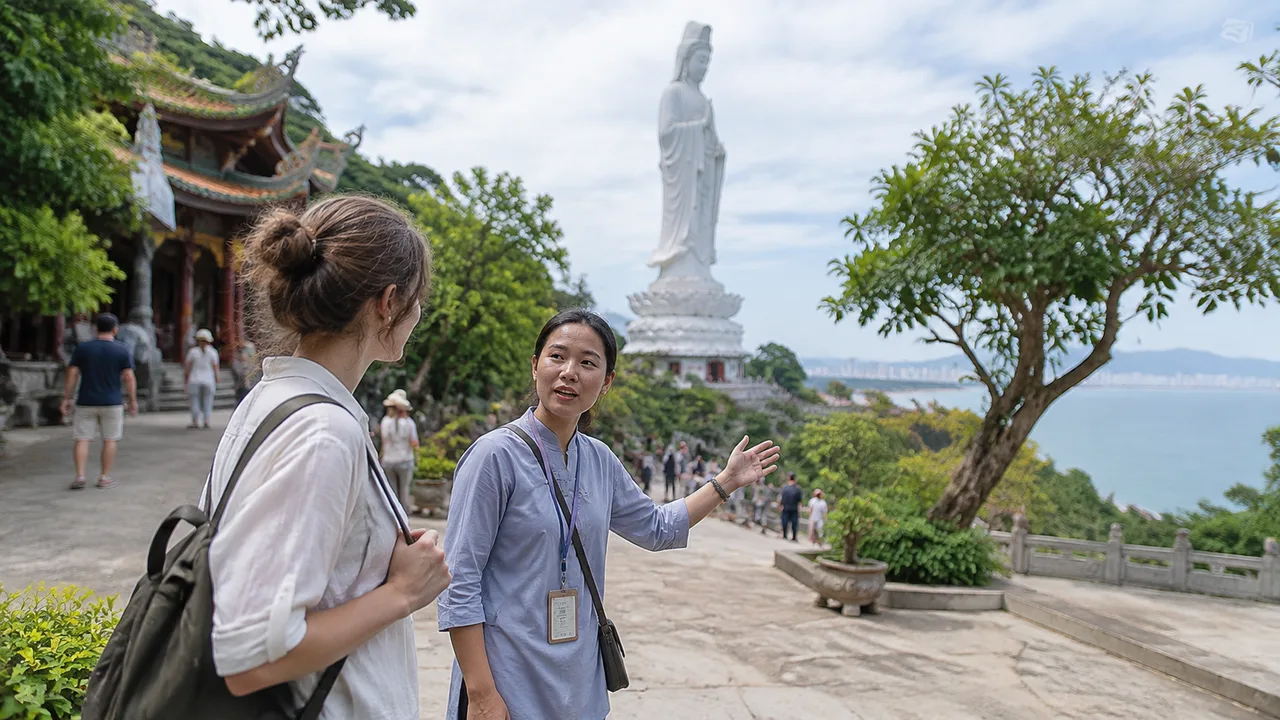
The 67-meter Lady Buddha, also called Quan Am, faces the sea and is widely regarded by local worshippers as a figure of compassion and protection. From below, look at the lotus-shaped base and the statue’s calm expression; nearby, people may pray or leave offerings, so keep voices low and leave clear space around them.
At a glance: See the Lady Buddha first, explore the temple courtyard next, and finish at an ocean-facing viewpoint. The statue represents Quan Am, a bodhisattva associated with compassion, while the pagoda remains an active place of worship. Dress modestly and be discreet around prayer areas.
Main temple buildings, courtyards, and architectural details
Look for curved tiled roofs, carved details, broad courtyards, and rows of stone Arhat figures. Rather than rushing from one photo to the next, notice how the shaded gardens create a quieter contrast with the exposed coastal viewpoints. If you enter a prayer hall, cover shoulders and knees, remove your shoes when requested, and avoid photography where signs or worshippers indicate it is unwelcome.
Ocean views, photography spots, and nearby Son Tra attractions
For a strong composition, frame the statue with the coastline from the lower courtyard, then turn toward Da Nang Bay for a wider view. Morning usually brings softer light and fewer visitors. The pagoda also works well as a first stop on a peninsula outing; browse Da Nang tour options if you prefer local transport and planning support.
| Spot | Best for | Visitor tip |
|---|---|---|
| Lady Buddha | Religious meaning and scale | Give worshippers space |
| Main courtyard | Architecture and stone figures | Walk slowly and look closely |
| Coastal viewpoints | Bay views and photographs | Visit early for softer light |
For a more adventurous visit, combine the pagoda with other Son Tra viewpoints, but check road and weather conditions before setting out. Choose a respectful pace, bring water, and plan your ride back before exploring farther around the peninsula.
Make Linh Ung Pagoda part of your Da Nang day plan: explore the temple thoughtfully, then continue along Son Tra for coastal scenery and a more adventurous peninsula experience.
Best Time to Visit Linh Ung Pagoda
The best time to visit Linh Ung Pagoda is early morning, when the air is cooler, the light is gentle, and tour groups are less likely to fill the courtyard. Late afternoon is a good alternative for softer coastal views, but check the forecast first: clouds or rain over Son Tra Peninsula can hide the horizon.
Weather, seasonal conditions, and visibility on Son Tra Peninsula
Da Nang’s dry season, usually from February to August, often brings clearer skies and easier sightseeing. Hot midday weather can feel tiring on the open grounds, so carry water and sun protection. During the wetter months, showers and low cloud can arrive quickly; bring a light rain layer and allow flexibility.
Morning, afternoon, and sunset visits: benefits and trade-offs
Choose morning for cooler conditions and a quieter visit. Afternoon light can be attractive, though the heat may linger. Sunset offers a striking view toward Da Nang, but visibility depends on clouds and the sun may set behind the city rather than over the sea.
| Visit time | Crowds | Best for | Trade-off |
|---|---|---|---|
| Early morning | Usually lighter | Cool air and photos | Earlier start |
| Late afternoon | Can ease later | Warm light and views | Weather-dependent sunset |
How to avoid crowds and allow enough time for sightseeing
Arrive before mid-morning tour groups, especially on weekends and public holidays. Allow about 60 to 90 minutes for the Lady Buddha, temple grounds, and viewpoints; add time if you are exploring Son Tra by scooter or car. Keep your schedule flexible if coastal weather changes.
For a guided visit that fits into a wider local itinerary, browse Da Nang tour options. Plan your visit around the forecast, then leave room to enjoy the peninsula at an unhurried pace.
Linh Ung Pagoda FAQs and Essential Visitor Tips
Linh Ung Pagoda is an easy, memorable stop on Son Tra Peninsula, but visitors often wonder how much time to allow and whether they need a guide. A little planning helps you enjoy the sea views, explore respectfully, and avoid getting stranded without a ride back to Da Nang.
Quick answer: Entry to Linh Ung Pagoda is generally free, and most visitors spend about 60–90 minutes exploring the grounds, seeing the Lady Buddha statue, and taking in the coastal views. Allow extra time if you are combining the visit with Son Tra viewpoints or beaches.
Is Linh Ung Pagoda free to visit, and how long should you stay?
There is usually no entrance ticket for the pagoda, though you should bring cash for incidental costs such as parking or refreshments. Plan for about an hour if you want a relaxed walk and photos; allow closer to two hours if you also visit the prayer halls and gardens. Arriving early often means cooler weather and fewer tour groups.
Can you visit independently, and is it suitable for families?
Yes. A taxi, ride-hailing car, or motorbike can take you to the site, and the main areas are straightforward to explore without a guide. Families should keep children close around steps and busy parking areas. Independent riders should check road conditions and local restrictions before setting out, and arrange a return ride in advance because pickups can be less predictable on the peninsula. For a guided option, compare Da Nang tour options that include Son Tra.
| Visit style | Best for | Plan for |
|---|---|---|
| Independent | Flexible stops and photo breaks | Return transport and road checks |
| Guided trip | Easy transport and local context | Tour pace and included stops |
Common mistakes to avoid and a simple planning checklist
- Wear clothing that covers shoulders and knees if you plan to enter worship halls; remove shoes where requested.
- Keep your voice low, avoid blocking worshippers for photos, and never feed wild monkeys.
- Bring water, sun protection, and a charged phone. Check the weather and confirm your ride back before you begin exploring.
For a more adventurous half-day, pair the pagoda with other Son Tra stops rather than rushing through the grounds. Check transport and road access on the day, then choose a locally led Vietnam tour if you would rather leave the logistics to someone else.