
Nghia An Hoi Quan Pagoda is one of the clearest places to understand Chinese-Vietnamese heritage in Ho Chi Minh City, especially if you are looking for a Chinese temple in Saigon that feels lived-in, not staged. Many travelers arrive with the same concern: is it worth the stop, what does it mean culturally, and how should you visit respectfully without missing the details that matter?
The answer is yes, if you want a Ho Chi Minh City heritage site that combines history, devotion, and distinctive craft in one compact visit. Nghia An Hoi Quan Pagoda rewards slow observation, from its incense-filled main hall to its lion guardians and old-world ornaments. For first-time visitors, it is also a practical introduction to Cholon’s local character, where heritage still shapes daily life.
What Is Nghia An Hoi Quan Pagoda?
Nghia An Hoi Quan Pagoda is one of the best-known Chinese pagodas in Ho Chi Minh City’s District 5, and it offers a clear answer for travelers who want more than a quick photo stop. This pagoda is a living piece of Chaozhou heritage, built before the 19th century and later restored while keeping its rich wooden carvings, incense-filled halls, and red-and-gold ceremonial atmosphere.
For first-time visitors, the main value is not just the architecture. It is the chance to understand how faith, family memory, and community identity still shape daily life in Saigon’s Chinatown. If you enjoy local places with real cultural depth, this pagoda is an easy addition to a short city route, especially when combined with a local HCMC tour or a deeper walk through Toward Local tours.
Here is the practical definition: it is a traditional Chinese-Vietnamese temple where people come to pray, make offerings, and join important festivals. It is also a strong local landmark for travelers who want an authentic District 5 experience without needing a full day. In one stop, you can see religion, migration history, and neighborhood life intersect in a very compact space.
| Criteria | Quick visit | Culture-focused visit | Festival visit |
|---|---|---|---|
| Best for | Travelers with limited time | History and architecture lovers | Visitors who want local religious energy |
| What you notice | Gate, incense, main altar | Wood carvings, statues, lanterns | Offerings, crowd, ritual atmosphere |
A useful takeaway: the pagoda feels most meaningful when you slow down and read the details, not when you rush through it. Look at the guardian figures, the altar layout, and the symbolic objects inside the front hall. That is where the story of Nghia An Hoi Quan Pagoda becomes more than a landmark and starts feeling like a real community shrine.
For many visitors, the best time to include it is on a District 5 itinerary that also covers nearby markets, Chinese assembly halls, or street-food stops. It works well for solo travelers, couples, and families because it is compact, walkable, and easy to pair with other local experiences. If you are building a broader food-and-culture day, HCMC food tours can help you turn the visit into a fuller local circuit.
In short, include this pagoda when you want a destination that is calm, historic, and genuinely rooted in the Chinese-Vietnamese community. It gives you a strong cultural snapshot of Saigon, especially if your trip style favors places that feel local rather than overly polished.
The History and Cultural Meaning of Nghia An Hoi Quan Pagoda
Nghia An Hoi Quan Pagoda is one of the clearest places in Ho Chi Minh City to understand how an immigrant community turned faith into identity. For first-time visitors, the challenge is not just seeing an old temple, but reading the symbols that explain why it still matters. This chapter breaks down its origins, design, and beliefs so you can visit with context, not guesswork.
Built by Chaozhou settlers in the 19th century, the pagoda became a communal anchor for prayer, social gathering, and protection. If you are planning a local-focused city trip, pair this stop with Hoi An tours style heritage exploration or look at all tours of Toward Local for a broader cultural route that fits solo travelers, couples, and families.
Featured insight: Nghia An Hoi Quan Pagoda reflects more than architecture. It preserves the memory of Chaozhou migration, shows how Chinese sacred design works in daily life, and blends Taoist, Buddhist, and folk devotion into one living space.
The pagoda’s history begins with the Chaozhou immigrant community, who arrived in Saigon and needed a place to worship, meet, and support one another. Instead of building a monument for display, they created a community house for ritual life. That is why the site still feels local and active rather than frozen as a museum piece. In practice, this means incense offerings, festival days, and family prayers remain part of its rhythm.
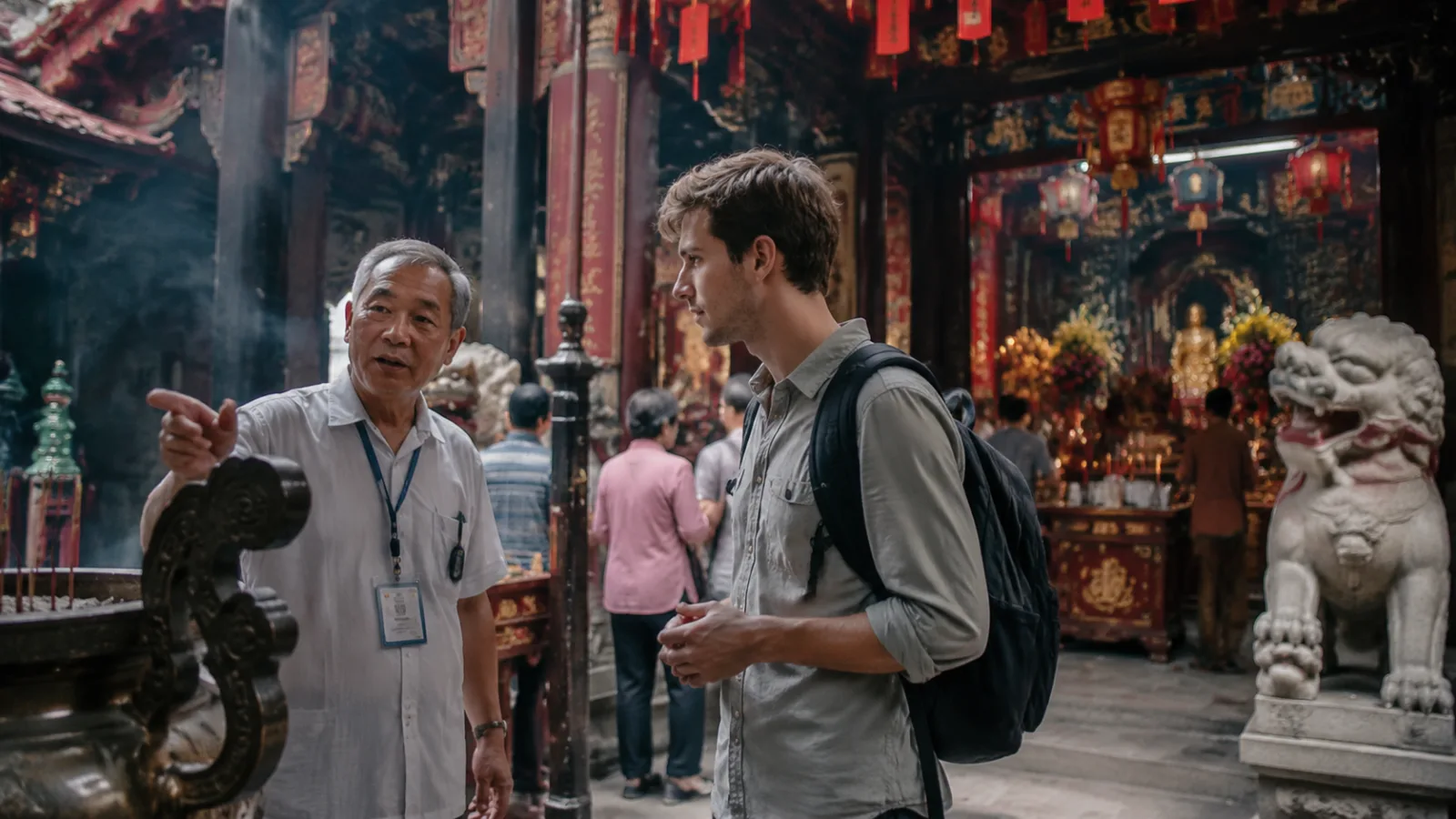
Architecturally, the space communicates belief through detail. Red tones, guardian lions, carved wood, and hanging lanterns all carry meaning. Inside, altars for Quan Cong and other protective figures show the pagoda as a place where loyalty, justice, prosperity, and blessings intersect. A useful rule for visitors is simple:
- Look up to read roof ornaments and symbolic creatures
- Look inward to understand altar hierarchy
- Look at the crowds to see living devotion, not just decoration
This is also where Taoist, Buddhist, and folk traditions meet in a practical way. Rather than separating beliefs, the pagoda layers them to match everyday spiritual needs. A visitor may see worshippers asking for luck, safety, business success, or family peace in the same visit. That mix is the real cultural meaning of Nghia An Hoi Quan Pagoda.
| Criteria | What to Notice | Why It Matters | Visitor Takeaway |
|---|---|---|---|
| Origin | Chaozhou community roots | Explains the pagoda’s identity | See it as heritage, not decoration |
| Design | Altars, lions, lanterns, carvings | Each detail carries symbolic meaning | Read the building like a story |
If you want to understand the pagoda in a wider city context, a Ho Chi Minh City food tour can help you connect temple culture with the surrounding streets, markets, and Chinese-Vietnamese neighborhoods.
For travelers who enjoy authentic local layers, the strongest insight is this: the pagoda is still meaningful because it serves people, not just visitors. That living function is what makes it culturally important and visually memorable at the same time. When you walk through it slowly, the history becomes visible in the space itself.
Soft planning note: If you are building a heritage day in District 5, combine this pagoda with nearby Chinatown stops so the visit feels complete and efficient.
In short, Nghia An Hoi Quan Pagoda is a record of migration, faith, and continuity. Its architecture reveals how a community protected its identity, while its rituals show how that identity still lives today. For travelers who want a local, meaningful stop in Saigon, this is one of the most rewarding cultural sites to include.
Add Nghia An Hoi Quan Pagoda to your District 5 route, then continue through nearby heritage streets to experience the full Chinese-Vietnamese cultural layer of the city.
What to See and Do at Nghia An Hoi Quan Pagoda
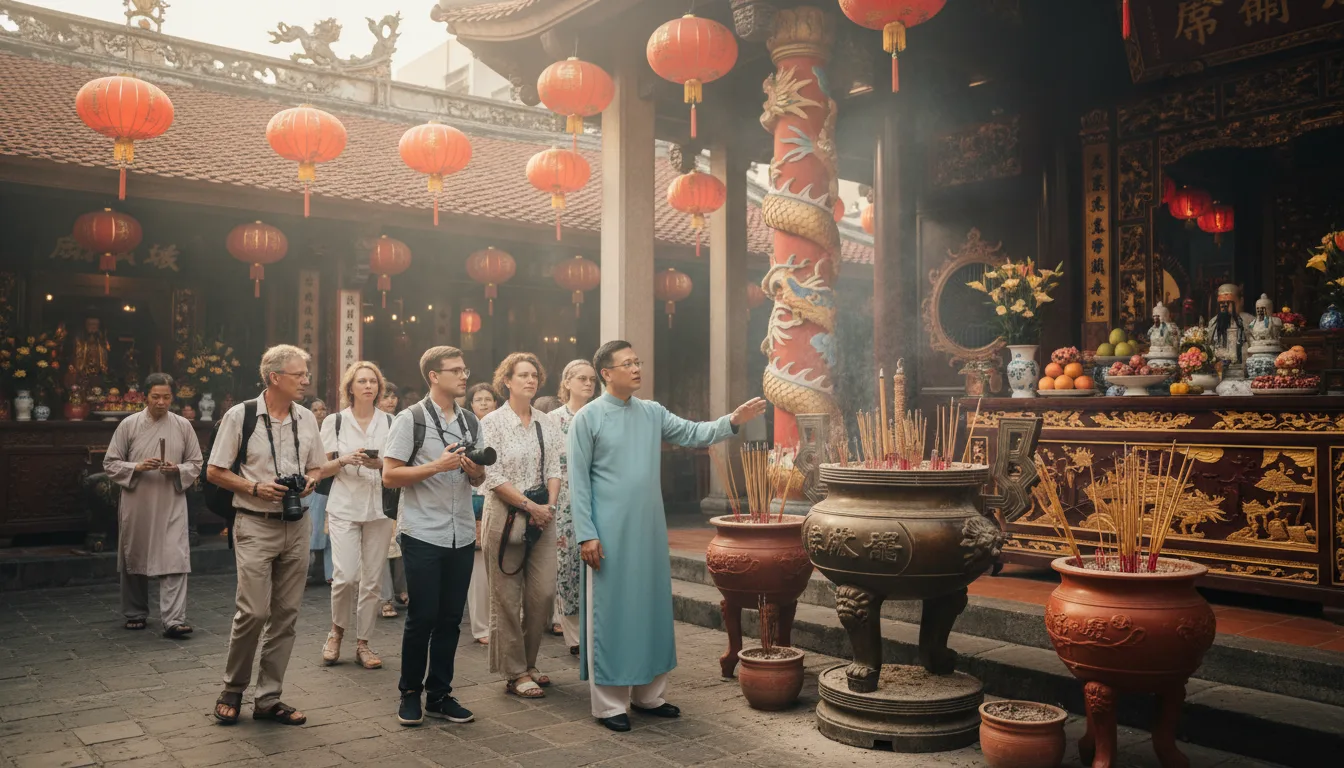
Nghia An Hoi Quan Pagoda rewards visitors who slow down and notice detail. If you only glance at the courtyard, you will miss the lion guardians, carved beams, and the layered altar layout that make this District 5 landmark feel deeply local. The easiest way to enjoy it is to move room by room and read the space like a living temple, not a photo stop.
For first-time visitors, the challenge is not finding something to see, but knowing what matters. Focus on the main hall, the incense coils, and the statues, then add a few minutes for quiet observation. That approach gives you a clearer sense of worship, architecture, and daily devotion in one compact visit.
Key features to look for include the front courtyard, the main hall, and the incense burners placed for offerings. The courtyard sets the mood first: open space, red details, and the kind of stillness that contrasts with the busy street outside. Inside, the main hall draws the eye to Quan Cong, while side figures such as Chau Khuong, Quan Binh, the God of Wealth, and Lady Thien Hau show how layered Chinese-Vietnamese temple iconography can be. Hanging incense coils and lanterns also matter because they add both symbolism and atmosphere. A useful rule is to look up as well as forward; many visitors miss the ceiling art and wooden carvings that give the pagoda its age and character.
takeaway: the best photos often come from a side angle, not the centerline, because the layers of statues and smoke look more natural from the edge.
| Criteria | Main Hall | Incense Coils | Statues |
|---|---|---|---|
| Best for | Understanding the temple core | Atmosphere and ritual detail | Religious symbolism and storytelling |
| Visitor focus | Altar layout and central deity | Smoke, scent, and ceiling view | Names, positions, and guardian roles |
Visitor activities are simple but meaningful. Sightseeing works best when you move slowly and let the details connect, while photography is strongest in softer light near the courtyard or just inside the entrance. Prayer etiquette stays important: speak quietly, avoid blocking worshippers, and never step too close to offerings without permission. If you want a broader local-day plan, a Toward Local tour collection can help you combine the pagoda with nearby Chinatown stops in a more efficient way. For travelers who like a deeper District 5 route, this is where a quiet visit feels more rewarding than a rushed checklist.
The best moments to visit are early morning on a weekday or late afternoon after the main tourist wave has passed. Early hours usually bring fewer people, cooler air, and a calmer soundscape, which helps the incense smoke and red interiors feel more atmospheric. Late afternoon can be equally strong if you want warm light across the courtyard and softer shadows in the prayer halls. If you are planning a larger Ho Chi Minh City day, pairing the pagoda with local city food tours can make the visit feel more efficient and less fragmented. For the most immersive experience, avoid festival crowds unless your goal is ceremony and energy rather than silence. A practical choice is to arrive with enough time to sit, observe, and leave before the space becomes busy again.
To see Nghia An Hoi Quan Pagoda well, focus on the main hall, incense coils, and guardian statues, then visit in the early morning or late afternoon for a quieter mood. Keep your voice low, respect worshippers, and use the courtyard and side angles for the best photos and atmosphere.
Best moments to choose:
- Early morning for calm light and fewer visitors
- Weekdays for a more local rhythm
- Late afternoon for warmer tones and softer shadows
- Festival days for ceremonial energy, if crowds are welcome
If you prefer a local-first itinerary, choose a guided route that includes nearby Chinatown streets so the pagoda visit fits naturally into the day.
Plan your visit with enough time to observe the architecture, watch the rituals, and experience Nghia An Hoi Quan Pagoda without rushing, because that is where the place becomes memorable rather than simply beautiful.
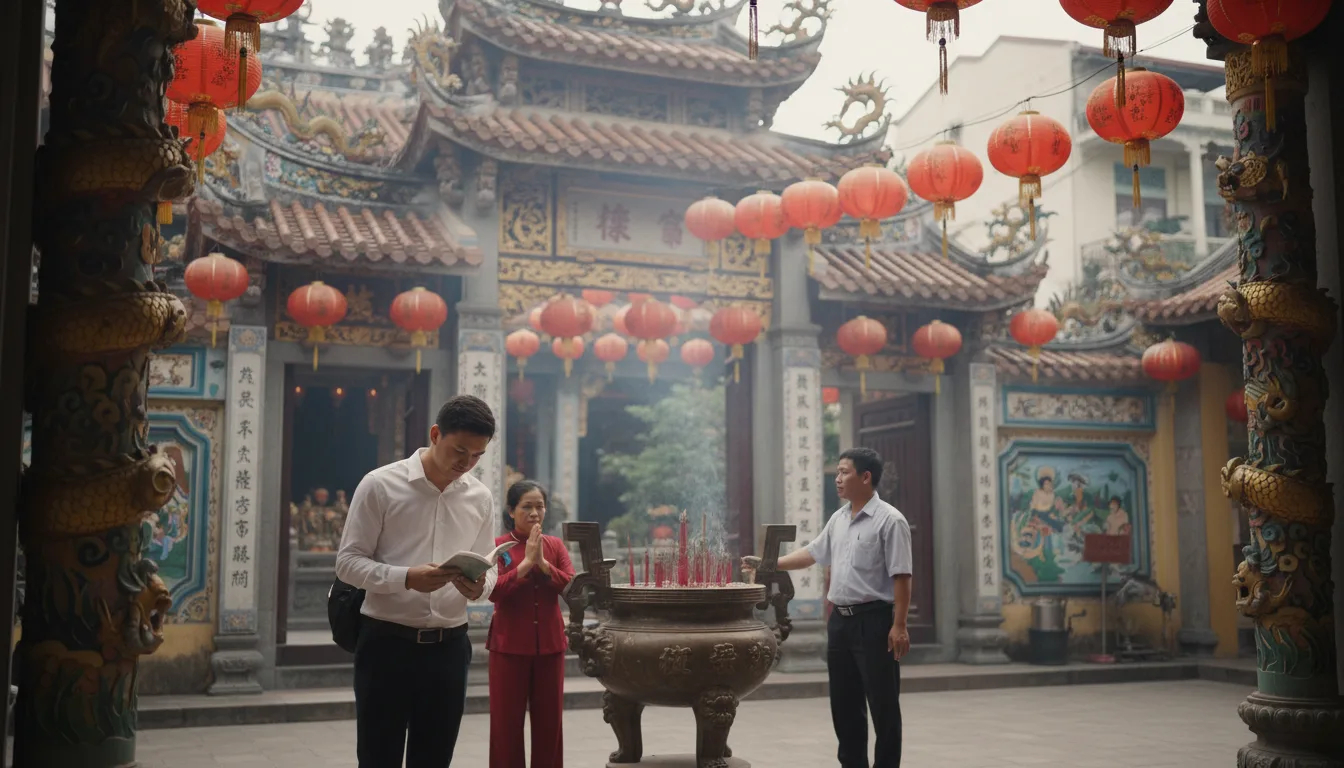
How to Visit Nghia An Hoi Quan Pagoda the Right Way
Nghia An Hoi Quan Pagoda is easiest to enjoy when you plan the visit around its quiet hours, dress respectfully, and know what makes it different from Saigon’s more tourist-heavy temples. If you are coming from central Ho Chi Minh City, the real challenge is not the distance but avoiding the wrong timing, the wrong transport choice, and the typical visitor mistakes that make the experience feel rushed.
For travelers who like local details, this pagoda rewards slow observation. The courtyard, incense-filled halls, and Chinese-style roof carvings are more meaningful when you arrive prepared. A short visit can still feel rich if you know where to go, what to notice, and how to behave inside a working place of worship.
Nghia An Hoi Quan Pagoda is best visited in the morning or late afternoon, ideally by taxi or ride-hailing from District 1 or District 3. Wear modest clothing, speak softly, and avoid blocking worshippers. It is one of the most atmospheric Chinese temples in Saigon for travelers who prefer authentic local culture over polished sightseeing.
Opening hours and getting there
The pagoda is located in District 5, in the heart of Saigon’s Chinatown area, so it fits well into a half-day local food and heritage route. From central Ho Chi Minh City, the smoothest option is a Grab or taxi. Traffic is usually lighter early in the day, and that matters because the trip can feel much longer at peak hours.
Best timing is usually before the crowds build up, especially if you want better photos and less noise. If you are building a broader city day, you can combine the stop with local HCMC food tours and keep the temple visit as a cultural anchor between meals. The pagoda is not about rushing through highlights; it is about noticing the atmosphere, details, and active worship.
| Criteria | Taxi or Grab | Bus | Guided tour |
|---|---|---|---|
| Convenience | Best for direct access | Slower and less clear | Most efficient for first-time visitors |
| Experience | Simple and flexible | More local but harder to manage | Adds context and route planning |
What to wear and how to behave
Dress modestly: shoulders covered, shorts or skirts at a respectful length, and shoes that are easy to remove if needed. The temple is active, not staged, so quiet behavior matters more than perfect photos. A useful rule is to move like a guest in someone’s home, not like a spectator in a museum.
Common mistakes are easy to avoid once you know them: standing in front of worshippers, speaking loudly, taking flash photos inside, or treating incense areas like a selfie spot. A small but important insight is that the most respectful visitors often see more because they wait, observe, and let the temple rhythm guide them. That is what makes all Toward Local tours a good fit for travelers who want local context without feeling overmanaged.
Comparison with other temples in Saigon
Compared with larger and more famous temples, Nghia An Hoi Quan Pagoda feels less polished and more intimate. It does not try to impress with scale. Instead, it offers dense details, strong Chinese heritage, and a real neighborhood feel that suits curious solo travelers, couples, and families who enjoy cultural texture.
If you want a temple that is visually striking but still calm, this one is a strong choice. Travelers who prefer broad sightseeing may like bigger landmarks more, but people who enjoy offbeat, local, and slightly adventurous city stops usually remember this pagoda longer. It is especially good for visitors who like to combine heritage, photography, and everyday street life in one area.
If you want to turn the visit into a smoother Chinatown day, pair the pagoda with a food stop, a heritage walk, or a local guide who can explain the symbols and rituals without slowing the pace.
Best visitor fit
This pagoda works best for beginners who still want something authentic, not overly crowded, and easy to reach from District 1. It also suits repeat visitors to Saigon who have already seen the main postcard sights and now want something with more local character. For first-timers, the main win is simple: go at the right time, dress properly, and keep the visit quiet and observant.
If this is the kind of place you travel for, do not leave it as a quick stop. Plan it into a Chinatown route, let yourself stay longer than expected, and use the temple as the cultural centerpiece of a real local day in Ho Chi Minh City.
Tips, FAQs, and Final Travel Advice for Nghia An Hoi Quan Pagoda
Nghia An Hoi Quan Pagoda is easiest to enjoy when you plan for a quiet, respectful visit and avoid the small mistakes that can ruin the mood. Many first-time visitors arrive too late, dress too casually, or rush through the courtyard without noticing the ritual space, which makes the experience feel flat instead of meaningful.
For travelers who like local, adventurous stops, the pagoda works best as a short cultural pause inside District 5 rather than a standalone attraction. If you are already mapping a walking route through Chinatown, consider pairing it with Ho Chi Minh City local tours or a broader guided itinerary to keep the day efficient and context-rich.
The best way to visit Nghia An Hoi Quan Pagoda is to go early, dress modestly, keep your voice low, and expect a brief stop of around 20 to 40 minutes. Entry is free, photography is usually allowed in public areas, and the calmest experience is on a weekday morning before the site becomes more active.
Common visitor mistakes are easy to avoid. Do not block worshippers near the altar, avoid flash photography unless a staff member clearly permits it, and keep your bag small because the interior spaces can feel tight. A simple rule helps: observe first, then move slowly. That approach is especially useful for solo travelers and couples who want photos without disturbing the atmosphere.
| Criteria | Quick Answer | Best Choice | Why It Matters |
|---|---|---|---|
| Entry fee | Free | Morning visit | Less crowded and easier to respect rituals |
| Visit duration | 20 to 40 minutes | Weekday stop | Good for a cultural walking route |
FAQ: there is no entrance fee, and a short visit is usually enough unless you want to study the architecture or observe a festival. The best time to go is early morning on a weekday, while the busiest and most atmospheric time is during major lunar celebrations. Photography is generally acceptable in outer areas, but always avoid interrupting prayers and be cautious with flash.
If you are building a deeper Chinatown route, this stop fits naturally between nearby heritage sites and food breaks. For travelers who want more structure, a Hoi An tours style cultural approach may inspire how you pace the day: move slowly, focus on details, and leave time for both history and street life. That mindset makes the pagoda feel less like a checkbox and more like a real local experience.
For a final travel tip, combine Nghia An Hoi Quan Pagoda with a nearby market, old shophouse street, or coffee stop so the area feels connected rather than isolated. If you want the simplest soft plan, visit the pagoda first, then continue on foot through District 5 to nearby temples and streets that show the city’s Chinese-Vietnamese character. That is the most efficient way to turn one stop into a memorable cultural walking itinerary.
Add Nghia An Hoi Quan Pagoda to your Ho Chi Minh City route if you want a compact, authentic, and highly local heritage stop. It is a smart choice for solo travelers, couples, families, and culture-focused visitors who prefer meaningful places over crowded highlights, especially when paired with a guided walk or a self-paced Chinatown exploration.