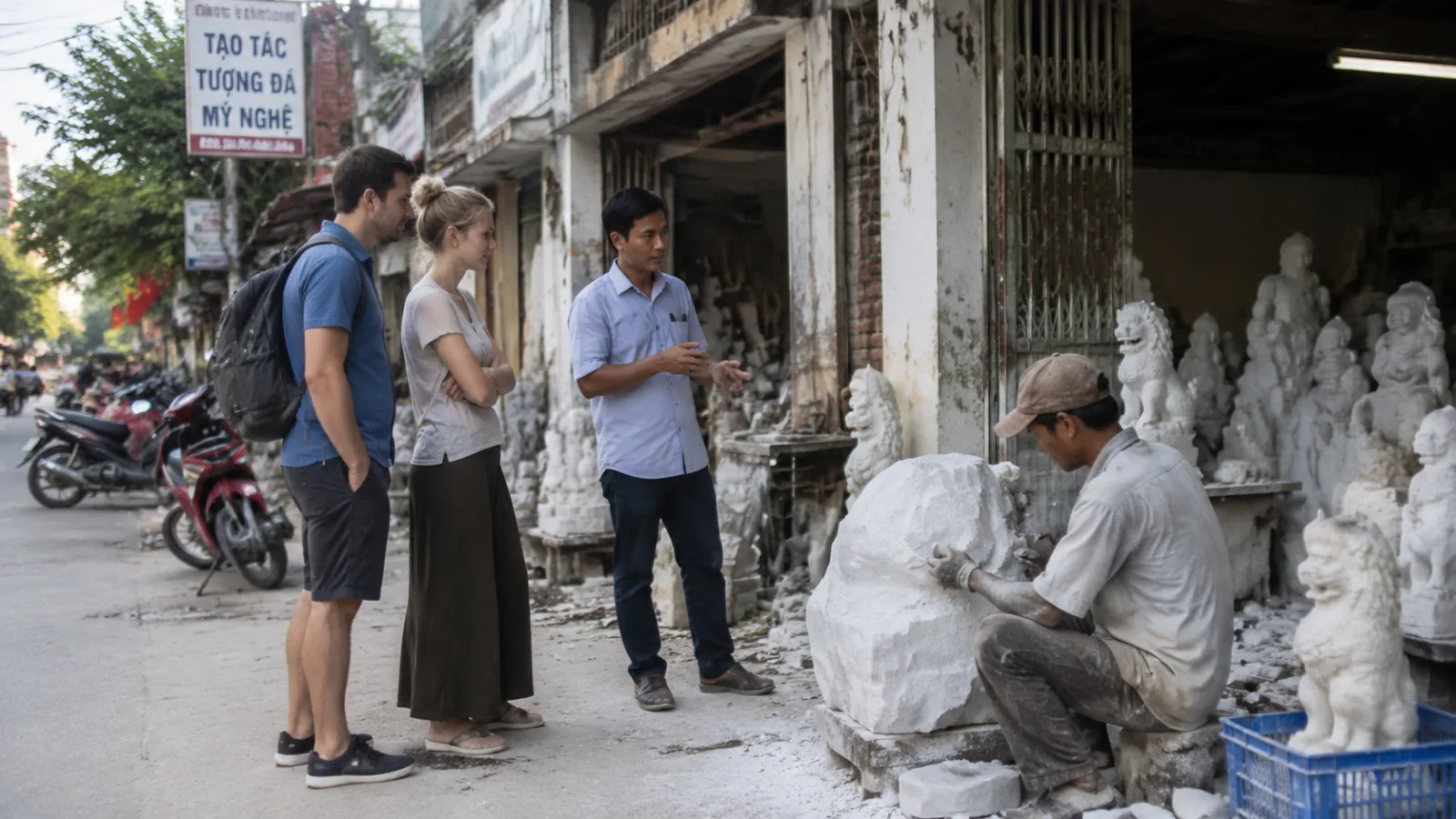

Non Nuoc Stone Carving Village is one of the most rewarding stops for travelers who want more than a quick photo near Da Nang. This working marble carving village sits beside the Marble Mountains, where you can hear chisels, see artisans at work, and understand why the area has become a symbol of Vietnamese craft heritage.
If you are wondering what the village actually is, why it matters, and whether it is worth adding to your plan, the answer is simple: yes, especially if you like local culture with real activity around you. This Da Nang stone village is easy to combine with a beach day, and it gives you a rare look at a living tradition instead of a staged attraction; our free Da Nang local guide covers more to see and eat.
Non Nuoc Stone Carving Village is a long-running craft district near the Marble Mountains in Da Nang. Visitors come to see stone and marble workshops, compare handmade sculptures, learn about local carving techniques, and plan a short cultural stop that fits easily into a half-day itinerary.
| Criteria | Entrance area | Deeper village lanes | Best for |
|---|---|---|---|
| Price level | Higher and more tourist-oriented | Often better value | Budget-aware visitors |
| Experience | Quick look and easy access | More workshops and real production | Travelers seeking authenticity |
If you want a smoother plan, pair your visit with Hoi An day tours or an afternoon at the Marble Mountains, then use the village as a cultural break between sightseeing stops. For solo travelers, couples, and families, that mix usually feels more meaningful than a standard shopping stop, because you get craft, context, and a clear sense of place in one short visit.
For a soft and practical start, walk past the first row of stalls, compare a few pieces, and watch how the carvers work before buying anything. That simple approach helps you avoid overpaying, spot better workmanship, and decide whether you want a small souvenir or just the experience of seeing the village up close.

What Is Non Nuoc Stone Carving Village?
Non Nuoc Stone Carving Village is a working craft village at the foot of the Marble Mountains in Da Nang, where local artisans shape marble, granite, and other stone into statues, home decor, and religious pieces. It is not a showroom district in the usual sense. It is an active production area where you can see carving, polishing, and selling happening side by side.
For first-time visitors, that difference matters. The village is easy to combine with a Marble Mountains visit, and it gives you a clear look at how Central Vietnam keeps its craft culture alive. If you want a broader day plan, Da Nang tours can help you pair the village with nearby highlights without wasting time on transport or logistics.
Featured insight: Non Nuoc is best understood as a living workshop district, not a souvenir stop. You come here to watch real craftsmanship, compare quality between studios, and understand why stone carving became part of Da Nang’s identity.
The village has deep historical value because it helped define Vietnamese stone carving for centuries. Artisans here developed a reputation for detailed religious sculptures, feng shui pieces, and temple decorations, while also serving local households and export markets. A simple example is the contrast between a mass-produced stone souvenir and a hand-finished Buddha statue with fine facial lines and natural stone veining.
What makes the experience memorable is the human scale of it. You may hear chisels, see dust in the air, and watch an artisan refine a face by hand. That mix of tradition and daily commerce is why many travelers stop here on the way to Hoi An tours, especially if they want a local, authentic, and low-effort cultural detour.
| Criteria | Visitor View | What It Means | Best For |
|---|---|---|---|
| Location | At the foot of the Marble Mountains | Easy to combine with sightseeing | Day trips |
| Experience | Active workshops and street-side carving | See real craftsmanship up close | Curious travelers |
If you like local culture with practical convenience, plan the village with a guide so you can focus on the craftsmanship instead of figuring out the route.
In short, Non Nuoc Stone Carving Village is a place where heritage is still visible in daily work. For couples, solo travelers, and families, it offers a short but meaningful stop that feels more genuine than a standard shopping area and gives you a stronger sense of Da Nang’s craft identity.
If you want a smooth visit with context and transport, our Da Nang sightseeing tour by motorbike covers hidden gems and historical sites with a local driver.
How Non Nuoc Stone Carving Village Works Today
Non Nuoc Stone Carving Village works as a living production district, not a quiet museum. In the first minutes, visitors usually notice the noise, the dust, and the open-front workshops where artisans are carving stone in real time. For travelers who want something local and active, that is the whole appeal of Toward Local tours: seeing craft, commerce, and daily work in one place.
The village is especially rewarding for beginners because the process is easy to follow. You can watch raw stone turn into statues, home decor, and religious pieces without needing a guide to explain every detail. A short visit already answers the main question: how does Non Nuoc Stone Carving Village make those pieces look so refined while still feeling handmade?
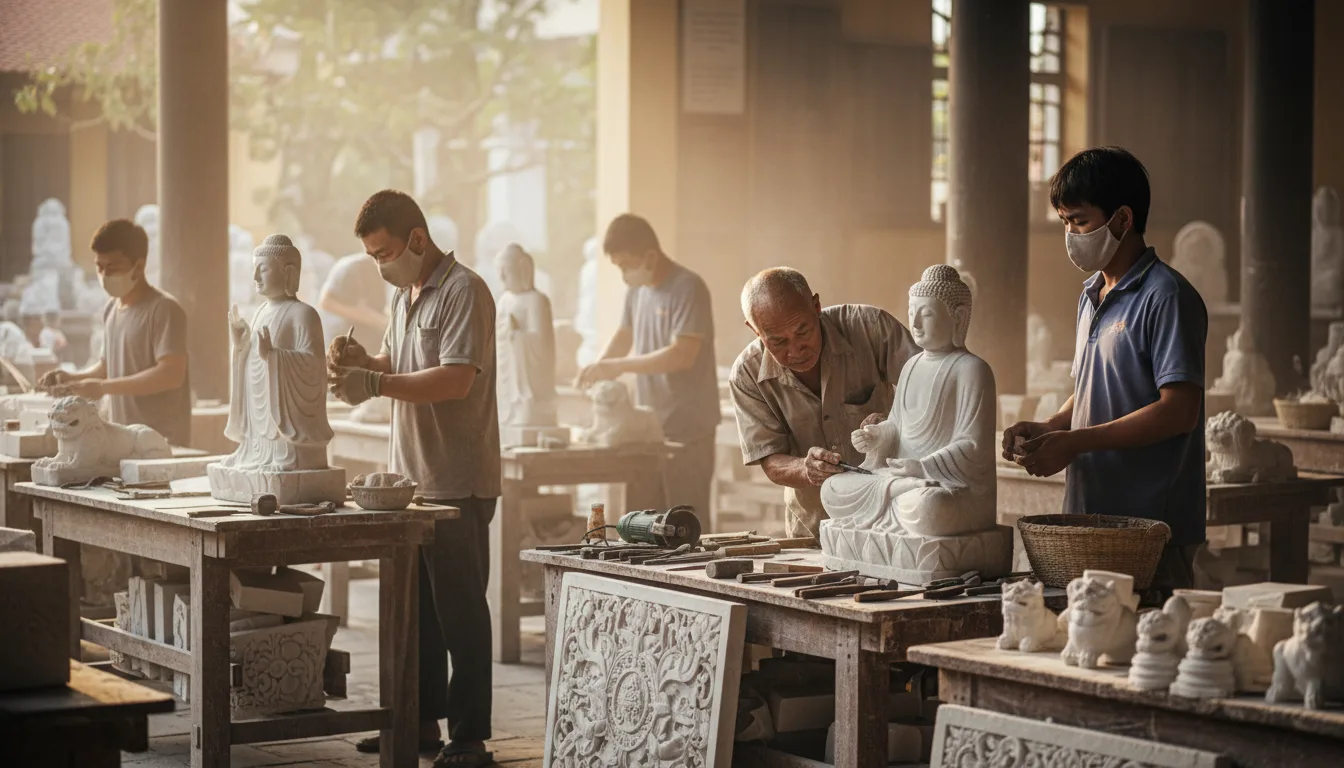
Non Nuoc Stone Carving Village today is a working craft hub where artisans turn marble and other stone into statues, home decor, and religious pieces through a clear process: selecting the stone, sketching the design, rough carving, fine detailing, sanding, and polishing. Visitors can watch the workflow from the street and compare styles across workshops.
| Step | What visitors see | Why it matters | Typical output |
|---|---|---|---|
| Stone selection | Blocks checked for grain, color, and cracks | Quality starts with the raw material | Marble, granite, serpentine |
| Carving and finish | Chisels, grinders, and hand polishing | Shape and detail define value | Statues, decor, religious figures |
Artisans usually begin with a block chosen for strength, color, and natural veining. Then they sketch the outline, remove extra material with saws or grinders, and move into hand carving for faces, folds, and symbolic details. This is why a simple Buddha statue from a deep workshop can look more balanced than a polished display piece near the entrance, where speed often matters more than nuance.
For couples, solo travelers, and families, the best takeaway is to walk a little deeper into the village before buying. Prices, craftsmanship, and patience from sellers often improve as the tourist traffic thins out. If you want to combine this stop with a broader Da Nang day, end it with our Da Nang street food tour by motorbike.
Main stages of the carving process:
- Raw stone is selected and inspected for quality
- The design is marked directly on the surface
- Rough shaping removes the extra bulk
- Fine carving adds expression and texture
- Sanding and polishing create the final surface
The practical value of the village today is that visitors can see each stage with their own eyes. That transparency builds trust and makes the experience more than shopping. It also helps you judge whether a piece is worth the price, because the level of finish is visible before you buy.
If you enjoy local craftsmanship and want to see how living traditions still function in Central Vietnam, Non Nuoc delivers a rare mix of working studios, street-level access, and real artisan skill. For a deeper cultural day, soft booking through Hoi An tours can also make sense if you are continuing south after Da Nang.
Best takeaway: visit for the process first, the products second. Once you understand how the stone is selected, carved, and polished, every statue and decorative piece becomes easier to evaluate, and the village feels far more meaningful than a typical souvenir stop.
For travelers who want a smoother experience, a guided visit also saves time, avoids tourist-markup zones, and gives context on what is handmade versus mass-produced. If you are planning a local, adventurous trip through Central Vietnam, this is one of the clearest places to see tradition still working in public.
Why Visit Non Nuoc Stone Carving Village
Non Nuoc Stone Carving Village is worth visiting if you want a real local experience in Da Nang, not a polished tourist stop. The village gives you active workshops, skilled artisans, and a close look at how stone is turned into art, which makes it especially appealing for first-time visitors, solo travelers, couples, and adventurous families.
The best part is that the visit is easy to shape around your travel style. You can come for quick sightseeing, a photo stop, a meaningful craft experience, or a practical shopping break, and still leave with a stronger sense of Central Vietnam’s heritage. For travelers who like local culture with a clear payoff, this is a strong match.
Non Nuoc Stone Carving Village is a working craft village in Da Nang where visitors can watch artisans carve marble, take photos of active workshops, learn about local heritage, and buy unique stone souvenirs. It is best for culture seekers, day-trippers, and travelers pairing it with the Marble Mountains.
What makes Non Nuoc stand out is the mix of heritage and live production. You are not only looking at finished products, you are seeing the making process, from rough cutting to detailed carving and polishing. That is why many visitors stay longer than expected, especially when they find a workshop where the artisan is open to explaining the work.
Common reasons to visit include:
- Heritage: a long-standing craft village with deep cultural value
- Photography: open-front workshops, stone statues, and real working scenes
- Artisan workshops: see carving, polishing, and finishing up close
- Souvenirs: small statues, bracelets, and custom stone pieces
A useful insight for travelers is to go beyond the entrance area. The first row of shops is convenient, but deeper alleys often feel more authentic and may offer better value. If you are combining it with a Da Nang craft day trip, this is where the visit becomes more rewarding, because you can compare workshops and understand the difference between tourist display pieces and true workshop quality.
For different types of visitors, the village works in different ways. Culture seekers usually focus on the history and craftsmanship. Day-trippers prefer a short, efficient stop. Shoppers look for marble statues or smaller gifts. Tour groups often use it as a bridge between the Marble Mountains and other Da Nang highlights, making it a practical add-on rather than a standalone destination.
| Visitor type | Why it works | Best experience | Time needed |
|---|---|---|---|
| Culture seekers | Authentic craft heritage | Workshop visits and learning | 60 to 90 minutes |
| Shoppers and groups | Wide product range | Comparing souvenirs and statues | 30 to 60 minutes |
If you want a smoother day, pairing the village with nearby attractions is the smartest move. Many travelers combine it with the Marble Mountains, and that makes the route more efficient while also adding variety to the trip. If you prefer a ready-made plan, Hoi An tours and nearby Da Nang itineraries can help you build a half-day or full-day route without wasting time on transport.
Non Nuoc is not for people who want a passive museum visit. It is best for travelers who enjoy seeing things happen in real time, asking questions, and bringing home something that feels handmade and local. That combination of live craft, practical shopping, and cultural value is the reason many visitors remember it long after they leave Da Nang.
If your goal is a local experience with clear value, this village is one of the easiest places to recommend. For travelers planning a broader trip in Central Vietnam, it also fits well into a full tour collection that balances culture, convenience, and soft adventure.
How to Choose the Best Non Nuoc Stone Carving Village Experience
Non Nuoc Stone Carving Village is best experienced in the way that matches your travel style, because the village works differently from a normal sightseeing stop. If you want live craft, better value, and a clearer understanding of what you are buying, the right format can turn a short visit into a memorable local experience.
For first-time visitors, the main choice is simple: do you want convenience, flexibility, or deeper context? A guided visit saves time and removes guesswork, while a self-guided walk gives you more room to compare workshops and watch artisans at work. Many travelers get the best result by combining the village with nearby Marble Mountains, especially if they are already planning a half-day in the area.
The best Non Nuoc visit depends on your goal. Choose a guided tour for convenience and context, self-guided exploration for slower comparison and better prices, or a combined Marble Mountains trip if you want the most efficient half-day. For most first-time visitors, a hybrid plan gives the strongest overall value.
| Criteria | Guided visit | Self-guided visit | Combined tour |
|---|---|---|---|
| Best for | First-time visitors | Independent travelers | Half-day planners |
| Main value | Context and ease | Freedom and comparison | Efficiency and coverage |
Guided visits work well when you want practical context, especially if you are unsure how to tell a workshop piece from a tourist souvenir. A local guide can explain marble types, workshop quality, and where to stop without wasting time. This matters if you are short on time or want a smooth route from Da Nang, because the village can feel busy and fragmented without local guidance.
A self-guided visit suits adventurous travelers who enjoy wandering side alleys, comparing prices, and watching artisans shape stone in real time. You can move deeper into the village, compare the same statue across several workshops, and notice details that tourist shops often hide. If you are coming from Da Nang tours style planning, this approach gives you more control and often better value. The small trade-off is that you need to ask more questions and be comfortable making decisions on the spot.
A combined Marble Mountains tour is the strongest choice for couples and families who want one efficient trip with cultural depth. The village adds craft and street-level energy, while the mountains add views, caves, and a more complete sense of the area. If you are also building a broader itinerary, all tours of Toward Local can help you compare options before you decide.
When buying, direct workshops usually give you the best balance of quality, transparency, and price. You can see the carving process, check the stone, and ask whether a piece is natural marble or composite material. Tourist shops are easier and sometimes prettier to browse, but they often charge more and show fewer production details. A good rule is to inspect the same item in at least two workshops before buying, especially for statues, bracelets, and small gift pieces.
Buying directly also helps you judge craftsmanship with your own eyes. Look for clean edges, even polishing, and natural veining in the stone, then compare that with the same product in a shop near the entrance. The difference is often subtle at first, but it becomes obvious once you step deeper into the village. For soft conversion, the smartest purchase is the one that feels authentic, fits your luggage, and matches the amount of time you really have.
If you want the simplest plan, visit the entrance area first, walk farther into the village, then decide whether to buy directly from a workshop. That sequence gives you price awareness, better confidence, and a more local experience without pressure. For travelers who like authentic, low-stress exploration, that is usually the best way to enjoy Non Nuoc Stone Carving Village.
If you prefer a smoother experience with transport and local insight, consider pairing the village with a guided half-day itinerary so you can focus on the craft, not the logistics.
Choose the visit style that matches your pace, then book the route that saves time and adds context, because the best Non Nuoc experience is the one that lets you see real workshops, compare quality, and leave with something meaningful.
Visitor Tips, Common Mistakes, FAQ, and Travel CTA
Non Nuoc Stone Carving Village is easiest to enjoy when you slow down, compare a few workshops, and plan the visit around active carving hours. Many travelers arrive expecting a quick photo stop, then leave without understanding the difference between tourist-facing stalls and real working studios. A smarter approach gives you better prices, better pieces, and a more authentic look at local craft.
For first-time visitors, the main win is simple: arrive early, walk deeper than the entrance row, and ask clear questions before buying. If you are already planning a Da Nang day trip or pairing the village with the Marble Mountains, this chapter will help you avoid the usual mistakes and make the most of a short visit.
The best way to visit Non Nuoc Stone Carving Village is to go in the morning, compare several workshops, ask about stone type and price before buying, and allow at least 45 to 60 minutes. This gives you time to watch artisans work, spot better value, and avoid rushed tourist purchases.
| Criteria | Best choice | What happens if you rush | Travel tip |
|---|---|---|---|
| Time of visit | Morning workshop hours | Less production activity | Arrive before noon for the best atmosphere |
| Buying approach | Compare several studios | Overpaying for similar items | Check craftsmanship and stone quality first |
Common mistakes to avoid: rushing through the entrance row, skipping price comparisons, and assuming every item is natural marble. Some souvenir pieces use composite stone, while established workshops can explain the difference clearly. Another mistake is visiting too late in the day, when the carving floor is quieter and the village feels more like a retail strip than a living craft site.
A practical rule is to spend 15 minutes browsing near the entrance, then walk a little deeper and compare details such as carving sharpness, surface finish, and stone veining. That extra effort often reveals better value. If you want to extend the day, combine the visit with Hoi An tours or a Marble Mountains stop, which fits well for couples, solo travelers, and families who want a local experience without a long transfer.
FAQ
What are the opening hours? Most workshops open from about 7:30 am to 5:30 pm daily. Morning is the best time to see artisans actively carving and finishing pieces.
What is the best time to visit? Go in the morning, ideally before lunch. The village is livelier, the light is better for photos, and workshop staff usually have more time to answer questions.
What should I buy? Small stone figurines, bracelets, and medium-sized statues are the easiest choices for travelers. They are easier to carry, and the quality range is broad enough for every budget.
How long should I stay? Plan for 45 to 60 minutes if you only want the highlights. If you want to compare workshops carefully or buy a gift, allow up to 90 minutes.
Travel CTA: If you want a local, low-stress visit with the right timing and a smoother route, consider a guided stop that combines the craft village with nearby highlights. You will save time, get clearer context, and avoid the common tourist traps that make the visit feel rushed. For travelers building a Central Vietnam plan, check dates for the Da Nang street food tour and build the rest of the day around it.
For adventurous travelers who value real local life, Non Nuoc works best as a half-day cultural stop rather than a quick pass-through. Go early, ask questions, compare before buying, and leave enough time to enjoy the workshops instead of just checking the place off the list.