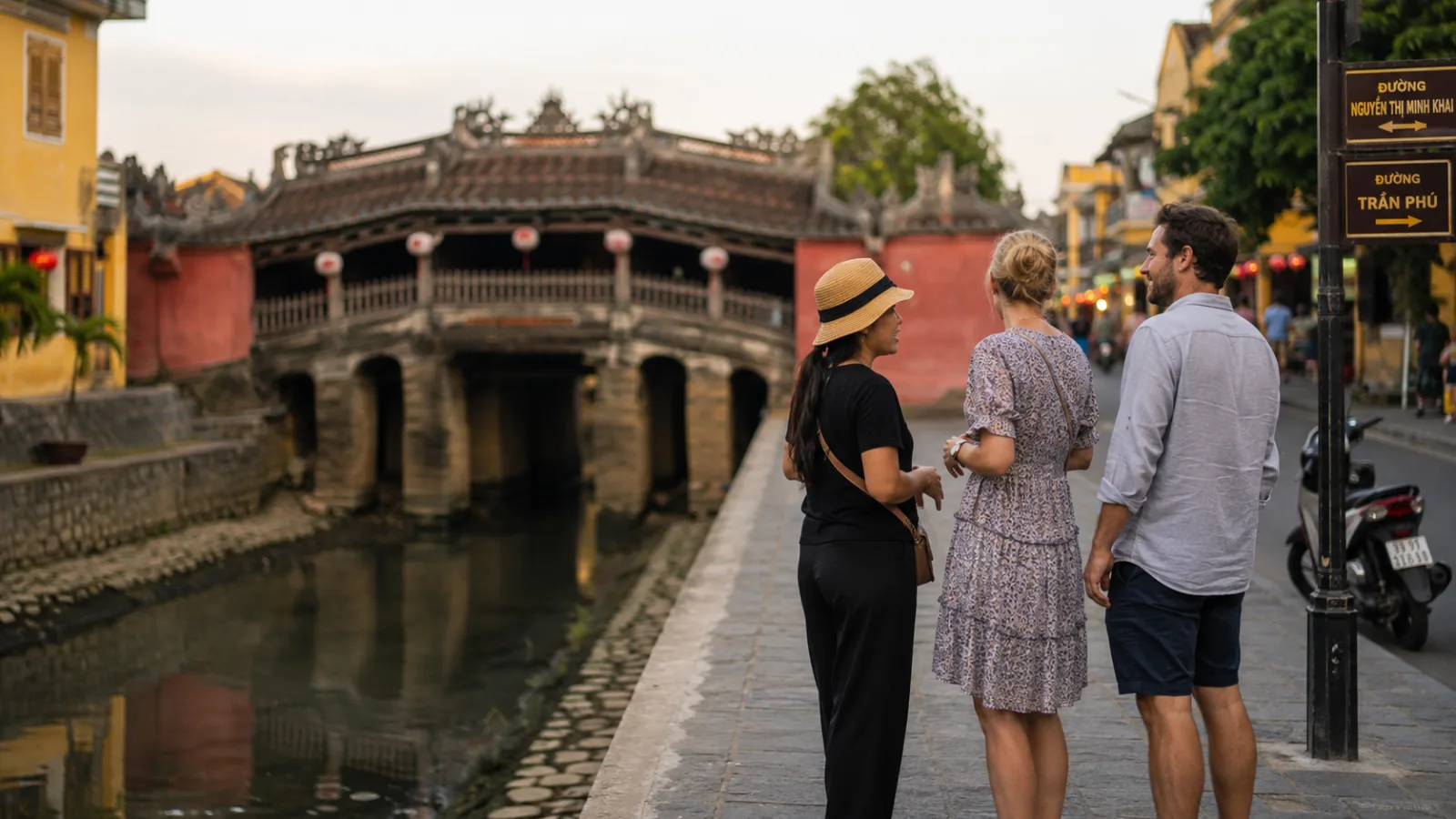

Japanese Covered Bridge Hoi An is one of the most iconic landmarks in Hoi An Ancient Town, and it is usually the first stop for travelers who want a clear sense of the old quarter. If you are trying to figure out its history, exact location, entrance details, and what the visit actually feels like, this guide gives you the essentials without the fluff.
Most visitors come expecting a quick photo, but the bridge works better when you know the context. A short walk through the lantern-lit streets, a look at the carved details, and a sense of the surrounding neighborhood can turn a simple stop into a memorable one. For travelers building a local route, Hoi An tours can help connect the bridge with nearby streets, markets, and hidden corners.
| Criteria | Quick visit | Deeper stop | Best for |
|---|---|---|---|
| Time needed | 10 to 15 minutes | 30 to 45 minutes | First-time visitors |
| Visit style | Photo stop | Walk and observe details | Couples, solo travelers, families |
Japanese Covered Bridge Hoi An is a compact historic bridge in Hoi An Ancient Town, known for its cultural symbolism, photogenic architecture, and easy access from the old town center. Most travelers visit for history, photos, and a short walk through one of the most recognizable spots in central Hoi An.
If you want to combine the bridge with a broader local experience, the smartest move is to visit early or late in the day, when the old town feels calmer and easier to explore on foot. That way, you can see why this iconic bridge matters beyond the photo and still leave time for nearby streets, cafés, and river views. For a wider day plan, all Toward Local tours can be a useful starting point.
Quick take: go for the history, stay for the atmosphere, and plan a little extra time so the bridge feels like part of Hoi An, not just a checkpoint.
What Is the Japanese Covered Bridge Hoi An?
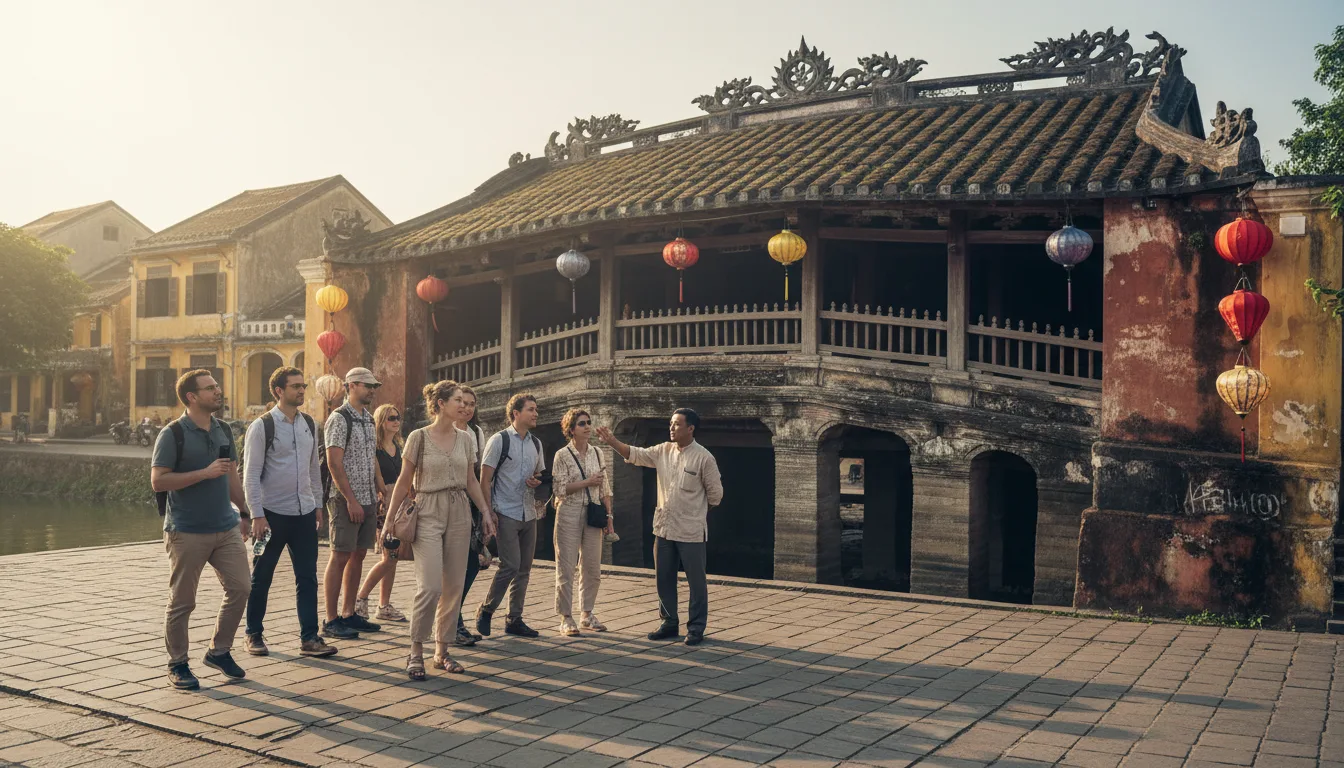
The Japanese Covered Bridge Hoi An is one of the most recognizable landmarks in Hoi An Ancient Town, and it is far more than a photo stop. Built to connect old trade streets across a small canal, it reflects the town’s multicultural past, where Japanese, Chinese, and Vietnamese influences met in daily life.
For first-time visitors, the bridge answers a simple question: what should you not miss in Hoi An if you only have a short time? The answer is this bridge, because it gives context to the whole town. If you are planning a slow walking day, Hoi An tours can help you pair it with nearby streets, cafes, and lantern-lit corners without wasting time on guesswork.
The Japanese Covered Bridge Hoi An is a historic wooden bridge in Hoi An Ancient Town that once linked trading quarters and now serves as a symbol of the town’s heritage. It is famous for its roofed design, cultural meaning, and central role in any Hoi An walking route.
A short history makes the bridge easier to appreciate. Local records and common historical accounts place its origins in the late 16th or early 17th century, when foreign merchants were active in Hoi An. The covered roof protected travelers from sun and rain, while the temple space inside added spiritual meaning for the local community.
That design still matters today because it explains why the bridge feels so different from a simple crossing. It is part architecture, part local belief, and part living heritage. A quick comparison can help:
| Criteria | Japanese Covered Bridge | Simple Town Bridge | Visitor Value |
|---|---|---|---|
| Purpose | Crossing plus worship | Crossing only | Deeper cultural story |
| Experience | Historic and symbolic | Functional and plain | Better for slow travel |
In practical terms, the bridge matters because it helps you read the rest of Hoi An. Once you understand its role, the lantern streets, riverside houses, and old merchant homes make more sense. For travelers who like a deeper local feel, it is a small landmark with a big lesson: Hoi An is best enjoyed slowly, on foot, with time to notice details.
If you are coming from central Vietnam and want to combine history with a relaxed city day, a broader route through Da Nang tours can also make Hoi An easier to fit into a regional trip. For many couples, solo travelers, and families, the bridge becomes the natural starting point for a short, memorable ancient-town visit.
In short, the Japanese Covered Bridge Hoi An is not just famous because it looks beautiful. It matters because it connects history, faith, and everyday travel into one compact landmark, which is exactly why it remains a must-see for anyone exploring Hoi An for the first time.
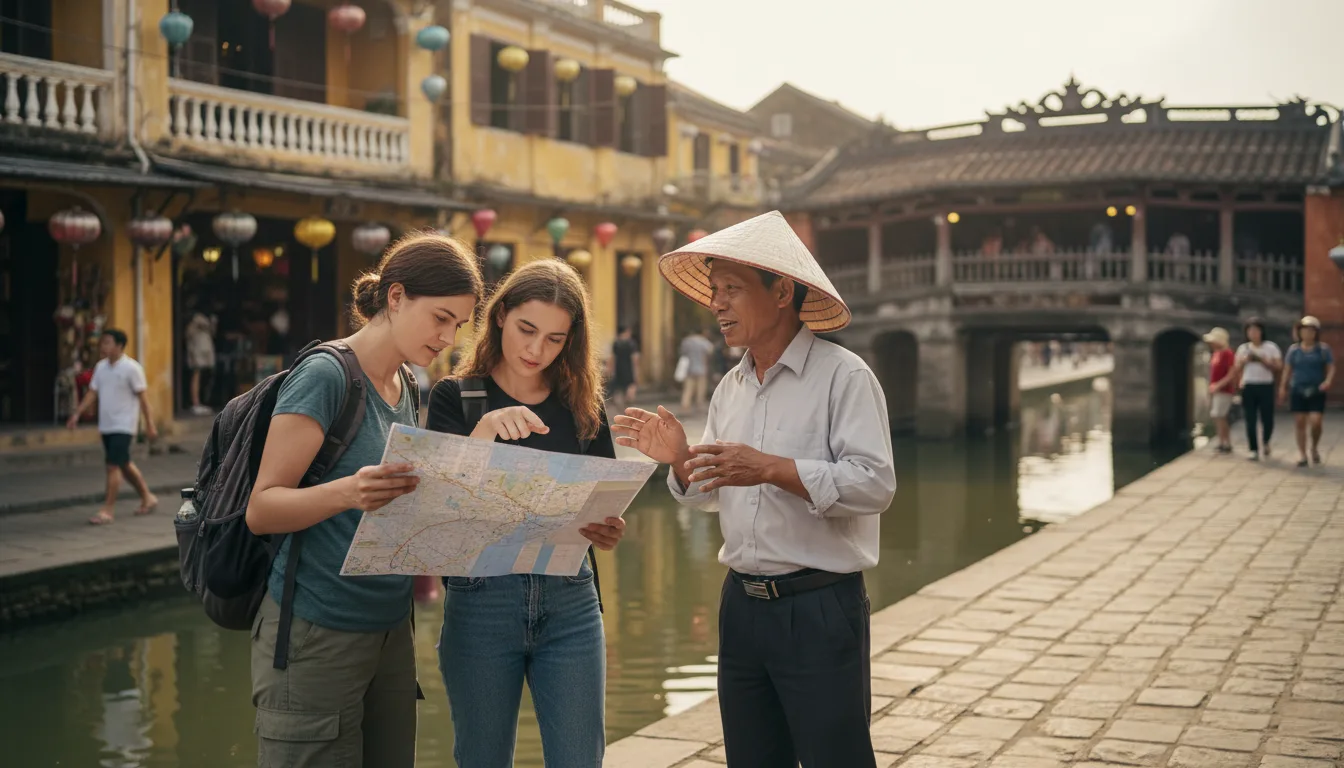
Where Is the Japanese Covered Bridge Hoi An and How Do You Get There?
The Japanese Covered Bridge Hoi An sits in the heart of the Ancient Town, connecting the old merchant streets near Tran Phu and Nguyen Thi Minh Khai. If you are trying to find it fast, the easiest landmark is the riverfront area where visitors naturally drift toward the bridge after exploring the compact center. The walk is short, but the lanes can feel confusing on a first visit, especially during busy hours.
For travelers planning a smooth visit, the key is to enter the old quarter and move slowly on foot. That is how most people discover the bridge without stress, while still enjoying shops, yellow walls, and small cafes along the way. If you are building a relaxed day in town, Hoi An tours can save time by pairing the bridge with nearby heritage stops and local food.
The Japanese Covered Bridge Hoi An is located in Hoi An Ancient Town, near the old center and riverside streets. You can reach it easily on foot from most central hotels, by bicycle from nearby neighborhoods, or with a guided tour that handles navigation and timing for you.
| Criteria | On foot | By bike | By tour |
|---|---|---|---|
| Best for | First-time visitors staying central | Travelers who like flexible exploration | Visitors who want easy planning |
| Main advantage | No parking, no detours | Cover more local streets | Local context and time efficiency |
Walking is the best option if you are already inside the Ancient Town, because distances are compact and the bridge is part of the natural sightseeing route. A simple rule works well: follow the river, then move into the busiest heritage streets once you see more lantern shops and foot traffic. Families and couples usually prefer this because it feels easy and lets everyone stop for photos.
Biking is useful if you stay just outside the center and want a more adventurous arrival. It gives you a local feel, but you still need to park before entering the pedestrian-heavy zone. For a smoother route with less guesswork, all Toward Local tours are a good fallback when you want transport, context, and a well-paced sightseeing plan.
By tour, the bridge becomes part of a bigger experience rather than a navigation task. That works especially well for solo travelers and international visitors who want to see the bridge, hear the local story, and avoid wasting time figuring out street turns. If you want the easiest and most rewarding visit, book a local Hoi An experience and let the route, timing, and nearby highlights be handled for you.
What to See and Do at the Japanese Covered Bridge Hoi An
Japanese Covered Bridge Hoi An is one of the easiest places in the old town to understand Hoi An’s layered history in a single stop. It feels compact, but the details matter: the roofline, carved beams, guardian statues, and the small stream of visitors moving in and out of the bridge all shape the experience. For first-time visitors, the challenge is not finding it, but knowing what to actually look at once you arrive.
This chapter focuses on the parts that reward a slower visit. If you are planning a short walk through the heritage zone, pair your stop with Hoi An tours so you can move through the area with better timing and less guesswork. A few minutes of observation here often gives better photos, stronger context, and a more memorable visit than rushing through with the crowd.
The Japanese Covered Bridge is best known for its 18th-century roofed structure, decorative wooden details, and symbolic statues at both ends. Visitors usually come to admire the architecture, take photos from the canal side, and visit during quieter hours for a more relaxed view of the bridge and surrounding old town streets.
The main things to see are simple, but each one adds context. Look closely at the curved roof tiles, painted wood, and the small temple-like space inside the bridge. The monkey and dog statues are not just decoration; they are tied to local symbolism and the bridge’s historical role as a landmark in Hoi An’s trading district.
Good photo spots are usually a few steps away rather than directly on the bridge. Stand along the canal edge for a wider frame, or shoot from the side street to capture the roof shape and foot traffic together. A soft morning visit gives cleaner light, while late afternoon adds warmer tones and more atmosphere. If you want to compare this stop with other local experiences, browse all Toward Local tours for ideas that fit a self-guided or light-structure itinerary.
| Criterion | Best for | What you get | Time needed |
|---|---|---|---|
| Architecture focus | Culture-minded travelers | Roof detail, woodwork, symbolic statues | 10 to 15 minutes |
| Photo visit | Couples and solo travelers | Best light and wider canal views | 20 to 30 minutes |
For timing, early morning is the calmest option, especially if you prefer clear photos and fewer tour groups. Midday can feel crowded and bright, which is fine if you only need a quick stop, but not ideal for detail shots. In the evening, the area becomes busier and more atmospheric, so expect slower movement and more people around the entrance.
The inside area is small, so manage expectations. You are not coming for a long indoor experience, but for a heritage stop that works best when combined with the surrounding streets, shops, and riverfront walk. A practical approach is to visit, take a few photos, notice the symbolism, and then continue deeper into the old town while the mood is still fresh.
If you prefer an easier, locally guided flow through the town, a gentle route through Hoi An tours can help you connect this landmark with nearby streets worth seeing. Visit early, stay observant, and let the bridge be a short but meaningful pause in your Hoi An itinerary.
Japanese Covered Bridge Hoi An vs Other Hoi An Attractions
Japanese Covered Bridge Hoi An is often the easiest landmark to recognize first, but it should not be treated as the only stop in town. For first-time visitors, the real challenge is choosing what to see when time is limited and every street feels worth a pause. The best approach is to compare the bridge with nearby experiences so your route feels efficient, not rushed.
That is why this chapter focuses on simple trip planning for travelers who want local atmosphere, walkability, and a strong visual payoff. If you want a broader route after the bridge, consider pairing it with Hoi An walking tours or browsing all Toward Local tours for a day plan that matches your pace and travel style.
The bridge is compact, symbolic, and fast to visit, while other attractions in Hoi An give different rewards. The market is better for sound, smell, and street energy. Ancient houses offer depth, craftsmanship, and historical detail. The lantern streets deliver atmosphere at sunset and after dark. A smart visitor uses the bridge as a starting point, then chooses the next stop based on mood, not distance.
The Japanese Covered Bridge is the best first landmark if you want a quick, iconic introduction to Hoi An. Visit it early for clear photos and less crowding, then continue to the market, ancient houses, or lantern streets depending on whether you prefer local food, heritage, or evening ambience.
| Criteria | Japanese Covered Bridge | Hoi An Market | Lantern Streets |
|---|---|---|---|
| Best for | History and iconic photos | Local food and daily life | Night atmosphere and romance |
| Visit timing | Early morning or midday | Morning for energy | Sunset to evening |
For adventurous solo travelers and couples, the bridge works best as a first anchor because it is easy to find and easy to combine with nearby lanes. Families usually appreciate it too, since the stop is short and the walking distance is manageable. If your trip is built around local discovery rather than checklist tourism, the bridge gives you a clean starting point before you move into Da Nang day trips or deeper heritage walks.
Who should prioritize it first depends on travel style. Go to the bridge first if you want the classic Hoi An introduction, if you are arriving on a half-day schedule, or if you prefer a calm start before crowds build. Save it for later only if your main goal is food hunting, market browsing, or nightlife. The best order is simple: bridge, then one heritage stop, then one atmosphere stop, so the day feels complete without overload.
If you want the most efficient route with local character, begin at Japanese Covered Bridge Hoi An, then expand outward from there. This gives you a strong visual landmark, a useful orientation point, and an easy way to build the rest of your itinerary around time, energy, and interest. For travelers who value smart pacing, that is usually the best decision.
Tips, Common Questions, and Final Visit Advice
Japanese Covered Bridge Hoi An is easiest to enjoy when you arrive with a simple plan: go early, move slowly, and expect a small but busy heritage site. The bridge is compact, so the real challenge is not seeing it, but timing your visit around crowds, heat, and photos. If you want a smoother day, pair it with nearby walking stops through Hoi An walking tours so the visit feels more local and less rushed.
Entry rules are straightforward, but many visitors still make the same mistakes. They rush in at peak hour, block the crossing for photos, or miss the fact that this is part of a wider old town experience rather than a standalone attraction. A better approach is to treat the bridge as one meaningful stop in a wider route, then continue toward cafés, lantern streets, and riverside corners without forcing the schedule.
| Criteria | Best Choice | Avoid | Why It Matters |
|---|---|---|---|
| Visit time | Early morning | Late afternoon peak | Fewer crowds and better photos |
| Travel style | Slow walking route | Rushed stopover | More context, less friction |
The best time to visit Japanese Covered Bridge Hoi An is early morning or after sunset on a weekday. Bring cash for nearby fees or snacks, wear comfortable shoes, and avoid standing in the middle for long photo sessions. Most travelers spend 15 to 30 minutes here before continuing through the old town.
FAQ: opening hours, tickets, and nearby attractions are the questions most first-time visitors ask. In general, opening times depend on old town access and your wider sightseeing plan, so check locally before arrival. For a smooth route, visit the bridge with nearby streets, then continue to the riverside or a curated day plan with all Toward Local tours if you want a broader trip idea.
Common mistakes are easy to avoid: arriving in heavy sun, forgetting modest clothing if you plan temple stops, and assuming the bridge is large enough for long stays. A quick tip for solo travelers and couples is to photograph from the side first, then cross once the crowd clears. Families should keep the stop short, because the real value is the atmosphere around the bridge, not lingering on the span itself.
Final advice is simple. Go early, stay flexible, and build the visit into a half-day Hoi An route instead of treating it as a checklist item. That approach gives you better photos, less stress, and a more memorable sense of place. If you are planning more local experiences in central Vietnam, a guided route through Da Nang day tours can also fit neatly before or after Hoi An.
For most travelers, Japanese Covered Bridge Hoi An works best as a short but essential stop, especially if you like authentic streets, easy walking, and local atmosphere. Keep the timing smart, follow basic etiquette, and let the old town set the pace rather than forcing your own. That is how the bridge becomes part of a better trip, not just another photo point.