
Hoi An Japanese Covered Bridge is one of the most recognized landmarks in Hoi An Ancient Town, but many travelers arrive with the same two questions: what does it mean, and how do you visit without wasting time? This guide gives you the historical context, the cultural value, and the practical details you need for a smooth stop, whether you are exploring solo, as a couple, or with family.
The bridge sits in the heart of the old town, where lantern streets, riverside lanes, and heritage houses shape the experience around it. If you are planning a deeper Hoi An tours route, the Hoi An Japanese Covered Bridge is an easy anchor point for a smart walking plan. In the next sections, you will learn what makes it special, how long to spend, and the small timing tips that help you avoid crowds.
What Is the Hoi An Japanese Covered Bridge?
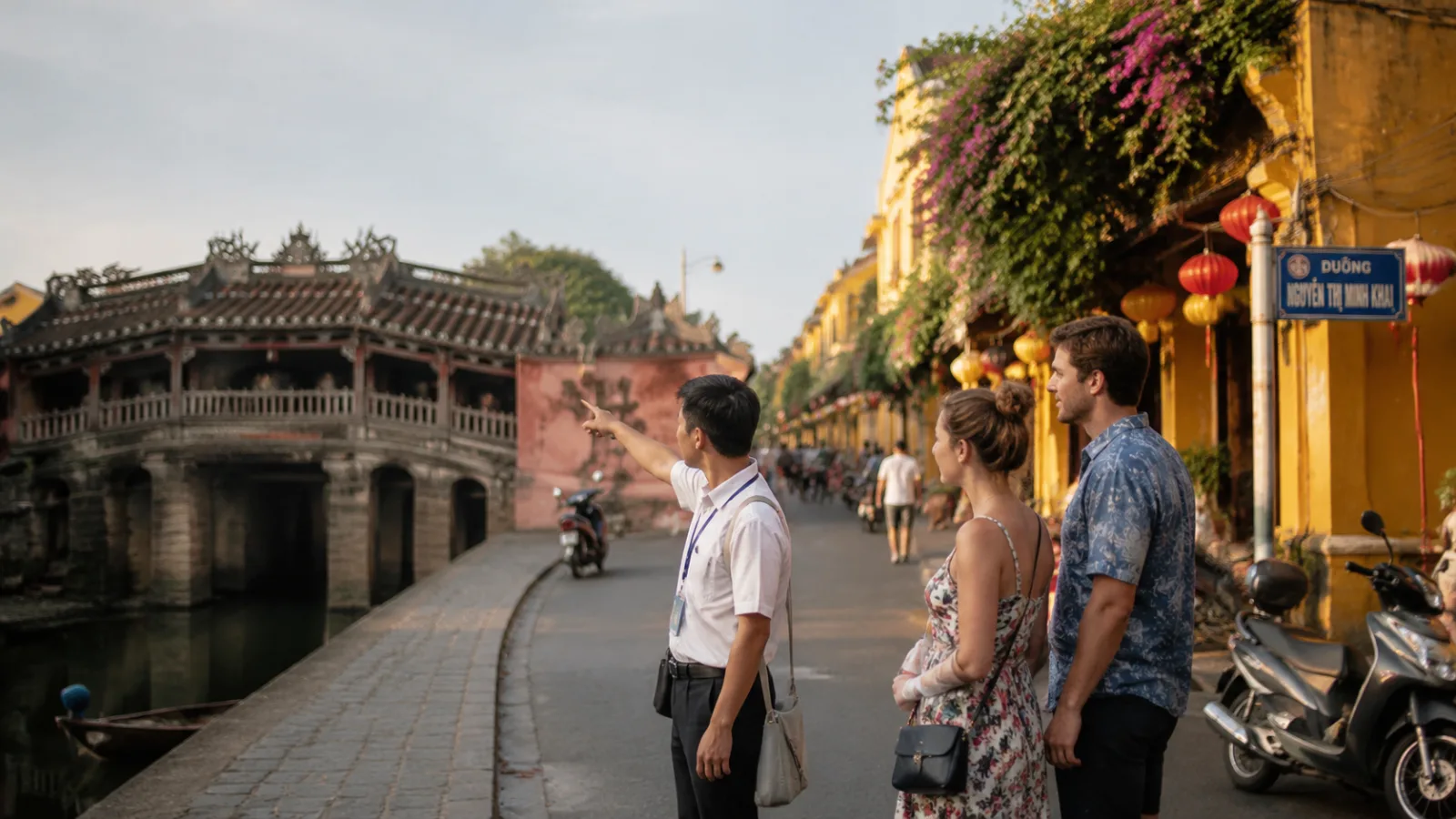
The Hoi An Japanese Covered Bridge is a small but highly symbolic landmark in the heart of Ancient Town, built as a covered footbridge that once linked trading communities across a narrow canal. For first-time visitors, it is more than a photo stop. It gives a clear sense of how Japanese, Chinese, and Vietnamese influences shaped Hoi An into one of Southeast Asia’s most layered heritage towns.
Visitors often ask what makes this bridge worth a stop when the town has so many lantern streets, old houses, and riverside cafés. The answer is simple: it is one of the few places where history, architecture, and local identity meet in one compact view. If you are planning a slower, local-style trip, Hoi An tours can help you see how the bridge fits into the wider Ancient Town experience.
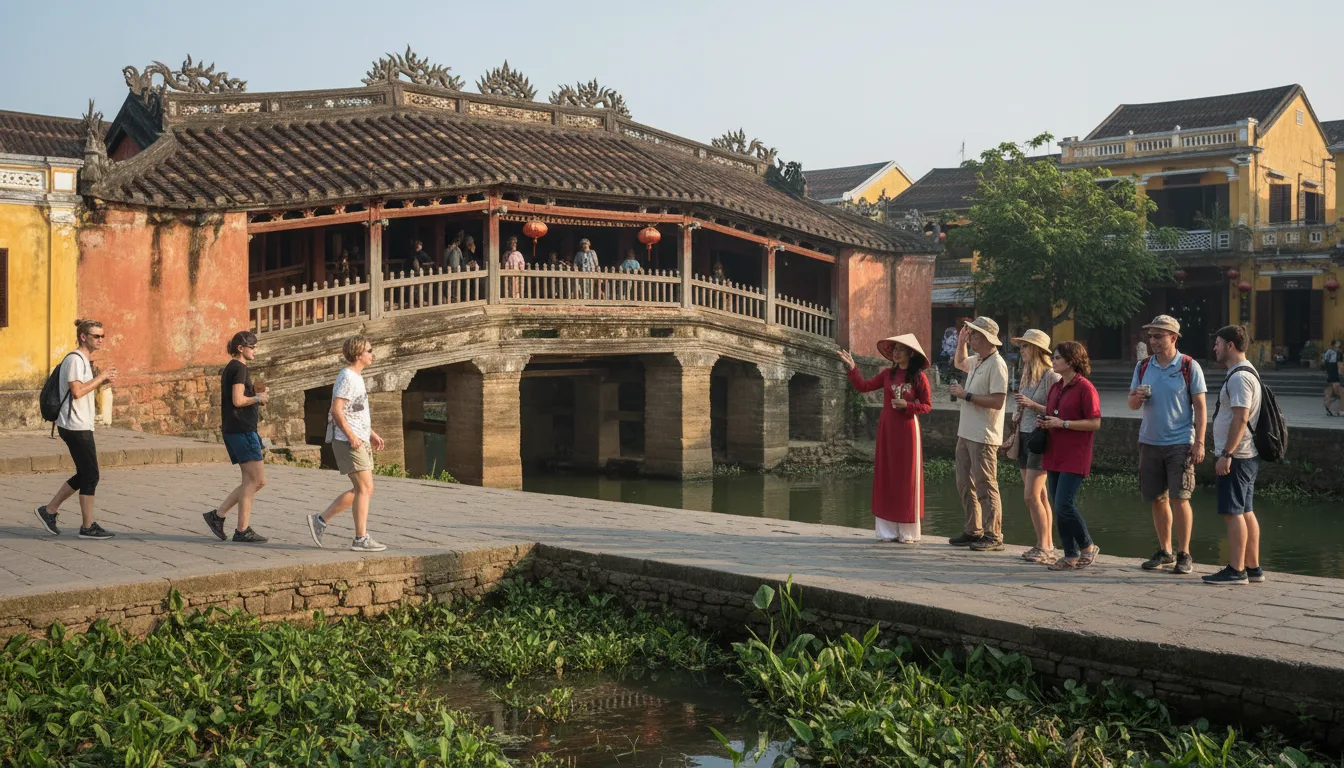
The Hoi An Japanese Covered Bridge is a historic covered bridge in Hoi An Ancient Town, originally built to connect merchant areas and protect pedestrians from sun and rain. Today it stands as a cultural icon, blending Japanese design with Vietnamese heritage and serving as one of the town’s most recognized landmarks.
Why it matters in practical terms:
- It helps visitors understand Hoi An’s trading past in a single stop.
- It is easy to combine with a walking route through Ancient Town.
- It is especially useful for travelers who want a short but meaningful cultural highlight.
For a quick decision, think of it this way: if you only have a few hours in Hoi An, the bridge gives you context before you move on to the markets, old merchant houses, and riverside streets. That makes the visit feel less like sightseeing and more like reading the town itself. If your itinerary also includes central Vietnam, you can compare it with Da Nang tours to plan a balanced regional trip.
Best time to learn about it:
| Criteria | Quick visit | Better experience | Why it matters |
|---|---|---|---|
| Time of day | Midday | Early morning or late afternoon | Lower crowds and softer light |
| Trip style | Photo stop | Cultural walk | More context and better memory |
If you want to understand the bridge without rushing, a guided walk through the old quarter is often the easiest way to connect the landmark with the wider story of the town.
For travelers who value local detail, the bridge works best as part of a longer route rather than a standalone stop. That is when its small scale becomes its strength: you notice the roofline, the wooden structure, the nearby temple, and the way daily life still moves around it. To compare more options across Vietnam, browse all Toward Local tours.
If you are building a local-first itinerary, start with the bridge, then move into the nearby streets where Hoi An’s heritage feels alive, walkable, and easy to understand.
The History and Symbolism of the Hoi An Japanese Covered Bridge
Hoi An Japanese Covered Bridge is one of the clearest places to understand how Hoi An grew from a busy trading port into a town shaped by Japanese, Chinese, and Vietnamese influence. If you are planning a local-style visit, this bridge answers a common problem: what is worth seeing beyond the usual old-town streets, and why does it matter?
Built in the late 16th or early 17th century, the bridge connected the Japanese quarter with the Chinese area and became both a practical crossing and a cultural marker. Today, it still works as a compact history lesson for first-time visitors, especially those who like places with real context, not just photo stops. For travelers building a deeper route, Hoi An tours can help connect the bridge with nearby streets, temples, and riverside spots in one smooth half-day plan.
The bridge is short, covered, and carefully balanced in design. Its roof protected travelers from sun and rain, while the enclosed structure made it feel more like a ceremonial passage than a simple walkway. On the bridge, you will also notice decorative details that carry meaning:
- A monkey and a dog at opposite ends, often linked to protection and the construction timeline
- Wooden beams and tiled roofing that reflect a practical local adaptation
- A small temple space inside, showing how the bridge became a spiritual stop as well as an urban connector
That mix of function and belief is what makes the Hoi An Japanese Covered Bridge more than a landmark. It is a living example of how trade, migration, and local worship shaped daily life over time. If you want to understand Hoi An beyond surface-level sightseeing, this is one of the best places to start. A carefully planned local tour can add the right context without turning the visit into a rushed checklist, which is especially useful for couples, solo travelers, and families who prefer meaningful stops.
| Criteria | Historical value | Visitor value | Best for |
|---|---|---|---|
| Origin | Linked to Japanese traders in old Hoi An | Shows the town’s international past | History-focused visitors |
| Symbolism | Animal guardians and temple space | Creates a deeper cultural reading | Solo travelers and couples |
In practical terms, the bridge is best seen early in the day or after sunset, when the surrounding streets are calmer and the details are easier to notice. The real insight is simple: this is not just a bridge to cross, but a place to read the town’s history in architecture, ritual, and everyday movement. For travelers who want a local, adventurous feel, pairing it with a walk through the old quarter makes the experience far richer than visiting it alone.
How to Visit the Hoi An Japanese Covered Bridge
Hoi An Japanese Covered Bridge is one of the easiest heritage stops to fit into a first visit to the old town, but timing matters if you want calm photos and a smoother walk. The bridge sits in a busy pedestrian zone, so the main challenge is not finding it, but arriving when the lanes are still pleasant, the light is soft, and you are not trapped in a crowd surge.
For most travelers, the best approach is simple: go early, keep your visit short, and pair it with nearby streets rather than treating it like a standalone stop. If you plan your route well, the bridge becomes part of a richer old-town loop, especially for travelers who enjoy local details, small temples, and riverside atmosphere. For a broader planning base, check Hoi An tours before you build your day around the bridge.
The Hoi An Japanese Covered Bridge is best visited early in the morning or late afternoon, when crowds are lighter and the light is better for photos. It is located in central Hoi An Ancient Town, usually free to view from outside, and works best as part of a short walking route through nearby lanes, old houses, and riverside streets.
The bridge is in the heart of Hoi An Ancient Town, close to Tran Phu Street and a short walk from many heritage houses. In practical terms, most visitors reach it on foot after entering the old quarter, then pause for photos before moving on. The exact opening schedule can vary for restoration or local events, so the safest rule is to visit during daylight and assume peak accessibility between mid-morning and late afternoon.
| Criteria | Best option | Why it works | Notes |
|---|---|---|---|
| Time of day | Early morning | Fewer people and softer light | Best for photos and quiet walking |
| Trip style | Old-town loop | Combines bridge, cafes, and heritage stops | Better value than a single-stop visit |
Entry is usually low-friction, but the real value comes from the surrounding area. A few steps away, you will find small pagodas, souvenir lanes, and old merchant houses that explain why this corner of Hoi An feels so complete. If you prefer a more guided local experience, you can combine it with local Hoi An experiences that move at a slower pace and help you avoid the most crowded hours.
What to expect is a compact, photogenic stop rather than a long attraction. Expect narrow walkways, a steady flow of visitors, and plenty of chances to observe details like the covered roof, carved figures, and the river-facing setting. A useful takeaway: the bridge is more rewarding when you treat it as a cultural landmark inside a living town, not just as a famous photo spot. That mindset turns a quick visit into a better travel memory.
If you want to make the most of this area, plan your bridge stop together with nearby heritage walks so you can see more without rushing.
Nearby landmarks are easy to stack into one route, including Tan Ky Old House, Quan Cong Temple, and the lantern-lined streets around the river. Couples often prefer late afternoon for a slower pace, while families and solo travelers usually do better in the morning before the lanes become busy. For travelers extending the trip beyond Hoi An, Da Nang tours can pair well with an overnight base nearby.
Use this quick rule set to decide your visit:
- Go before the main tour groups arrive
- Spend 15 to 30 minutes at the bridge and surrounding lanes
- Bring cash for small nearby purchases
- Wear comfortable shoes because the old town is best explored on foot
In the end, the Hoi An Japanese Covered Bridge works best as a smart stop inside a larger walking route. Arrive early, move slowly, and let the surrounding streets do the rest of the work. If you are building a wider Vietnam itinerary, you can also browse all tours of Toward Local to compare other local-style day plans.
Book your route, choose a quiet time, and explore the bridge with the surrounding old town so the visit feels complete rather than crowded.
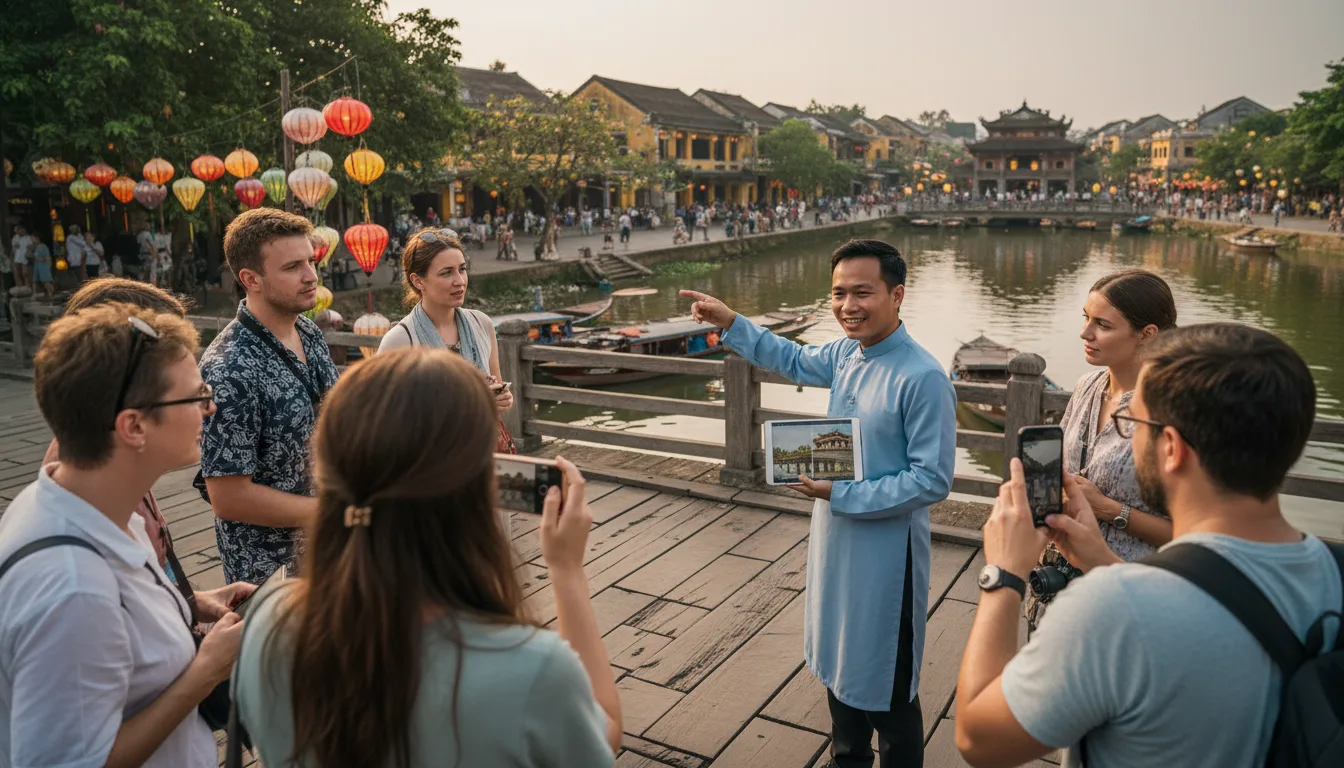
Hoi An Japanese Covered Bridge vs. Other Hoi An Attractions
Hoi An Japanese Covered Bridge is the most photographed landmark in the old town, but it is not always the most rewarding stop if you only have a short visit. For first-time travelers, the real challenge is deciding whether to spend time at the bridge, explore heritage houses, or walk deeper into the lantern-lit streets.
The answer depends on your pace and travel style. If you want a quick cultural checkpoint, the bridge works well. If you want richer context, pair it with nearby sites such as the old town core, Tan Ky Old House, and Fujian Assembly Hall. That approach gives you more depth without turning the day into a rushed checklist.
To compare them clearly, think of the bridge as the symbol, the old town as the experience, and the heritage houses as the details. For travelers who prefer local atmosphere, the bridge is best seen as a starting point, not the whole story. A Hoi An local tour can help connect those pieces in one smooth route.
| Criteria | Japanese Covered Bridge | Ancient Town | Heritage Houses and Assembly Hall |
|---|---|---|---|
| Best for | Quick iconic photo and historical symbol | Walking, cafes, night atmosphere, broad exploration | Architecture, history, and quieter cultural depth |
| Time needed | 15 to 30 minutes | 2 to 4 hours | 30 to 60 minutes each |
| Travel value | High visual value, limited depth alone | Best overall immersion | Best for travelers who enjoy detail |
A practical comparison helps most travelers decide fast. The bridge is ideal if you are doing a short self-guided loop, while the old town rewards slower wandering, especially in the late afternoon when streets feel more alive. Tan Ky Old House is stronger for people who enjoy preserved interiors, and the Fujian Assembly Hall stands out when you want ornate design and religious heritage.
The bridge is rarely the most time-consuming stop, but it often becomes the emotional anchor of a Hoi An itinerary. That means it is worth visiting even if you do not stay long. For couples and solo travelers, the bridge works best as a photo stop before continuing into the quieter lanes, where the town feels less staged and more local.
Pros of prioritizing the bridge include easy access, strong visual identity, and a compact visit that fits almost any schedule. Its limitation is simple: you can understand its importance in minutes, which is why it should be combined with nearby attractions. Travelers who want a deeper route can connect it with all Toward Local tours to build a fuller day around heritage, food, and walkable streets.
Who should prioritize it first: newcomers with limited time, families wanting an easy cultural stop, and visitors who enjoy iconic landmarks before moving on. Who should not make it the only stop: travelers seeking hidden corners, architecture lovers, and anyone hoping for a long visit with fewer crowds. The best strategy is simple: see the bridge early, then expand outward into the rest of Hoi An.
Hoi An Japanese Covered Bridge is the best-known landmark in Hoi An, but it is usually a short visit rather than a full attraction. Compare it with the Ancient Town, Tan Ky Old House, and Fujian Assembly Hall to decide whether you want a quick photo stop, a deeper heritage experience, or a full walking route.
For travelers who want the most efficient plan, the bridge should be one part of a wider Hoi An circuit, not the entire itinerary. If you prefer convenience, cultural context, and a smoother local experience, book a guided route that combines the key landmarks and leaves room for spontaneous stops, street views, and relaxed exploration.
Tips, Common Mistakes, and FAQ About the Hoi An Japanese Covered Bridge
The Hoi An Japanese Covered Bridge is easy to admire, but many visitors still miss the small details that make the stop more meaningful. If you arrive without knowing the ticket system, the best viewing angle, or the local etiquette, you can waste time and get a weaker experience. This chapter gives you the practical shortcuts so you can visit smoothly, take better photos, and avoid the common mistakes that most first-time travelers make.
For travelers who like local, active, and flexible trips, the bridge fits well into a walking route through the Old Town. If you are planning a broader stay, pairing it with Hoi An tours can save time and help you see the area with better context. The bridge is not a long activity, but knowing how to approach it changes the visit from a quick photo stop into a more memorable cultural moment.
The Hoi An Japanese Covered Bridge is worth visiting if you want a short, culturally rich stop in the Old Town. Plan for 15 to 30 minutes, check whether your ticket is needed for nearby heritage sites, and visit early or late in the day for better light and fewer crowds.
Common Visitor Mistakes, Photo Etiquette, and Practical Travel Tips
One common mistake is treating the bridge like a private photo set. It is a living heritage spot, so keep your voice low, do not block the walkway, and avoid posing in the center for too long. A better approach is to take a quick shot from the side, then move on so others can cross naturally.
Another mistake is visiting at peak midday heat and expecting empty frames. Early morning gives softer light and a calmer atmosphere, while late afternoon brings warmer tones but more people. If you are staying in central Vietnam for several days, it can be smart to combine this stop with Da Nang tours for a balanced beach and heritage itinerary.
| Criteria | Best choice | Why it matters | Practical tip |
|---|---|---|---|
| Photo timing | Early morning | Fewer crowds and softer light | Arrive soon after sunrise |
| Visitor behavior | Respectful and brief | Keeps the site comfortable for everyone | Step aside after taking photos |
A useful takeaway: the bridge looks best when you include the river edge, the lanterns, or the old street behind it, not just the structure alone. That wider frame gives the scene more Hoi An character and makes the photo feel less generic. For adventurous travelers, walking there on foot is also part of the value, because the surrounding lanes are where the town feels most alive.
When in doubt, keep the visit short and purposeful. The bridge is not a place that needs a long explanation on-site. Its value comes from context, so the smartest travelers spend a few minutes observing the carvings, then continue deeper into the Old Town instead of standing at the entrance and waiting for the perfect shot.
FAQ: Ticket Requirements, Best Photo Spots, Time Needed, and Whether It Is Worth Visiting
Do you need a ticket to see the bridge? In many cases, the bridge itself can be viewed from the outside, but access to the broader Old Town heritage area may require a ticket. If you want the most efficient plan, check the current local rules before you arrive, especially during busy travel periods.
Where is the best photo spot? The most reliable angle is usually from a short distance away on the approach street, where you can capture the roofline, the path, and nearby activity in one frame. A side angle often works better than standing directly in front, especially if you want a cleaner composition with fewer people crossing through.
How long should you spend? Most visitors need only 15 to 30 minutes unless they are studying the architecture or using it as part of a walking route. Is it worth visiting? Yes, if you want a compact heritage stop with strong visual identity, local atmosphere, and easy access to the rest of Hoi An. It is especially valuable for couples, solo travelers, and families who prefer short but meaningful sights.
If you want a broader day plan, exploring all tours of Toward Local can help you match the bridge with food, culture, or countryside experiences. The strongest itinerary is not the one that crams in the most places, but the one that balances time, comfort, and local texture.
If you are building a heritage-focused route through central Vietnam, consider pairing the bridge with a guided local walk so you can understand the symbolism, avoid wasted time, and see more of the Old Town in a natural flow.
For travelers who want a smoother, more local experience, book a Hoi An route that includes the bridge, nearby streets, and a flexible stop for photos, because that is the easiest way to turn a quick landmark visit into a better travel memory.